
.jpeg)
What is the difference between obeticholic acid and ursodeoxycholic acid?
Obeticholic acid(Obeticholic acid) and ursodeoxycholic acid (UDCA) are both drugs for the treatment ofPrimary Biliary Cholangitis(Primary Biliary Cholangitis, PBC) and related biliary liver diseases. However, there are significant differences in their mechanisms of action, indications and clinical applications. Obeticholic acid is a farnesoid X receptor (FXR) agonist, while ursodeoxycholic acid is a natural bile acid that reduces hepatic cholestasis primarily by improving bile flow.
From the perspective of its mechanism of action, obeticholic acid regulates the synthesis, secretion and efflux of bile acids by activatingFXR, while inhibiting liver inflammation and fibrosis progression. The central role of FXR in bile acid metabolism enables obeticholic acid to not only reduce serum alkaline phosphatase (ALP) levels, but also improve liver fibrosis indicators, thereby delaying disease progression. In contrast, ursodeoxycholic acid mainly reduces the toxicity of bile to liver cells by replacing endogenous bile acids, while improving bile fluidity, thereby alleviating liver damage and itching symptoms. Although UDCA can reduce ALP and bilirubin levels, its efficacy is limited in some patients with PBC, especially in patients with advanced stage or poor response to UDCA.
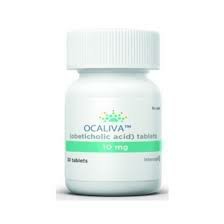
In terms of clinical application,UDCA is usually used as the first-line standard treatment drug for PBC, is suitable for most early-stage patients, and has a long-term safety record. Obeticholic acid is more commonly used in patients who are under-treated or intolerant to UDCA and is a second-line or combination therapy option. In clinical trials, the use of OCA combined with UDCA has shown a more significant improvement in liver function, especially in patients whose ALP levels cannot be sufficiently reduced. It can further reduce bile acid levels and delay liver fibrosis and disease progression.
In addition, there are differences in drug tolerance and side effects. UDCA is generally well tolerated and side effects are rare, mainly mild diarrhea or gastrointestinal discomfort. Obeticholic acid may cause itching, elevated blood lipids and mild liver enzyme fluctuations, and medication needs to be monitored under the guidance of a professional doctor. Some patients may experience worsening of itching symptoms in the early stages of treatment, but this can be relieved through dose adjustment or auxiliary medications.
In terms of treatment strategy, doctors usually decide whether to introduce obeticholic acid based on the patient's disease course, liver function indicators, andUDCA response. For patients with early-stage PBC, UDCA alone may be sufficient; for patients with poor response to UDCA or with moderate to severe disease, adding OCA for combined therapy may be considered. In addition, long-term follow-up and liver function monitoring are key links to ensure efficacy and safety.
In summary, although obeticholic acid and ursodeoxycholic acid are both used in the treatment ofPBC, their mechanisms of action and clinical positioning are different. UDCA mainly works through the improvement of bile flow and replacement of toxic bile acids, while OCA achieves multiple regulation of bile acid metabolism, liver fibrosis and inflammation through FXR activation. Which drug to choose should be based on the patient's specific condition, drug tolerance and long-term liver function goals, and the doctor will formulate a treatment plan. In the future, with the in-depth research on FXR agonists, obeticholic acid is expected to play a greater role in combination therapy and long-term disease management, providing more precise and effective treatment options for PBC patients.
Reference materials:https://en.wikipedia.org/wiki/Obeticholic_acid
[ 免责声明 ] 本页面内容来自公开渠道(如FDA官网、Drugs官网、原研药厂官网等),仅供持有医疗专业资质的人员用于医学药学研究参考,不构成任何治疗建议或药品推荐。所涉药品可能未在中国大陆获批上市,不适用于中国境内销售和使用。如需治疗,请咨询正规医疗机构。本站不提供药品销售或代购服务。


