
.jpeg)
Real-world data supports tucatinib/tucatinib-based treatment for HER2+ metastatic breast cancer
Real-world results from a retrospective study strengthen the tucatinib/tucatinib-based regimen The effectiveness of KYSA's treatment in patients with HER2-positive metastatic breast cancer, including those with brain metastases and those previously treated with trastuzumab (T-DXd)-Enhertu.
The retrospective study included patient data fromMerative MarketScan (n=150) and Komodo Healthcare Map (n=436) databases. Published results showed that at a median follow-up of 9.7 months (IQR, 5.3-20.3), patients in the MarketScan cohort had a median time off treatment (TTD) of 7.4 months (95% CI , 5.0-13.1); the median TTD of the Komodo cohort was 9.0 months (95% CI, 7.4-9.8), and the median follow-up time was 10.3 months (IQR, 5.0-18.2). The 12-month treatment persistence rate was 49.2% in the MarketScan cohort and 42.8% in the Komodo cohort. The 24-month incidence rates were 35.7% and 26.1% respectively.
Notably, patients who received tucatinib plus trastuzumab (Herceptin) and capecitabine in the third-line setting after second-line treatment with T-DXd The median TTD was 5.5 months (95% CI, 3.4-not reached [NR]) and 4.8 months (95% CI, 3.2-NR) in the tScan group (n=26) and Komodo group (n=34), respectively. The 12-month treatment persistence rate was 20.0% in the MarketScan group and 37.5% in the Komodo group.
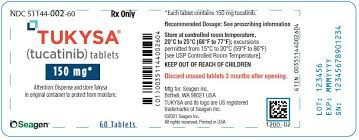
Data fromthe phase 2 HER2CLIMB trial (NCT02614794) supports the April 2020 FDA approval of tucatinib in combination with trastuzumab and capecitabine for the treatment of unresectable locally advanced or metastatic HER2-positive breast cancer Patients with cancer, including those with brain metastases, have been treated with at least1 anti-HER2-based regimen in the metastatic setting. In this study, the median duration of exposure to tucatinib was 7.3 months (range, <0.1 to 35.1) in patients receiving the tucatinib regimen (n = 320), compared with 4.4 months (range, <0.1 to 24.0) in the control group (n = 160). Of note, the duration of trastuzumab and capecitabine treatment was also shorter in the placebo group.
These[retrospective] data illustrate the real-world effectiveness of tucatinib in patients with HER2-positive metastatic breast cancer with and without brain metastases and suggest that treatment with tucatinib is an effective treatment option in accordance with the FDA and European Medicines Agency (EMA) labeling, including in patients previously treated with T-DXd. Notably, in February 2021, the European Commission approved the same tucatinib-based regimen, but for patients who had received at least 2 prior anti-HER2 therapies.
Patients from theMarketScan and Komodo databases were included in the retrospective study if they were female and at least 18 years old and had at least 1 claim for breast cancer; at least 1 claim for HER2-directed therapy; and at least 1 claim for metastatic disease 1 month before diagnosis or at any time after initial diagnosis. Patients will need to receive tucatinib-based regimens upon FDA approval. The researchers excluded patients who had at least two claims of extrabreast primary cancer within 6 months before metastasis diagnosis, and patients who had any claims of metastatic breast cancer more than 1 month before diagnosis.
The purpose of the study was to evaluate treatment patterns, TTD, and treatment persistence. Outcomes were evaluated in the overall study population and in the subgroups of patients who received FDA-approved tucatinib regimens; patients who received EMA-approved regimens; and patients who received tucatinib after T-DXd.
In theMarketScan and Komodo cohorts, the median age was 53.0 years (range 31.0-89.0) and 55.0 years (range 20.0-87.0), respectively. New disease was reported at diagnosis in 42.7% and 55.3% of patients. Metastatic sites include the brain, bones, lungs, and liver. The median time from metastasis diagnosis to initiation of tucatinib-based regimens was 32.4 months (IQR, 18.6-44.9) for MarketScan and 19.0 months (IQ, 10.0-32.0) for Komodo.
Patients in the MarketScan cohort had received a median of 2 prior lines of therapy (IQR, 2-4); patients in the Komodo cohort had received a median of 2 prior lines of therapy (IQR, 1-3). Prior therapies in the metastatic setting included T-DXd (22.0%; 12.4%), Kadcyla; 58.0%; 39.7%), trastuzumab (91.3%; 81.7%), and pertuzumab (Perjeta; 82.0%; 74.5%).
atIn the MarketScan database, 50% of patients received tucatinib-based regimens in the first line (n=4), 87% received the drug in the second line (n=31), 81% received tucatinib in the third line (n=47), and 60% received the drug in the fourth line or later (n=68). In the Komodo database, these rates are 76% for the first row (n=49), 83% for the second row (n=138), 76% for the third row (n=132), and 69% for the fourth row or after (n=117).
The proportion of patients with brain metastases in this retrospective study was higher than in previous real-world studies evaluatingany treatment for HER2-positive metastatic breast cancer, which may suggest that patients with brain metastases are more likely to receive tucatinib given its efficacy in this population.
Reference materials:https://www.onclive.com/view/real-world-data-support-tucatinib-based-treatment-in-her2-metastatic-breast-cancer
[ 免责声明 ] 本页面内容来自公开渠道(如FDA官网、Drugs官网、原研药厂官网等),仅供持有医疗专业资质的人员用于医学药学研究参考,不构成任何治疗建议或药品推荐。所涉药品可能未在中国大陆获批上市,不适用于中国境内销售和使用。如需治疗,请咨询正规医疗机构。本站不提供药品销售或代购服务。


