
.jpeg)
Which one is more effective, neratinib/neratinib (He Li'an) or pyrotinib?
Neratinib and Pyrotinib are both irreversible HER2 receptor tyrosine kinase inhibitors (TKIs). They are mainly used to treat patients with HER2-positive breast cancer, especially if the disease has progressed after previous treatment with Trastuzumab. Although the mechanisms of the two are similar, there are some differences in target specificity, clinical application, resistance mechanism, and patient tolerance, which affect the overall evaluation of the treatment effect.
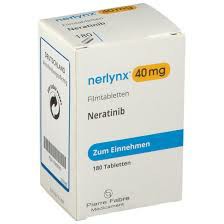
Neratinib is a broad-spectrum irreversibleHER2 TKI that can act on both HER1 (EGFR) and HER4. In clinical studies, it has shown efficacy in postoperative adjuvant therapy and metastatic HER2-positive breast cancer. Its advantage is that it can prolong relapse-free survival (DFS), especially when used early after the end of adjuvant trastuzumab therapy. In addition, neratinib can further improve patient outcomes when combined with other drugs, such as tamoxifen or anastrozole. However, common adverse reactions of neratinib include diarrhea, nausea, vomiting and abnormal liver function indicators, which need to be managed with drug intervention and dose adjustment.
Pyrotinib is a small molecule irreversible inhibitor developed in China and marketed domesticallyHER2 inhibitor, which also acts on HER2, HER4 and EGFR. It has shown good overall response rate and disease control rate in recurrent and metastatic HER2-positive breast cancer, and is particularly suitable for use in Chinese and some Asian patient groups. Clinical trials of pyrotinib have shown that it can achieve a higher objective response rate (ORR) and prolong progression-free survival (PFS) when combined with chemotherapy drugs such as capecitabine. In terms of tolerability, pyrotinib also has a higher incidence of diarrhea, but most are controllable mild to moderate symptoms that can be effectively managed by using symptomatic drugs or adjusting dosage.
From a drug selection perspective, which drug is more effective depends on the patient's specific situation and clinical needs. Neratinib has obvious advantages in adjuvant treatment and prolonging recurrence-free survival, and is suitable for patients with early breast cancer or consolidation therapy after trastuzumab surgery. Pyrotinib has shown certain advantages in overall response rate and progression control in patients with recurrent and metastatic breast cancer, and is more suitable for advanced patients who require combination chemotherapy. There is still a lack of global multi-center research on direct head-to-head comparison between the two clinically, so it is impossible to simply judge which one is better, but individual selection can be made based on the patient's course of disease, previous treatment history and side effect tolerance.
It is worth noting that resistance mechanisms are also an important reference for drug selection. Long-term use of neratinib may lead to HER2 pathway downstream signal escape or multidrug resistance, while pyrotinib has been shown to still have a certain effect on previously TKI-resistant breast cancer in some Chinese patients. In addition, the patient's financial conditions, drug availability, and medical insurance coverage will also affect the final choice.
In general, neratinib and pyrotinib each have their own advantages and disadvantages, and the treatment strategy should be comprehensively judged based on the patient's individual characteristics, tumor biological characteristics, and the doctor's clinical experience to achieve the best treatment effect.
Reference materials:https://en.wikipedia.org/wiki/Neratinib
[ 免责声明 ] 本页面内容来自公开渠道(如FDA官网、Drugs官网、原研药厂官网等),仅供持有医疗专业资质的人员用于医学药学研究参考,不构成任何治疗建议或药品推荐。所涉药品可能未在中国大陆获批上市,不适用于中国境内销售和使用。如需治疗,请咨询正规医疗机构。本站不提供药品销售或代购服务。


