
.jpeg)
Afatinib (Gitairin) usage standards and individualized adjustment methods
Afatinib (Afatinib) is an oral second-generation irreversible tyrosine kinase inhibitor (TKI) that can target EGFR and HER2 and HER4 receptors are commonly used to treat patients with locally advanced or metastatic non-small cell lung cancer (NSCLC) whose EGFR gene mutation is positive. It can also be used for advanced squamous cell lung cancer that has progressed after platinum-based chemotherapy. Due to its special mechanism of action, afatinib has a high efficacy in patients with certain EGFR sensitive mutations (such as Del19 and L858R) and is one of the commonly used first-line targeted therapies. Reasonable and standardized usage and dosage are the key to ensuring efficacy and reducing adverse reactions.
Afatinib is administered as an oral tablet. The usual recommended starting dose is 40 mg once daily on an empty stomach or 1 hour before a meal and 2 hours after a meal. Patients should swallow the tablet whole without breaking it, crushing it or dissolving it to ensure the stability and absorption of the drug. For some well-tolerated patients, if no adverse reactions or obvious toxicity of grade ≥ 2 occur after 4 weeks of treatment, the dose can be increased to 50 mg/day under the evaluation of a doctor in order to obtain a stronger inhibitory effect. However, adverse reactions need to be closely monitored after increasing the dose. If the patient experiences obvious toxic reactions during treatment (such as severe diarrhea, rash, stomatitis, abnormal liver function, etc.), the dose needs to be adjusted or the drug temporarily discontinued.
Afatinib should be taken regularly every day. If you forget to take the dose and it is more than 8 hours before the next dose, take it as soon as possible; if it is less than 8 hours, skip the missed dose and do not double the dose at once.
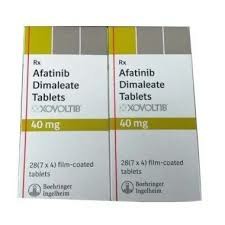
The dose adjustment of afatinib needs to be individualized based on the patient's tolerance, age, liver and kidney function status, and the severity of adverse reactions. The generally recommended dosage adjustment regimen is as follows:
1.Initial dose 40 mg/day: standard starting dose, suitable for most adult patients.
2.The dose is increased to 50 mg/ day: After 4 weeks of initial treatment, if there is no toxic reaction of grade ≥2, an increase in dose may be considered, especially in cases of high tumor burden or poor efficacy. However, close observation is required after increasing the dosage.
3.Dose reduction: When sustained toxicity of grade 2 or above occurs, or grade 3 diarrhea, severe rash, elevated liver enzymes, etc., the drug should be discontinued until the symptoms are relieved to ≤1 grade, and then continue with Restart treatment at a dose of 10 mg/day (e.g., from 40 mg to 30 mg/day to 20 mg/day). If it is reduced to 20 mg/ and is still intolerable in the future, permanent discontinuation of the drug needs to be considered.
4.Elderly and underweight patients: For patients ≥75 years old or with a lower body weight (e.g. ≤50 kg), an initial dose of 30 mg/day may be considered and adjusted based on tolerance.
5. Patients with impaired liver and renal function: Patients with mild to moderate impaired liver and renal function generally do not need to adjust the starting dose, but patients with severe liver dysfunction should use it with caution, reduce the dose if necessary and closely monitor changes in pharmacokinetics.
In actual clinical application, the dosage adjustment of afatinib is not only related to toxic reactions, but also takes into account the specific conditions of the patient. For example, some Asian patients (especially women and those who are underweight) have higher exposure to afatinib and are more likely to have adverse reactions. Therefore, it is often recommended to start with 30 mg/day and adjust according to tolerance. For patients with multiple underlying diseases or who use other drugs, attention should also be paid to drug interactions. For example, concomitant P-gp inhibitors may increase the plasma concentration of afatinib, and the dosage interval should be appropriately extended or the dosage adjusted according to the situation.
In addition, diarrhea is one of the most common adverse reactions of afatinib, which usually occurs early in treatment (within 2 weeks after treatment). It is recommended that patients prepare antidiarrheal drugs (such as loperamide) at the beginning of treatment and take them promptly once diarrhea occurs to avoid affecting the efficacy. Rashes and stomatitis are also common and require good skin care and local or systemic treatment when necessary. If serious toxicity of Grade 3 or above occurs, treatment should be suspended and the dosage should be reduced after symptoms are relieved.
The usage and dosage of afatinib need to be flexibly adjusted on a standardized basis and based on the individual conditions of the patient. 40 mg/day is the standard starting dose for most patients, but some patients who tolerate it well can increase it to 50 mg/day to improve the efficacy; for patients with obvious adverse reactions or special groups, the dose should be reduced appropriately to avoid treatment interruption due to toxicity. The entire treatment process should be evaluated and monitored by experienced oncologists, and patients should also actively cooperate and provide timely feedback on discomfort symptoms to achieve "early detection and early adjustment" to ensure the efficacy while minimizing the risk of side effects.
Reference link:https://www.drugs.com
[ 免责声明 ] 本页面内容来自公开渠道(如FDA官网、Drugs官网、原研药厂官网等),仅供持有医疗专业资质的人员用于医学药学研究参考,不构成任何治疗建议或药品推荐。所涉药品可能未在中国大陆获批上市,不适用于中国境内销售和使用。如需治疗,请咨询正规医疗机构。本站不提供药品销售或代购服务。


