
.jpeg)
Detailed instructions for tucatinib/tucatinib
1. Basic drug information
Tucatinib/Tucatinib (Tucatinib), trade name TUKYSA, is a highly selective HER2 tyrosine kinase inhibitor and is an oral small molecule targeted drug. The drug was developed by the American company Seagen and is mainly used to treat malignant tumors such as HER2-positive metastatic breast cancer and colorectal cancer. Its English name is Tucatinib, its common Chinese name is Tucatinib, and it is also often called Tucatinib or Tucatinib tablets. The drug has been approved for marketing in the United States, Europe, Japan and other places, and has been included in multinational tumor treatment guidelines.
2. Description of indications
1. Metastatic breast cancer: Tucatinib is suitable for the treatment of adult patients with HER2-positive, unresectable or metastatic breast cancer in combination with trastuzumab and capecitabine, especially cases with brain metastases. These patients typically have received one or more anti-HER2 regimens.
2. HER2-positive colorectal cancer: used in patients with RAS wild-type, HER2-positive unresectable or metastatic colorectal cancer, in combination with trastuzumab. Tucatinib may serve as a new treatment option for patients whose disease has progressed despite treatment with fluoropyrimidine, oxaliplatin, and irinotecan.
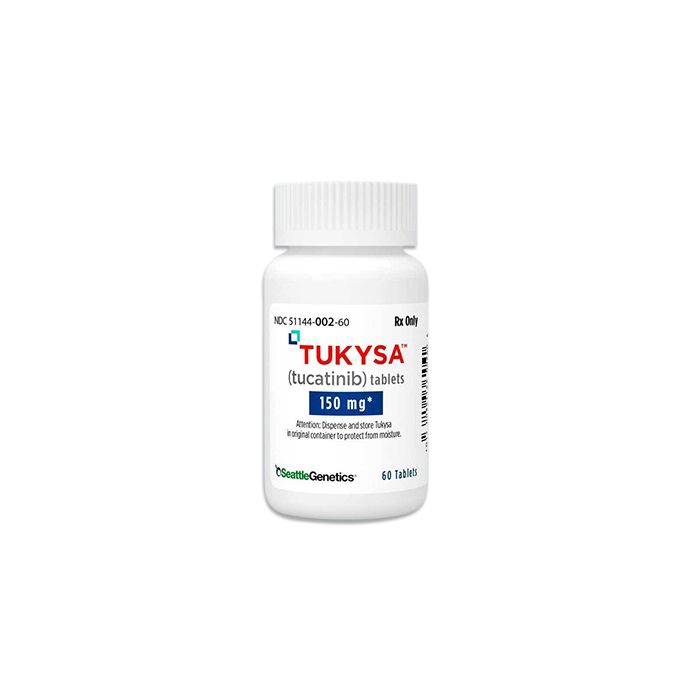
3. Usage and dosage
1. Recommended dose: The recommended dose of tucatinib is300mg, taken orally twice a day, and can be used in combination with trastuzumab and capecitabine until disease progression or unacceptable toxicity occurs. If you miss a dose or vomit, there is no need to take another dose. Take the next dose at the normal time.
2. Dose adjustment: If adverse reactions such as diarrhea and liver enzyme elevation occur, the dose should be gradually reduced to 250mg, 200mg or 150mg twice a day. If the patient cannot tolerate the lowest dose, treatment should be discontinued. For patients with severe hepatic impairment, it is recommended that the dose be adjusted to 200 mg twice daily.
3. Drug interactions: Tucatinib is metabolized byCYP2C8, so combination with strong CYP2C8 inhibitors should be avoided; if it is really necessary, the dose should be temporarily reduced to 100 mg twice a day, and the original dose can be restored after discontinuation.
4. Overview of adverse reactions
In clinical studies, the adverse reactions of tucatinib were generally controllable. Common side effects include diarrhea, nausea, vomiting, fatigue, rash, decreased appetite, stomatitis, anemia, and increased liver function indicators. Some patients may develop palmoplantar erythema, fever, or infusion reactions. Laboratory tests showed a decrease in hemoglobin and an increase in alanine aminotransferase (ALT) and aspartate aminotransferase (AST). Most reactions are reversible and can improve after stopping the drug or adjusting the dose. Liver function and blood routine should be monitored regularly during treatment.
5. Storage conditions
Tucatinib should be storedat room temperature between 20°C and 25°C (with a range of 15°C to 30°C allowed), away from moisture. The medicine bottle must be used within three months after opening. Any remaining medicine should be discarded after the expiration date.
6. Medication for Special Populations
1. Pregnant and lactating women: Tucatinib may cause fetal damage and is contraindicated during pregnancy. Breastfeeding women should avoid breastfeeding while taking this medication and for one week after the last dose.
2. Male patients: Men with partners of childbearing potential must take effective contraceptive measures during treatment and within one week after stopping the drug.
3. Patients with renal function impairment: No dose adjustment is required for mild to moderate renal impairment. However, capecitabine is contraindicated in patients with severe renal impairment (creatinine clearance<30mL/min), so combined use is not recommended for such patients.
4. Patients with liver function impairment: No adjustment is required for mild to moderate impairment, but patients with severe liver function impairment should use reduced dosage.
7. Mechanism of action
Tocatinib inhibitsHER2 tyrosine kinase activity and blocks the phosphorylation of HER2 and HER3 receptors, thereby inhibiting the downstream MAPK and AKT signaling pathways and preventing tumor cell proliferation. This mechanism effectively reduces the growth and metastasis of HER2-positive tumors. When combined with trastuzumab, tucatinib can enhance the anti-tumor synergistic effect, and also has strong penetration into brain metastases, showing good central efficacy.
Reference materials:https://www.tukysa.com/
[ 免责声明 ] 本页面内容来自公开渠道(如FDA官网、Drugs官网、原研药厂官网等),仅供持有医疗专业资质的人员用于医学药学研究参考,不构成任何治疗建议或药品推荐。所涉药品可能未在中国大陆获批上市,不适用于中国境内销售和使用。如需治疗,请咨询正规医疗机构。本站不提供药品销售或代购服务。


