
.jpeg)
Is Doxorubicin the same as doxorubicin? Comparative analysis of similarities, differences and clinical applications between the two
Doxorubicin (Doxorubicin) is indeed what is often referred to clinically as doxorubicin. The two are different names for the same drug. Doxorubicin is the international non-proprietary common name (INN), and "doxorubicin" is its trade name or common translation in China and some Asian countries. The two are completely consistent in chemical structure, mechanism of action and clinical application. They are anthracycline anti-tumor drugs. They mainly intercalate into DNA double strands and inhibit the activity of topoisomerase II, thereby preventing the replication and transcription of cancer cells and causing cell apoptosis.
In terms of its mechanism of action, doxorubicin binds to the DNA helical structure, making topoisomerase II unable to restore the DNA chain break, leading to the death of cancer cells. At the same time, it can also produce free radicals, further damage cell membranes and mitochondria, and has a broad-spectrum killing effect on malignant tumor cells. Because of its powerful killing power, doxorubicin is used in a variety of solid tumors and blood tumors, including breast cancer, leukemia, lymphoma, ovarian cancer, etc.
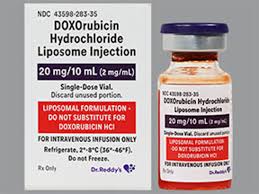
In clinical use, the dose of doxorubicin is usually calculated based on the body surface area (mg/m²) and administered 1-2 times per cycle. It is often used in combination with other chemotherapy drugs to enhance the efficacy, such as cyclophosphamide, paclitaxel, etc. It is worth noting that doxorubicin is cardiotoxic, and excessive cumulative doses may cause heart failure. Therefore, patients need to regularly monitor cardiac function, liver function, and blood routine during long-term treatment. At the same time, attention should be paid to the drug infusion process to prevent local tissue damage caused by intravenous extravasation.
In practical applications, Doxorubicin/doxorubicin has the advantage of broad-spectrum anti-tumor activity and mature clinical experience, but its side effects are also obvious, such as bone marrow suppression, nausea and vomiting, oral mucositis and alopecia. Therefore, doctors will formulate individualized plans based on the patient's specific conditions, reasonably control the dosage, combine cardioprotective drugs, or use liposome preparations to reduce toxicity. In general, doxorubicin and doxorubicin are clinically equivalent, and their application value and safety management principles are consistent.
Reference materials:https://www.drugs.com/
[ 免责声明 ] 本页面内容来自公开渠道(如FDA官网、Drugs官网、原研药厂官网等),仅供持有医疗专业资质的人员用于医学药学研究参考,不构成任何治疗建议或药品推荐。所涉药品可能未在中国大陆获批上市,不适用于中国境内销售和使用。如需治疗,请咨询正规医疗机构。本站不提供药品销售或代购服务。


