
.jpeg)
Detailed scientific explanation of the mechanism of action and treatment principle of Seripparase (BRINEURA)
Seripase (BRINEURA) is an enzyme replacement therapy drug. Its main mechanism of action is based on the enzyme supplementation principle of lysine carboxylase (TPP1) that is missing or functionally defective in the body. Patients with Brunner's neuronal snacking disease (CLN2 late-onset Niemann-Pick disease) lack the TPP1 enzyme, resulting in the inability of proteins in lysosomes to be degraded normally and abnormal accumulation, thus causing neuronal damage and degeneration. BRINEURAThrough intravenous injection or intracerebroventricular administration, functional TPP1enzyme is directly supplemented into the patient's body to restore the protein degradation function of lysosomes and fundamentally intervene in the pathological process.
In terms of treatment principle, BRINEURA belongs to a category of enzyme replacement therapy (ERT), which improves cellular metabolic function by supplementing missing enzymes. TPP1The enzyme enters nerve cells and is absorbed by lysosomes. It can directly participate in the protein degradation cycle and reduce the accumulation of abnormal proteins in cells. This can not only reduce neuronal toxicity, but also delay the progression of the disease and improve patients' motor ability, cognitive function and quality of life. Clinical data shows that early use of BRINEURA can significantly slow the decline of motor and speech abilities.
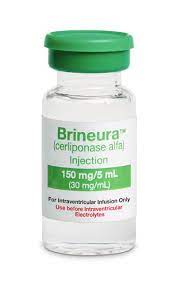
In addition, BRINEURA’s molecular design takes into account targeting and stability. Through specific carriers and delivery systems, drugs can effectively cross the cerebrospinal fluid barrier, allowing the TPP1 enzyme to be fully distributed within the central nervous system to achieve therapeutic effects. At the same time, regular administration can maintain the enzyme activity in the body within the effective range, ensure sustained efficacy, and minimize the damage to neurons caused by pathological protein accumulation.
In terms of safety and efficacy, BRINEURA’s clinical studies have shown that most of its adverse reactions are mild to moderate, mainly including administration site reactions, fever and mild infection. Scientific and reasonable dosage regimens, strict treatment course management and patient monitoring can ensure stable treatment effects and controllable risks. Overall, BRINEURA directly intervenes in the core pathological mechanism of CLN2 neurodegenerative diseases by precisely supplementing the missing enzyme, providing the most targeted treatment strategy for the disease at present.
Reference materials:https://www.drugs.com/
[ 免责声明 ] 本页面内容来自公开渠道(如FDA官网、Drugs官网、原研药厂官网等),仅供持有医疗专业资质的人员用于医学药学研究参考,不构成任何治疗建议或药品推荐。所涉药品可能未在中国大陆获批上市,不适用于中国境内销售和使用。如需治疗,请咨询正规医疗机构。本站不提供药品销售或代购服务。


