
.jpeg)
Full analysis of Afatinib production countries and manufacturer information
Afatinib (Afatinib) is a second-generation irreversible EGFR-TKI (tyrosine kinase inhibitor) Enzyme inhibitors), mainly used to treat malignant tumors such as EGFR gene mutation-positive non-small cell lung cancer (NSCLC). The drug was first developed and produced by the famous German pharmaceutical company Boehringer Ingelheim (Boehringer Ingelheim). In 2013 it was first approved for marketing in the United States under the trade name Gilotrif®. As an original manufacturer, Boehringer Ingelheim has profound capabilities in drug development, clinical research and quality control. Its afatinib has been launched in many countries and regions around the world and has become an important targeted treatment option for patients with EGFR mutated lung cancer.
Afatinib has been officially approved for marketing in China and has been included in the national medical insurance directory, which has greatly reduced patients’ medication burden. Afatinib, which is marketed in China, is mainly supplied by Boehringer Ingelheim China Branch. At the same time, many domestic pharmaceutical companies have obtained approval for the production of generic drugs. Currently, the State Food and Drug Administration has approved some domestic pharmaceutical companies to carry out generic production of afatinib, which marks a significant increase in the supply capacity and accessibility of the drug in China. Domestic version manufacturers usually have complete GMP certified production lines, and the drug quality standards are consistent with the original drugs to meet the needs of clinical medication.
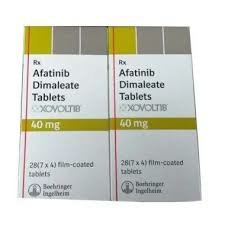
In addition to the German original research and the Chinese generic version, afatinib is also produced in India, Laos, Bangladesh and other countries. India is one of the world's largest producers of generic drugs. Many well-known pharmaceutical companies (such as Natco, Hetero, etc.) have launched generic afatinib drugs. Its price is more advantageous than the original drug, and it is widely exported to Asian, African and Latin American countries. Generic versions from Laos and Bangladesh are known for their low prices and consistent ingredients, making them an alternative for patients in many developing countries. Pharmaceutical companies in these countries usually produce according to international pharmacopoeia standards. Although the prices are cheap, they also have corresponding guarantees in terms of drug quality and bioequivalence.
Overall, the German original version of afatinib has the highest quality standards, complete clinical verification and international certification, and is also relatively the most expensive. China's domestic version has undergone strict consistency evaluation of generic drugs, and its quality is stable and reliable. At the same time, due to its inclusion in medical insurance, the actual price paid by patients is significantly reduced. Generic drugs in India, Laos and Bangladesh are more competitive in price, generally only a fraction of the price of original drugs, but they should be purchased through formal channels to ensure that the source of the drugs is legal and safe. For clinical use, the original drug and the generic drug that have undergone consistency evaluation are basically the same in terms of active ingredients, efficacy and safety. Patients can reasonably choose the version of the drug based on their financial ability, medical insurance policy and doctor's advice.
Reference materials:https://www.drugs.com/
[ 免责声明 ] 本页面内容来自公开渠道(如FDA官网、Drugs官网、原研药厂官网等),仅供持有医疗专业资质的人员用于医学药学研究参考,不构成任何治疗建议或药品推荐。所涉药品可能未在中国大陆获批上市,不适用于中国境内销售和使用。如需治疗,请咨询正规医疗机构。本站不提供药品销售或代购服务。


