
.jpeg)
Teritusumab/Telivac combination is encouraging in first-line myeloma treatment
Recent analysis ofMajesTEC-5 Phase 2 study (NCT05695508), which is evaluating teritusumab ( Teclistamab-cqyv) combined with daratumumab-hyaluronidase (Darzalex Faspro) study protocol for the treatment of newly diagnosed multiple myeloma (MM). Following induction therapy, 100% of patients achieved an overall response and, importantly, 100% of evaluable patients achieved minimal residual disease (MRD) negativity. This indicates a profound and meaningful reduction in cancer cells.
The treatment also demonstrated a manageable safety profile. Although cytokine release syndrome occurred in 65% of patients, all cases were grade 1 or 2. Of note, no patient developed immune effector cell-related neurotoxic syndrome. The combination's success in achieving deep responses early in the treatment course, as well as its tolerability, highlight its potential as a highly effective, immune-based, steroid-sparing option for newly diagnosed patients.
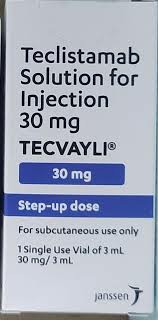
The idea behind this study is that bispecific[antibodies] in myeloma—in this case, targeting bispecific BCMA [B cell maturation antigen]—are very effective in late-stage treatment. With this in mind, these patients and their T cells have already received numerous treatments; the idea is to explore bispecific therapies in the frontline setting, where the patients and their T cells have not been exposed to any prior therapies. [We] are exploring combinations with standard of care therapies such as [daratumumab , or lenalidomide (Revlimid) and dexamethasone (LenDex)] or daratumumab , bortezo [Velcade] and LenDex, [which are] the standard of care in the first-line treatment of myeloma, in combination with teritusumab, which we report here, and with taqualitumab or in combination with teritusumab and tacitutumab.
A total of50 patients and 49 evaluable patients. What we found was that the response rate was very, very high. Nearly all patients achieved complete remission by the end of cycle 6. Even more impressive, all patients tested were MRD negative 10-5 after 3 cycles and 10-6 after 6 cycles. There was only 1 patient with no samples tested for MRD.
Of course, safety is always a concern for frontline patients. Overall, BCMA tolerates this very well in detail. Throughout the study, IVIG [intravenous immunoglobulin] and antibiotic prophylaxis were supplemented during the first 3 cycles, and PJP [Pneumocystis jiroveci pneumonia] was provided. The rate of grade 3 or higher infections was found to be approximately 36%, primarily due to infections in the first 3 cycles, with no treatment interruptions or grade 5 toxicities reported.
Of course, longer follow-up is needed to see whether these very early but very impressive response rates and MRD-negative rates translate into long-term treatment and disease-free survival. In subsequent trials, whether this will lead to limiting the duration [of treatment] to, for example, 2 years of treatment and then giving patients a time interval in which they do not require treatment.
Reference materials:https://www.targetedonc.com/view/teclistamab-combos-encouraging-in-frontline-myeloma
[ 免责声明 ] 本页面内容来自公开渠道(如FDA官网、Drugs官网、原研药厂官网等),仅供持有医疗专业资质的人员用于医学药学研究参考,不构成任何治疗建议或药品推荐。所涉药品可能未在中国大陆获批上市,不适用于中国境内销售和使用。如需治疗,请咨询正规医疗机构。本站不提供药品销售或代购服务。


