
.jpeg)
Instructions for the standard treatment course of mirikizumab
Milikizumab (Mirikizumab) is a humanized monoclonal antibody targeting the IL-23p19 subunit. It is used to treat moderate to severe inflammatory bowel diseases, includingulcerative colitis (UC) and Crohn's disease (CD) . Its medication regimen follows the "induction-maintenance" principle, with individualized doses based on the type and severity of the disease.
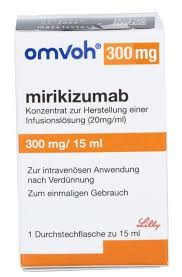
For patients with ulcerative colitis, the recommended dose during the induction phase is 300 mg per dose as an intravenous infusion at weeks 0, 4, and 8, with each infusion lasting at least 30 minutes. The purpose of this stage is to quickly control intestinal inflammation, relieve symptoms, and lay the foundation for subsequent maintenance treatment. After the induction period, the maintenance period begins. Starting from the 12th week, 200 mg each time is administered by subcutaneous injection, which can be divided into two consecutive injections of 100 mg, repeated every 4 weeks. The design of the maintenance dose takes into account the stability of blood concentration and the need for long-term immune regulation, so that the drug can inhibit IL-23 signaling while reducing the risk of systemic immunosuppression.
For patients with Crohn's disease, due to the complex course of the disease and wide range of inflammation, the induction dose is higher, 900 mg each time, intravenously infused at weeks 0, 4 and 8, with each infusion lasting no less than 90 minutes. This high-dose induction regimen can suppress intestinal inflammation more quickly and improve mucosal damage and clinical symptoms. After entering the maintenance period, 300 mg is injected subcutaneously every 4 weeks, which can be divided into continuous injections of 100 mg and 200 mg to ensure long-term efficacy and stable blood concentration.
The course design of militizumab embodies the concept of precision immunotherapy. In the induction phase, high-dose, intravenous administration is used to make the drug take effect quickly and control acute symptoms; in the maintenance phase, a low-dose subcutaneous injection regimen is used to facilitate patient self-management while ensuring continued effectiveness of immune regulation. This approach not only relieves intestinal symptoms but also alleviates the side effects of patients' long-term dependence on systemic immunosuppressants. During treatment, blood routine, liver and kidney function, and infection risks need to be monitored, with special attention being paid to potential bacterial, viral, and fungal infections.
Reference materials:https://omvoh.lilly.com/
[ 免责声明 ] 本页面内容来自公开渠道(如FDA官网、Drugs官网、原研药厂官网等),仅供持有医疗专业资质的人员用于医学药学研究参考,不构成任何治疗建议或药品推荐。所涉药品可能未在中国大陆获批上市,不适用于中国境内销售和使用。如需治疗,请咨询正规医疗机构。本站不提供药品销售或代购服务。


