
.jpeg)
Clinical data of capmatinib (Tourad) in the treatment of MET-mutant colorectal cancer
Capmatinib (capmatinib), as a selective MET inhibitor, has gradually attracted attention in recent years for its application in patients with MET mutant colorectal cancer (CRC). MET Gene abnormalities, including amplifications and missense mutations, are relatively low in colorectal cancer patients, but when they occur, they often indicate more aggressive tumor biology and an increased risk of resistance to conventional chemotherapy and targeted therapy. Capmatinib inhibits the activity of MET receptor tyrosine kinase and blocks downstream signaling pathways (such as RAS/MAPK and pan>PI3K/AKT), thereby inhibiting tumor cell proliferation and migration, providing a new treatment strategy for patients with MET mutant colorectal cancer.
In multiple early clinical studies, capmatinib has shown certain efficacy in METexon14 skipping mutation or amplification colorectal cancer. For example, in a phase II single-arm study of patients with MET highly amplified colorectal cancer treated with capmatinib, some patients had an objective response rate (ORR) reached 20%~30%, and the median progression-free survival (PFS) was prolonged. Although the overall efficacy has not yet reached the level of targeted therapy in other tumors (such as non-small cell lung cancer), capmatinib still has clinical value for patients with MET abnormalities who lack standard treatment options.
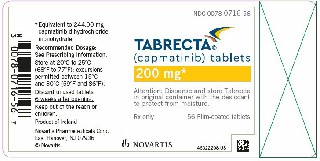
The safety profile during capmatinib treatment was generally controllable. Common adverse reactions include edema, nausea, fatigue, and interstitial lung disease. Adverse reactions in most patients are grade 1 to 2 and can be alleviated through dose adjustment or symptomatic treatment. Research also shows that for patients with abnormal liver and kidney function, hematological and biochemical indicators need to be closely monitored and treatment plans adjusted in a timely manner to reduce the risk of serious adverse events.
In general, the clinical application of capmatinib in MET mutant colorectal cancer is still in the exploratory stage, but its targeting properties provide new treatment directions for patients with MET abnormalities. In the future, it is necessary to conduct multi-center clinical studies with larger samples to clarify its efficacy and safety, optimize patient screening criteria, and explore more individualized comprehensive treatment plans in combination with other targeted drugs or immunotherapy, thereby improvingMETSurvival benefit in patients with mutated colorectal cancer.
Reference materials:https://www.drugs.com/
[ 免责声明 ] 本页面内容来自公开渠道(如FDA官网、Drugs官网、原研药厂官网等),仅供持有医疗专业资质的人员用于医学药学研究参考,不构成任何治疗建议或药品推荐。所涉药品可能未在中国大陆获批上市,不适用于中国境内销售和使用。如需治疗,请咨询正规医疗机构。本站不提供药品销售或代购服务。


