
.jpeg)
Long-term data from PHAROS show half of treatment-naïve patients treated with encofenib and bimetinib combination alive at 4 years
Targeted therapies continue to make waves in metastatic non-small cell lung cancer (NSCLC), as seen at the conference, which highlighted current therapies as well as ongoing therapies targeting ALK, EGFR, BRAF V600E and ROS1. Long-term results from the PHAROS Phase 2 study (NCT03915951), which in September 2022 showed for the first time the efficacy of combining two targeted therapies, encorafenib (Pfizer) and binimetinib/bemetinib (Pfizer). The combination was approved in October 2023 for patients with BRAF V600E-mutated metastatic NSCLC.
Overall survival (OS) data published concurrently in the Journal of Clinical Oncology show the longest survival data ever seen for these patients, who typically receive chemotherapy before the use of targeted therapies. A decade ago, a different targeted therapy combination, dabrafenib and trametinib, was approved. Lung cancer is the second most common cancer in the United States and the leading cause of cancer death, with NSCLC accounting for 80% or more of all lung cancers. These include the BRAF V600E mutation that occurs in approximately 2% of patients with non-small cell lung cancer. 3 These are so-called "driver mutations" that cause cells to grow out of control.
Among them98 patients (59 treatment-naïve and 39 previously treated) received encofenib 450 mg twice daily and at least 45 mg bimetinib twice daily. The primary endpoint was objective response rate (ORR), which was 75% in the initial treatment group and 46% in the previously treated group. Baseline characteristics "were consistent with what we would expect for BRAF V600E mutant NSCLC, including 50/50 men and women, and two-thirds of current or former smokers.
Among previously treated patients, 60% received immunotherapy. After the March 2025 data cutoff, the results are as follows:
The median OS follow-up time of patients at the initial stage of treatment was 52.3 months, and the median OS was 47.6 months (95% CI; 31.3 to unestimated); the 4-year OS probability was 49% (95% CI; 35-62).
Among previously treated patients, The median follow-up time for OS was 48.2 months, and the median OS was 22.7 months (95% CI; 14.1 to 32.6); the 4-year OS probability was 31% (95% CI, 16-47).
In the treatment-naïve and previously treated groups, 58% and 26% of patients, respectively, received at least one subsequent systemic therapy.
No new safety signals were reported.
These results support[encofenib-bimetinib] indications and support its use as first-line treatment for patients with BRAF V600E mutated non-small cell lung cancer.
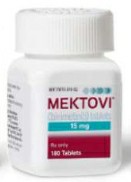
Olomorasib Promising Intracranial Response
Next-generation selective inhibitorPhase 1/2 results for olomorasib (NCT04956640), which received Breakthrough Therapy Designation for KRAS G12C in September 2025. Olomorasib, currently being developed by Eli Lilly and Company, has been shown to be safe and effective in "a variety of solid tumors harboring KRAS mutations."
Data on intracranial activity in patients with KRAS G12C (tissue or plasma)-positive advanced non-small cell lung cancer and active brain metastases who had not previously received KRAS G12C inhibitor therapy. The patient received single-agent olomocoxib, 150 mg daily. Safety assessments were performed on all treated patients. Intracranial response was assessed by modified RECIST v1.1 in at least 1 measurable lesion (at least 5 mm) assessed in patients who had at least 1 postbaseline response assessment or who discontinued treatment before the first assessment.
As of January 15, 2025, a total of 19 patients with a median age of 65 years have been treated; 15 patients have received prior systemic therapy, 13 of whom have received metastatic therapy. The median number of intracranial lesions was 1 (range 1-3). Common treatment-related adverse events were mild diarrhea, fatigue, and nausea; none were grade 3 or higher. Of 18 evaluable patients, 5 patients achieved a complete intracranial response and 4 patients had a partial response, for an overall intracranial response rate of 43%.
At100% response was ongoing at the 6-month milestone, and after a median follow-up of 8.1 months, the median duration of response has not yet been reached. Some patients have major responses at the first evaluation. We also see some patients' reactions deepening over time. Two global registration studies are currently underway for first-line metastatic and early-stage non-small cell lung cancer.
Zipalertinib targets central nervous system metastasis of NSCLC with EGFR exon 20 insertion mutations
In June 2025, ASCO data were reported on REZILIENT1 (NCT04036682) against the irreversible EGFR tyrosine kinase inhibitor Zipalertinib after pretreatment in 244 non-small cell lung cancer patients carrying EGFR exon 20 insertion (ex20ins) mutations. The confirmed ORR was 35.2% (95% CI, 28.2-42.8); the median DOR was 8.8 months (95% CI, 8.3-12.7). The most common grade 3 or higher treatment-related adverse events were anemia (7%), pneumonitis, and rash (2.5% each).
Preliminary results are providedREZILIENT2 (NCT5967689), also 100 mg twice daily, in patients with these mutations and at least 1 case of active central nervous system (CNS) metastasis and/or leptomeningeal disease (LMD). In addition to ORR and DOR, the group also evaluated intracranial ORR (iORR), intracranial DOR (iDOR), and disease control rate (iDCR) by response assessment of brain metastases (RANO-BM) and safety. Central nervous system metastases and epidermal growth factor receptor mutations are common in patients with non-small cell lung cancer, occurring in approximately 50% of patients and associated with a poor prognosis. Patients have few treatment options.
Reports on Cohort C of an ongoing Phase 2b trial; these patients have active brain metastases such that they require rediagnosis and/or treatment. Patients may have leptomeningeal disease, and use of prior therapies is permitted. As of the February 2025 data cutoff, REZILIENT2 has enrolled 32 patients. Most patients had an ECOB status of 1 and 19% had LMD; more than half of the patients carried ex20ins of EGFR; the remaining patients had rare single or compound EGFR mutations. Efficacy and safety data show:
31.3% of patients with measurable central nervous system disease had a confirmed response by RANO-BM.
Of the 5 confirmed reactions, 2 of 5 had LMD and 4 of 5 had not received prior central nervous system radiation therapy; the median iDOR was 8.1 months.
Per RESIST, 27.6% of patients had a confirmed systemic response, with an mDOR of 7.6 months.
The safety profile of Zipalertinib 100 mg twice daily was consistent with previous studies.
In short, in exonsZipalertinib demonstrated clinically meaningful intracranial antitumor activity in patients with 20 NSCLC with insertional or other rare single or compound mutations, with an intracranial response rate of 31.3% and an intracranial disease control rate of 68.8% per RANO-BM. It also appeared to be active in patients with leptomeningeal disease; intracranial response rates were similar to systemic response rates in the reported population.
Zipalertinib has received Breakthrough Therapy designation from the U.S. Food and Drug Administration and is being developed by Taiho Pharmaceutical in partnership with Cullinan Therapeutics.
References:https://www.ajmc.com/view/long-term-data-for-pharos-show-half-of-treatment-na-ve-patients-receiving-encorafenib-plus-binimetinib-alive-at-4-years
[ 免责声明 ] 本页面内容来自公开渠道(如FDA官网、Drugs官网、原研药厂官网等),仅供持有医疗专业资质的人员用于医学药学研究参考,不构成任何治疗建议或药品推荐。所涉药品可能未在中国大陆获批上市,不适用于中国境内销售和使用。如需治疗,请咨询正规医疗机构。本站不提供药品销售或代购服务。


