
.jpeg)
Analysis of the differences in efficacy and indications between afatinib (Gitarel) and osimertinib
Afatinib (Afatinib) and Osimertinib (Osimertinib) are both tyrosine kinase inhibitors (TKI ), mainly targeting patients with epidermal growth factor receptor (EGFR) mutations in non-small cell lung cancer (NSCLC). Both block the proliferation and survival of cancer cells by inhibiting the EGFR signaling pathway, but there are certain differences in their mechanisms of action and indications. Afatinib is a second-generation EGFR-TKI that can irreversibly inhibit EGFR and HER2 family receptors, while osimertinib is a third-generation EGFR-TKI. span>EGFR-TKI has a selective inhibitory effect on T790M drug-resistant mutations. At the same time, it has low inhibition on wild-type EGFR and has relatively mild side effects.
Differences in indications
Afatinib is mainly used for EGFR sensitive mutations (Exon 19 deletion or Exon 21 L858Rmutated) advanced or metastatic non-small cell lung cancer patients, regardless of whether they have received otherEGFR-TKI treatments. Its clinical trials have shown that it can significantly prolong progression-free survival (PFS) in patients with newly treated NSCLC, especially in patients with Exon 19 deletion.
Osimertinib has a wider range of indications and can be used for initial treatmentEGFRmutation-positiveNSCLCPatients, it can also be used for patients who are resistant to first- or second-generation EGFR-TKI and are accompanied by T790M mutation. The advantage of third-generation TKI is that it can cross the blood-brain barrier, effectively control brain metastasis, and has significant efficacy in patients with T790M drug-resistant mutations, filling the treatment gap for second-generation TKI after drug resistance.
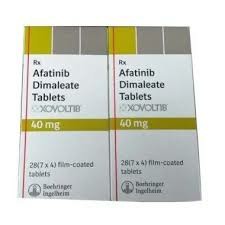
Efficacy difference analysis
Afatinib has shown good initial treatment efficacy in clinical trials, especiallyPFSThe median can reach 11–14 span> months, the overall response rate (ORR) is approximately 60–70%. However, for patients with T790M resistance mutations, the efficacy of afatinib is significantly reduced and needs to be replaced or combined with other regimens. In newly treated patients, the PFS of osimertinib can be extended to 18–19 months, and the overall response rate is about 70%. The effect is particularly obvious for patients with brain metastases. For T790M-positive drug-resistant patients, osimertinib can achieve a higher response rate and survival benefit, with a median PFS of more than 10 months.
Side effects and safety comparison
The adverse reactions of afatinib mainly include rash, diarrhea, stomatitis and onychomycosis, and some patients may develop abnormal liver function or interstitial lung disease. Due to its strong inhibition of wild-type EGFR, the side effects are relatively obvious and require strict monitoring and dose adjustment. Osimertinib has low selectivity for wild-type EGFR, so its side effects are mild, with common rashes, diarrhea and mild hematological abnormalities. The incidence of serious adverse events is low and it is better tolerated by patients.
Clinical application suggestions
In clinical practice, for patients with initial treatmentEGFR sensitive mutations, osimertinib has better efficacy and better tolerability, especially for patients with brain metastases or high-risk drug resistance, while afatinib can still be used as the first-line option for initial treatment, especially in terms of price or medical insurance accessibility. For patients with second-line treatment or T790M resistance, osimertinib is a better choice, which can effectively prolong survival and control the risk of brain metastasis. Doctors should develop an individualized plan based on the patient's mutation type, previous treatment history, brain metastasis, and tolerance to achieve the best treatment effect.
In general, afatinib and osimertinib are important drugs for the treatment of EGFRmutationsNSCLC. Afatinib is suitable for patients with initial treatment of EGFR sensitive mutations. It has good efficacy but the risk of drug resistance exists; osimertinib can not only be used for initial treatment of patients, but can also deal with T790Mdrug-resistant, and has good brain metastasis control capabilities and safety advantages. In terms of clinical selection, individualized and precise treatment strategies should be formulated based on the patient's mutation type, disease course characteristics, economic conditions, and drug tolerance to achieve maximum survival benefit.
Reference materials:https://www.drugs.com/
[ 免责声明 ] 本页面内容来自公开渠道(如FDA官网、Drugs官网、原研药厂官网等),仅供持有医疗专业资质的人员用于医学药学研究参考,不构成任何治疗建议或药品推荐。所涉药品可能未在中国大陆获批上市,不适用于中国境内销售和使用。如需治疗,请咨询正规医疗机构。本站不提供药品销售或代购服务。


