
.jpeg)
Detailed instructions and usage guide for dupilumab/dalbitux
Dupilumab (dupilumab) is a biologic agent whose application has rapidly expanded worldwide in recent years. As an interleukin-4 receptor alpha (IL-4Rα) antagonist, it blocks the IL-4 and IL-13 signaling pathways, which are thought to play a central role in a variety of diseases characterized by "type II inflammation." With precise target design, dupilumab has expanded from the initial atopic dermatitis to multiple respiratory, immune, skin and mucous membrane-related diseases, covering a wide range of people from children to adults.
1. Comprehensive analysis of indications
1. Moderate to severe atopic dermatitis: was first approved for the treatment of moderate to severe atopic dermatitis that cannot be effectively controlled by topical drugs. The applicable population ranges from 6-month-old infants to adults. In clinical practice, it can be used alone or in combination with topical corticosteroids to strengthen the control of itching, eczema-like rashes, and skin barrier damage. Its advantage is that it does not rely on systemic hormones or immunosuppressants and is more tolerable in long-term management.
2. Moderate to severe asthma: Can be used as "additional maintenance treatment"for patients aged 6 years and above. It is especially suitable for patients with eosinophil-related phenotypes, unstable conditions, or long-term dependence on oral hormone maintenance. It should be emphasized that this drug is not used for acute attacks, such as acute bronchospasm, so patients still need to carry fast-acting inhaled drugs.
3. Chronic sinusitis with nasal polyps: For patients over 12 years old who are still difficult to control with conventional treatments, dupilumab can improve symptoms such as obstruction, decreased sense of smell and recurrence of polyps. As maintenance treatment, it is often used in conjunction with basic management methods such as nasal hormones or saline irrigation.
4. Eosinophilic esophagitis (EoE): Already coveredPatients aged 1 year and above and weighing ≥15kg. The disease is characterized by dysphagia, foreign body sensation in the chest, and pain when eating. Duplimumab can improve the chronic inflammatory response of the esophageal mucosa and is currently one of the more important systemic treatment options.
5. Nodular prurigo (PN): This disease is characterized by repeated itching and skin nodules, which often affects sleep and quality of life. Dupilumab can effectively reduce the transmission of skin inflammation and itching signals and help patients return to stability.
6. Chronic obstructive pulmonary disease (COPD) specific phenotype: suitable for adults with eosinophilic phenotype and poor control with standard treatments. As adjunctive maintenance therapy, it can improve the process of inflammatory driven airway narrowing, but it is also not used to manage acute exacerbations.
7. Chronic spontaneous urticaria (CSU): ApplicablePatients aged 12 years and above who still have persistent symptoms despite standard antihistamine treatment. As a new choice of biological agents, it can be used for patients with recurring wheals and itching that affect their lives.
8. Bullous pemphigoid: In adults, combined with tapering oral corticosteroids. The intervention of dupilumab can help reduce hormone requirements and improve the skin blistering response.
2. Summary of usage and dosage (according to disease and age)
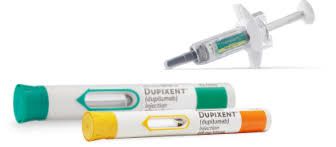
Duppilumab is a subcutaneous injection preparation. Professional medical personnel usually guide the use of the first dose, and some patients can inject it themselves after training. Dosage regimes vary significantly based on age, weight, and disease.
1. Atopic dermatitis (AD)
Adults: Initially 600 mg (two 300 mg doses), then 300 mg every 2 weeks.
6 months to 5 years old: divided into two levels according to weight, administered once every 4 weeks, 200mg or 300mg each time.
Children aged 6 years and above are classified by weight:
Weight15–30kg: 600mg initially, then 300mg every 4 weeks.
Weight30–60kg: 400mg initially, then 200mg every 2 weeks.
≥60kg: 600mg initially, then 300mg every 2 weeks.
2. Asthma (ASTHMA)
Children 6-11 years old: Weight <30kg: 300mg every 4 weeks. ≥30kg: 200mg every 2 weeks.
12 years and above:
Options: Initial400mg → 200mg every 2 weeks; or 600mg initially → 300mg every 2 weeks.
Those who are dependent on oral steroids or have comorbidities: Initial600mg → 300mg every 2 weeks.
3. Chronic rhinosinusitis with nasal polyps (CRSwNP)
12 years and older: 300 mg every 2 weeks.
4. Eosinophilic esophagitis (EoE)
Weight15-30kg: 200mg every 2 weeks. Body weight 30-40kg: 300mg every 2 weeks. ≥40kg: 300mg per week.
5. Prurigo nodularis (PN)
Adults: 600 mg initially, then 300 mg every 2 weeks.
6. Chronic obstructive pulmonary disease (COPD)
Adults: 300 mg every 2 weeks.
7. Chronic spontaneous urticaria (CSU)
12-17 years old according to weight:
30-60kg: 400mg initially → 200mg every 2 weeks. ≥60kg: 600mg initially → 300mg every 2 weeks.
Adult:
Initial600mg → 300mg every 2 weeks.
8. Bullous pemphigoid (BP)
Adults: Initial600mg → 300mg every 2 weeks in combination with tapering oral corticosteroids.
The important feature of dupilumab is that it is not used for rapid relief of any acute exacerbation, including acute exacerbations of asthma, acute airway spasm, and acute outbreaks of spontaneous urticaria. A clear diagnosis and long-term management planning are required before use.
Compared with traditional immunosuppressants, it does not affect the body's overall immune system, but more accurately intervenes in abnormal type II inflammatory signalsSo the safety of long-term use is relatively controllable. In clinical application, it is often combined with topical drugs, nasal spray hormones, inhaled treatments or dietary intervention to form a comprehensive treatment plan.
Reference materials:https://www.drugs.com
[ 免责声明 ] 本页面内容来自公开渠道(如FDA官网、Drugs官网、原研药厂官网等),仅供持有医疗专业资质的人员用于医学药学研究参考,不构成任何治疗建议或药品推荐。所涉药品可能未在中国大陆获批上市,不适用于中国境内销售和使用。如需治疗,请咨询正规医疗机构。本站不提供药品销售或代购服务。


