
.jpeg)
Detailed instructions on discontinuation methods and precautions for Asnib/Asiminib
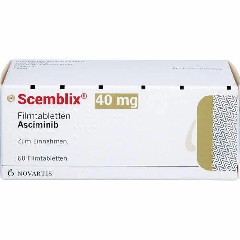
Asciminib (Asciminib) is a new type of tyrosine kinase inhibitor (TKI) that mainly targets BCR-ABL 1Tyrosine kinase, suitable for patients with chronic myelogenous leukemia (CML), especially those who are resistant or intolerant to imatinib, dasatinib or nilotinib. As an oral targeted drug, asinib can effectively inhibit the proliferation of leukemia cells and prolong the progression-free survival of patients in clinical practice. However, due to the particularity of chronic leukemia treatment and the characteristics of the drug itself, drug discontinuation must follow strict guidelines to ensure safety and maximize efficacy.
1. Adaptation scenarios for drug withdrawal
Not all patients are candidates for long-term or permanent discontinuation of asinib. Under normal circumstances, drug discontinuation considerations include the following situations: First, the patient achieves sustained deep molecular remission (MR4.5 or deeper) after long-term treatment, which has been stably maintained for at least two years, and hematological indicators and molecular levels Remain stable; second, the patient experiences serious or intolerable adverse reactions, and it is necessary to evaluate whether safety can be improved by discontinuing the drug or adjusting the dosage; third, based on the comprehensive judgment of the clinician based on the patient's condition, comorbidities, or special physiological status (such as pregnancy, major surgery), temporary drug suspension is beneficial to safety or efficacy management.
2. Assessment and preparation before discontinuation of medication
Before deciding to discontinue treatment, patients need to undergo a comprehensive evaluation, including hematology tests, bone marrow examinations and BCR-ABL1 molecular level testing. Ideal candidates for discontinuation should have stable molecular levels without significant fluctuations for at least 6 to 12 months before discontinuation. At the same time, patients need to understand the risks that may occur after stopping the drug, such as leukemia recurrence or molecular rebound, and receive detailed education from doctors to clarify the monitoring frequency and relapse treatment plan.
3. Medication discontinuation operation methods and monitoring plan
It is usually recommended to stop oral administration of asinib directly without gradually tapering off the drug. Because the half-life of the drug is short, tapering off the drug is of limited help in reducing adverse reactions. However, follow-up must be carried out in strict accordance with the recurrence monitoring plan after stopping the drug: the follow-up frequency from 6 months to 1 year before drug withdrawal is usually every 1< /span>To 2monthly reviewBCR-ABL1 molecular level. If an increase in molecular level or hematological recurrence is detected, treatment should be resumed in time. At the same time, patients should pay attention to clinical symptoms, such as fatigue, fever, anemia, etc., and report to the doctor in time.
4. Risk management after drug withdrawal
The main risk after stopping treatment is molecular relapse, and most relapses occur within 6 to 12 months after stopping treatment. Studies have shown that most patients who relapse are able to regain molecular remission after resuming asinib therapy. In addition, long-term drug withdrawal requires attention to hematological abnormalities, immune function, and management of comorbidities. Patients should avoid increasing or decreasing medications, changing lifestyles, or taking other medications at will, so as not to interfere with recurrence monitoring and drug effects.
5. Individualized management and psychological support
During drug withdrawal, individualized management is very important. Doctors should develop a follow-up plan based on the patient's age, disease course, comorbidities, and quality of life, and provide psychological guidance to the patient to alleviate the anxiety or uncertainty that may be caused by discontinuation of medication. Patients and family members should be familiar with the warning signs of recurrence to ensure that prompt measures can be taken when molecular levels increase. At the same time, lifestyle intervention, such as maintaining a healthy routine, eating a reasonable diet, and exercising moderately, can help maintain immune function and support stable treatment.
Overall, discontinuation of asinib is a high-risk, high-yield strategy that must be carried out under strict monitoring and professional guidance. Before stopping the drug, it is necessary to clearly identify the appropriate population, evaluate molecular response stability and hematological indicators. After stopping the drug, regular molecular testing and clinical follow-up are required, and preparations for relapse are required. Scientific drug withdrawal management can not only reduce drug burden and potential adverse reactions, but also improve patients' quality of life and treatment compliance, providing a more optimized strategy for the long-term management of chronic myelogenous leukemia.
Reference materials:https://www.drugs.com/
[ 免责声明 ] 本页面内容来自公开渠道(如FDA官网、Drugs官网、原研药厂官网等),仅供持有医疗专业资质的人员用于医学药学研究参考,不构成任何治疗建议或药品推荐。所涉药品可能未在中国大陆获批上市,不适用于中国境内销售和使用。如需治疗,请咨询正规医疗机构。本站不提供药品销售或代购服务。


