
.jpeg)
Study on the possibility of tumor disappearance with pyrotinib/arini
Pyrotinib (Pyrotinib Maleate) is a targeted therapy drug mainly used to treat HER2 positive breast cancer. HER2 (human epidermal growth factor receptor 2) is a receptor commonly found in breast cancer cells and promotes tumor cell growth and proliferation when overexpressed. Pyrotinib inhibits the activity of HER2 receptor and prevents the growth of cancer cells, and has shown significant anti-tumor activity in clinical practice. With more clinical research in-depth, the application of pyrotinib in the treatment of breast cancer has received widespread attention, especially its potential in tumor disappearance.
As a targeted drug, pyrotinib mainly blocks the proliferation signals of tumor cells by inhibiting the activity of HER2 tyrosine kinase. Overexpression of the HER2 receptor is thought to be a key factor in rapid tumor growth in many breast cancer patients. By targeting HER2, pyrotinib can effectively interfere with this signaling, slowing tumor growth or reducing tumor size. In clinical studies, pyrotinib not only showed good single-agent efficacy, but also further improved the therapeutic effect when combined with other treatment options (such as chemotherapy or immunotherapy).
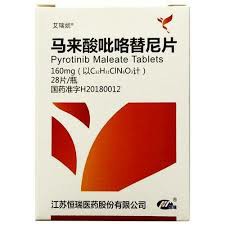
In many cancer treatments, complete tumor disappearance (CR, Complete Response) is one of the ideal goals of treatment efficacy. Studies of pyrotinib as monotherapy or in combination have shown promising results for patients with HER2-positive breast cancer. Studies have shown that in some patients, after pyrotinib treatment, the size of the tumor significantly reduced, and some patients even achieved complete remission, with the tumor "disappearing" or reaching very low residual levels.
In a major clinical trial, some patients with HER2-positive breast cancer who received pyrotinib experienced significant reductions in tumor size and significant improvement in tumor marker levels. Although the vast majority of patients fail to completely eliminate their tumors, some achieve partial remission and stable disease. For some high-risk or advanced-stage patients, the use of pyrotinib provides them with new treatment options and helps prolong survival.
In addition, pyrotinib also showed stronger efficacy when used in combination with chemotherapy drugs. Combination therapy allows drugs to act on tumor cells from different angles, enhancing the comprehensiveness of treatment and thus increasing the possibility of complete remission. Especially for those patients who have received other treatments but failed to obtain adequate response, the combination treatment of pyrotinib and chemotherapy drugs has become an effective option.
Although pyrotinib is primarily used to treat HER2-positive breast cancer, its targeting is not limited to breast cancer and other types of tumors may also benefit from this drug. For example, HER2 is also widely expressed in some solid tumors such as gastric cancer and esophageal cancer. Therefore, the potential application of pyrotinib in these cancers is being further explored. Through the advancement of clinical research, pyrotinib may provide treatment options for more tumor types in the future, especially for HER2-positive advanced or metastatic cancers.
Reference materials: https://www.drugs.com
[ 免责声明 ] 本页面内容来自公开渠道(如FDA官网、Drugs官网、原研药厂官网等),仅供持有医疗专业资质的人员用于医学药学研究参考,不构成任何治疗建议或药品推荐。所涉药品可能未在中国大陆获批上市,不适用于中国境内销售和使用。如需治疗,请咨询正规医疗机构。本站不提供药品销售或代购服务。


