
.jpeg)
The mechanism of action and clinical analysis of Midostaurin in the treatment of leukemia
1. Drug overview and indications
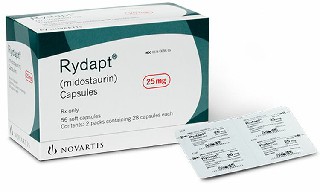
Midostaurin is an oral multi-target tyrosine kinase inhibitor mainly used to treat FLT3 mutation-positive acute myeloid leukemia (AML) and certain systemic mastocytosis (SM). In AML, FLT3 gene mutation (especially intron duplication type FLT3-ITD) is one of the most common pathogenic gene abnormalities and is closely related to high recurrence rate and poor prognosis. By inhibiting FLT3 and other related kinases, Midostaurin blocks abnormal signaling pathways, inhibits leukemia cell proliferation, and promotes apoptosis, thereby providing a new treatment option for relapsed or refractory AML.
2. Analysis of the mechanism of action
Midostaurin is an oral small molecule multi-targeted tyrosine kinase inhibitor. Its main targets include FLT3, KIT, PDGFR, VEGFR, etc. In leukemia cells, FLT3-ITD mutations lead to sustained activation of the receptor, initiating downstream PI3K/AKT, RAS/MAPK and STAT5 signaling pathways, promoting leukemia cell proliferation and resistance to apoptosis. Midostaurin can compete with the FLT3 ATP binding site and inhibit the kinase activity, thereby blocking signal transduction and reducing the survival rate of leukemia cells. In addition, its inhibitory effect on KIT and PDGFR can further inhibit the supporting effect of pro-leukemia signals in the bone marrow microenvironment, thereby enhancing the anti-leukemia efficacy.
3. Clinical efficacy analysis
In the treatment of AML, the most important application scenario of midostaurin is in adult acute myeloid leukemia patients with FLT3 mutations. The pivotal phase III clinical study (RATIFY trial) showed that combined with standard chemotherapy (cytarabine+Daunorubicin) patients who took midostaurin had a significantly longer median overall survival (OS), which was significantly improved compared to the placebo group (OS (74.7 months vs 25.6months). The complete response rate (CR) was also significantly improved in the combination treatment group, suggesting that midostaurin can enhance the efficacy of chemotherapy and improve prognosis. The trial also showed that the drug has a certain effect on both FLT3-ITD and TKD mutations, especially for patients with high ITD burden.
In real-world studies, midostaurin is conveniently administered orally and can be used during chemotherapy and before and after hematopoietic stem cell transplantation to help control leukemia burden in the bone marrow. Some studies have shown that patients taking midostaurin in combination may reduce relapse rates and provide a better bridge to transplantation. In relapsed or refractory AML, the use of single drug has also shown that some patients can achieve stable disease or improve blood levels, but the efficacy is generally lower than that of combination chemotherapy, suggesting that it is more suitable as a combination regimen.
4. Adverse reactions and management
Common adverse reactions of midostaurin include nausea, vomiting, diarrhea, fever, bone marrow suppression, QT prolongation, etc. Myelosuppression may aggravate chemotherapy-induced neutropenia or thrombocytopenia, so the blood picture needs to be closely monitored during combination chemotherapy, and the dose should be adjusted or delayed based on platelet and neutrophil levels. QTProlongation is rare, but special attention is needed in patients with previous heart disease or other QTprolonging drugs, and regular electrocardiogram monitoring is recommended. Adverse gastrointestinal reactions can be managed by taking the medication in divided doses, taking it after meals, and using anti-nausea medications.
5. Clinical Application and Treatment Strategies
The use of midostaurin in AML has become part of the standard chemotherapy combination regimen for patients with FLT3 mutations. Its mechanism of action and clinical studies show that by targeting the FLT3 signaling pathway, event-free survival and overall survival can be effectively prolonged, while providing favorable conditions for subsequent hematopoietic stem cell transplantation. In clinical practice, the application of midostaurin needs to be combined with gene mutation detection, blood picture monitoring, electrocardiogram and liver and kidney function assessment to formulate an individualized treatment plan. For patients with good tolerance, it can be used continuously to maintain blood concentration and efficacy; for patients with intolerance, the dose needs to be adjusted or combined with other targeted drugs to optimize the efficacy.
In general, midostaurin is an effective multi-target tyrosine kinase inhibitor that exerts anti-leukemia effects by inhibiting FLT3 and related signaling pathways. In clinical trials and in the real world, its combination with chemotherapy significantly improved FLR3mutationsAMLPatient survival prognosis and support for hematopoietic stem cell transplantation. Despite the risks of bone marrow suppression, gastrointestinal reactions and electrocardiogram, through reasonable monitoring and dose management, it can be safely and effectively applied in clinical practice, providing an important targeted therapy option for AML patients.
Reference materials:https://www.drugs.com/
[ 免责声明 ] 本页面内容来自公开渠道(如FDA官网、Drugs官网、原研药厂官网等),仅供持有医疗专业资质的人员用于医学药学研究参考,不构成任何治疗建议或药品推荐。所涉药品可能未在中国大陆获批上市,不适用于中国境内销售和使用。如需治疗,请咨询正规医疗机构。本站不提供药品销售或代购服务。


