
.jpeg)
Adjuvant durvalumab plus temsilimumab improves DFS after renal cell carcinoma resection
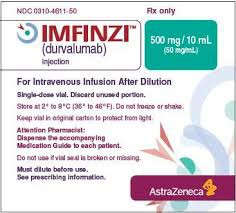
RAMPART Preliminary results from a phase 3 clinical trial (NCT03288532) show that adjuvant medication after resection of primary renal cell carcinoma (RCC) is less effective than active surveillance. Durvalumab/Infinifer (Durvalumab) combined with tremelimumab can improve disease-free survival (DFS). The findings suggest that improvements in DFS were largely driven by treatment outcomes in patients who were at higher risk of relapse.
A striking result was seen in a group of patients who were at high risk for cancer recurrence after surgery, with a relative reduction in risk of recurrence of more than 43%. These are very promising findings, confirming the benefits of immunotherapy in treating high-risk renal cell carcinoma. The study enrolled patients in 3 treatment groups in a 3:2:2 manner: active surveillance group (a group; n=340), durvalumab 1500 mg Q4W treatment for 1 year (B group; 225), durvalumab 1500mg Q4 treatment for 1 year, plus tilvalumab 75 on day 1 and week 4 mg (C group; n=225). The primary endpoint was DFS.
The data reported by ESMO included a comparison between the C arm (imrvalumab plus tecilumab) and the a arm (active surveillance). Baseline characteristics were well balanced between treatment groups. The primary analysis in this study had 80% power to detect an effect, with a one-sided significance level of 0.0129.
In the landmark 3 year analysis in the intention-to-treat population, data showed DFS was 81% in the durvalumab plus temsilimumab arm compared with 73% in the active surveillance arm ( HR, 0.65; 95%CI, 0.45 to 0.93; one-sided P=0.0094). Evaluate DFS by risk groupAt that time, the 3-year DFS of patients with a higher risk of recurrence in the durvalumab plus temsilimumab group was 78% (n=122), while that in the active surveillance group was 61% (n= 189) (HR, 0.52; 95%CI, 0.34 to 0.80; one-sided P=0.0016). In the intermediate-risk group, the 3-year DFS was 86% in the durvalumab plus temsilimumab group (n=103) and 87% in the active surveillance group (n=151). /span>, this did not reach statistical significance (HR, 1.19; 95%CI, 0.61 to 2.32; one-sided P=0.309).
Interaction testing "provided good evidence of an interaction between risk of relapse and disease-free survival," with an HR of 0.43 (95% CI, 0.19 to 0.95; P=0.019). Across all exploratory subgroups, DFS favored the treatment group over the control group. The median duration of treatment was 10.9 months (range, 0 to 13.3 months). Overall, 23% of patients completed treatment according to the protocol, 24% received 13 infusions of valumab, and 73% received concurrent infusions of temsilimumab.
The incidence of adverse events (AE) of any grade was 97% in the treatment group and 63% in the control group. Grade 3 or higher adverse events were reported by 40% of patients in the durvalumab plus temselimumab group, and 8% of patients in the active surveillance group reported grade 3 or higher adverse events. 15 people died in the active surveillance group, and 9 people died in the epidural / Treme group. It was noted that 4 patients had 6 cases of myocarditis [severe] adverse events, of which 2 unfortunately resulted in death. All-cause adverse events were consistent with expectations for the checkpoint inhibitor combination.
Quality of life data showed that from baseline to 15Months, there were no statistically significant differences between the two groups in changes in overall health and quality of life (mean difference, 1.0; 95% CI, -4.6 to 6.5; P=0.7324). Results of durvalumab versus active surveillance, B versus A, are expected to be published in 2026, depending on how quickly incidence rates increase.
References: https://www.urologytimes.com/view/adjuvant-durvalumab-plus-tremelimumab-after-rcc-resection-improves-dfs
[ 免责声明 ] 本页面内容来自公开渠道(如FDA官网、Drugs官网、原研药厂官网等),仅供持有医疗专业资质的人员用于医学药学研究参考,不构成任何治疗建议或药品推荐。所涉药品可能未在中国大陆获批上市,不适用于中国境内销售和使用。如需治疗,请咨询正规医疗机构。本站不提供药品销售或代购服务。


