
.jpeg)
Does treatment with Mitotane require continuous medication?
Mitotane(Mitotane) is a special type of anti-tumor drug that requires "long-term managed treatment", so many patients will have questions: Do they have to be taken continuously? The answer needs to be comprehensively judged based on the type of disease, response status, and guideline recommendations. Overseas professional information generally emphasizes that its treatment methods tend to be long-term maintenance rather than short-term use.
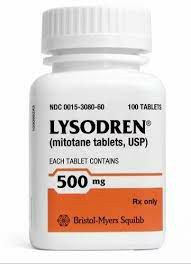
Mitotane is mainly used to treat adrenocortical cancer (ACC; adrenal cancer) and control related hormone excess symptoms. Its biological characteristics determine that it takes a long time for the drug to reach a steady-state concentration in the body. From the perspective of pharmacological mechanism, mitotane causes tumor cells to gradually lose activity by destroying adrenocortical cells and inhibiting hormone synthesis. This effect is not achieved overnight, but requires continuous accumulation. In addition, drugs accumulate in adipose tissue in large amounts and are cleared slowly, so treatment management often spans months or even years.
In the guidelines, mitotane treatment is generally divided into three stages: initiation period, dose adjustment period and maintenance monitoring period. The start-up phase focuses on tolerance; the adjustment phase requires regular monitoring of blood drug concentration to maintain it within the effective range; the maintenance phase requires long-term medication to ensure that the disease is under control. When the blood drug concentration drops to a low level, the drug efficacy may also decrease, so interrupting medication often affects the control effect. Many international experts emphasize that "maintenance treatment" is one of the core strategies of this drug.
Whether“Always take medication” depends on the condition. For example, for patients with a high risk of recurrence after surgery, long-term use of mitotane can be used as adjuvant therapy; for cases that have metastasized or are inoperable, continued medication is more necessary to maximize the inhibitory effect. However, if the patient experiences obvious intolerance, serious adverse reactions, or the doctor believes that the condition is stable and the risk is low, the regimen may be adjusted appropriately or use may be suspended.
Reference materials:https://go.drugbank.com/drugs/DB00648
[ 免责声明 ] 本页面内容来自公开渠道(如FDA官网、Drugs官网、原研药厂官网等),仅供持有医疗专业资质的人员用于医学药学研究参考,不构成任何治疗建议或药品推荐。所涉药品可能未在中国大陆获批上市,不适用于中国境内销售和使用。如需治疗,请咨询正规医疗机构。本站不提供药品销售或代购服务。


