
.jpeg)
The difference between erlotinib/Tarceva and anlotinib
Erlotinib and Anlotinib are both targeted drugs that have attracted attention in the treatment of lung cancer and other solid tumors in recent years. However, they have obvious differences in their mechanisms of action, scope of indications, pharmacological properties and clinical application strategies. Understanding these differences is important for patients to choose treatment options and for doctors to develop individualized treatment plans.
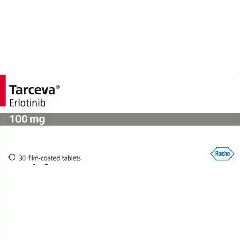
From the perspective of drug type and targeting mechanism, erlotinib is a small molecule epidermal growth factor receptor (EGFR) tyrosine kinase inhibitor. It mainly targets EGFR mutant tumors by inhibiting receptor tyrosine kinase activity and blocking downstream signaling pathways, thereby inhibiting tumor cell proliferation, inducing differentiation and apoptosis. Erlotinib is particularly suitable for patients with EGFR exon 19 deletions or exon 21 (L858R) substitution mutations in non-small cell lung cancer (NSCLC). It is a typical precision targeted drug, and its efficacy depends on the selective matching of tumor genotypes.
In contrast, anlotinib is a multi-target tyrosine kinase inhibitor, its effect is not limited toEGFR, but also includes multiple targets such as vascular endothelial growth factor receptor (VEGFR), fibroblast growth factor receptor (FGFR), platelet-derived growth factor receptor (PDGFR), etc. Because of this, anlotinib shows advantages in anti-angiogenesis and inhibiting tumor microenvironment remodeling. It not only directly affects tumor cell proliferation, but also inhibits tumor blood supply by blocking angiogenesis, thus having certain application value in a variety of solid tumors, including advanced lung cancer, soft tissue sarcoma, etc.
In terms of indications, erlotinib is mainly used NSCLC with EGFR-sensitive mutations and locally advanced or metastatic pancreatic cancer treated in combination with chemotherapy. It emphasizes precise medication and requires mutation detection to ensure efficacy. Anlotinib has been approved in China for the second-line or third-line treatment of advanced non-small cell lung cancer, soft tissue sarcoma and some solid tumors. Its applicable population depends more on clinical pathological classification and treatment tolerance, rather than just a single gene mutation.
In terms of pharmacokinetics and administration, erlotinib is a once-daily oral preparation, and its homeostasis relies on long-term regular administration. Anlotinib is also an oral preparation, but it usually adopts a cyclic medication regimen, such as continuous medication for several weeks and then intermittent discontinuation to balance the efficacy and toxicity. In terms of toxicity spectrum, the most common side effects of erlotinib include rash, diarrhea, and mild to moderate liver function abnormalities, while anlotinib may cause vascular-related adverse reactions such as increased blood pressure, hand-foot syndrome, bleeding, or proteinuria due to its multi-target properties.
Overall, the main differences between erlotinib and anlotinib lie in target selectivity, mechanism of action, indications and toxicity spectrum. Erlotinib emphasizes the precise targeting of a single gene mutation, with clear and controllable efficacy; anlotinib relies on its multi-target effect to have the advantages of both anti-tumor proliferation and anti-angiogenesis, and is more suitable for tumors with unclear gene mutations or dependence on multiple pathways. In clinical practice, the two are not completely mutually exclusive. Instead, the most appropriate treatment strategy is selected based on the patient's specific condition, genetic test results, and tolerance, providing diversified options for precise tumor management.
Reference materials:https://en.wikipedia.org/wiki/Erlotinib
[ 免责声明 ] 本页面内容来自公开渠道(如FDA官网、Drugs官网、原研药厂官网等),仅供持有医疗专业资质的人员用于医学药学研究参考,不构成任何治疗建议或药品推荐。所涉药品可能未在中国大陆获批上市,不适用于中国境内销售和使用。如需治疗,请咨询正规医疗机构。本站不提供药品销售或代购服务。


