
.jpeg)
Datopotamab Instructions and Medication Instructions
Datopotamab (Datopotamab) is an innovative anti-tumor drug based on antibody-drug conjugate (ADC) technology. It is composed of a humanized antibody targeting Trop-2 and a topoisomerase I inhibitor payload DXd connected through a cleavable linker. The drug combines precise targeting and potent cytotoxicity, and can efficiently deliver the drug load in Trop-2-expressing tumor cells. It is one of the treatment options that has attracted much attention in the current field of tumor targeted therapy. The following is a systematic summary of its indications, dosage, adverse reactions, pharmacological mechanisms and storage requirements.
1. Indications
Dedabrotuzumab as Trop-2 ADC, is mainly used for the following two types of adult patients with advanced solid tumors:
1. Unresectable or metastatic HR-positive, HER2-negative breast cancer: Applicable to adult breast cancer patients who are hormone receptor (HR)-positive and HER2-negative (including IHC 0, IHC 1+, IHC 2+/ISH–). Often these patients have received standard endocrine therapy and chemotherapy at the locally advanced or metastatic stage, but the disease continues to progress. The action characteristics of DATROWAY enable it to provide a new option after multi-line treatment, bringing more benefit opportunities to patients with endocrine resistance and lack of further treatment options.
2. Locally advanced or metastatic non-small cell lung cancer (NSCLC) with EGFR mutations: Applicable to adult patients who still experience disease progression after receiving EGFR-targeted therapy (such as first to third generation TKI) and platinum-based chemotherapy. Such patients often have limited options after exhaustion of traditional treatments, and Trop-2, as a highly expressed marker in a variety of lung cancers, makes DATROWAY a potentially effective late-line treatment option.
2. Recommended dosage and administration method
The administration method of dabrotomab needs to strictly follow the intravenous infusion process and be combined with pre-treatment medication to ensure patient tolerance and infusion safety:
1. Dose recommendation:6mg/kg, intravenous infusion once every 3 weeks (21 days as a cycle). For patients weighing ≥90kg, the maximum dose limit is 540mg.
2. Solvent requirements: First reconstitute with sterile water for injection, and then dilute with 5% glucose injection to the final infusion volume. It is prohibited to use sodium chloride injection for dilution to avoid affecting drug stability.
3. Infusion method: intravenous infusion only, no intravenous push or rapid drip.
4. Pretreatment medication: Anti-allergy and nausea and vomiting prevention medications need to be given before treatment to reduce infusion reactions.
5. Continuation of treatment: Continuous infusion until disease progression or unacceptable toxicity occurs is a common ADC treatment strategy.
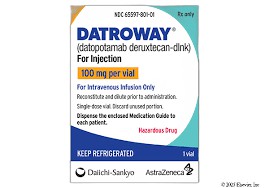
3. Overview of adverse reactions
As an ADC loaded with topoisomerase inhibitors DATROWAY has certain adverse reactions. In clinical application, common (≥20%) adverse reactions include:
Gastrointestinal symptoms: stomatitis, nausea, vomiting, constipation;
Hematological abnormalities: leukopenia, lymphopenia, neutropenia, hemoglobin decrease;
Metabolism related: decreased blood calcium;
Skin and hair changes: hair loss;
Eye symptoms: dry eye, keratitis;
Laboratory indicators are elevated:ALT, AST and alkaline phosphatase are elevated;
Other common complaints: Fatigue.
Most of the above reactions are related to drug mechanisms such as cytotoxicity and targeting Tissue distribution of Trop-2. Clinically, it is necessary to regularly monitor blood and liver function, pay attention to changes in the patient's eye symptoms, and provide supportive treatment or dose adjustment if necessary.
4. Pharmacological effects and mechanism of action
The anti-tumor effect of dabrotomab comes from its ADC "trinity" structure:
1. Targeting The antibody part of Trop-2: Trop-2 is a commonly expressed protein in a variety of solid tumors (especially breast cancer and lung cancer). The antibody (humanized IgG1) selectively recognizes and binds to Trop-2 on the surface of tumor cells, enabling precise delivery.
2. DXd (topoisomerase I inhibitor) payload: DXd is a highly effective cytotoxic drug that can block the topoisomerase I pathway of DNA, trigger double-strand breaks, and ultimately lead to tumor cell apoptosis.
3. Cleaved linker technology: After the antibody binds Trop-2, the ADC complex is engulfed by the tumor cells and enters the lysosome, and the linker is cleaved within the cell, thereby releasing DXd. DXd has membrane permeability, which can further produce a bystander effect on surrounding tumor cells and enhance its killing ability.
In breast cancer mouse models,DATROWAY has shown significant anti-tumor activity, supporting the rationale for its clinical development.
5. Storage and handling requirements
Dedabrotuzumab is a dangerous drug that requires strict management, and its storage and handling must follow relevant regulations:
Storage temperature:Refrigerate at 2℃-8℃.
Light Protection: Keep in original packaging and away from light.
Contraindications: Do not freeze, do not shake the reconstituted or diluted solution.
Handling of hazardous drugs: Special handling and waste disposal procedures for chemotherapy drugs must be followed during use.
Reference materials:https://dailymed.nlm.nih.gov/
[ 免责声明 ] 本页面内容来自公开渠道(如FDA官网、Drugs官网、原研药厂官网等),仅供持有医疗专业资质的人员用于医学药学研究参考,不构成任何治疗建议或药品推荐。所涉药品可能未在中国大陆获批上市,不适用于中国境内销售和使用。如需治疗,请咨询正规医疗机构。本站不提供药品销售或代购服务。


