
.jpeg)
Summary and analysis of Zongertinib clinical trial data and drug resistance
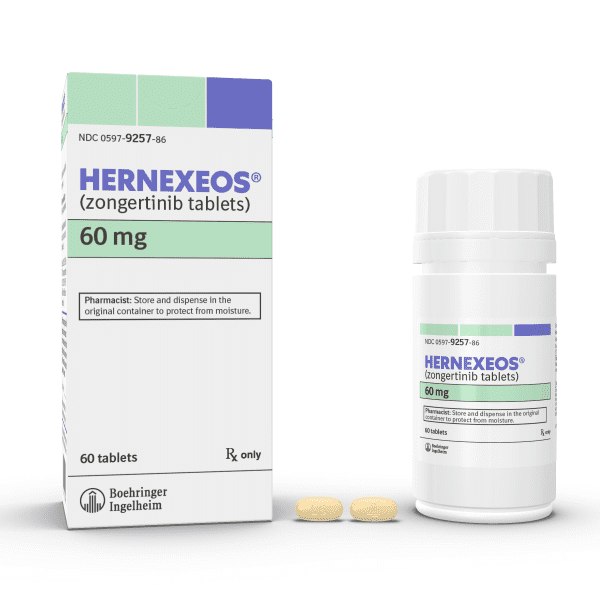
Zongertinib (also known as Zongertinib) is an oral irreversible, highly selective HER2 (also known as ERBB2) tyrosine kinase inhibitor (< /span>TKI), mainly used to treat patients with advanced or metastatic non-small cell lung cancer (NSCLC) carrying HER2 activating mutations. HER2 mutations account for a relatively low proportion of NSCLC, about 2% to 4%, and are mostly manifested as tyrosine kinase domain (TKD) insertions or point mutations. Traditional chemotherapy has limited efficacy in these patients, and there is an urgent need for targeted therapeutic drugs in clinical practice. Zongertinib is highly selective against HER2 TKD mutations and can effectively inhibit tumor cell proliferation signals, demonstrating good anti-tumor potential.
In terms of clinical trials, the Ⅰ/Phase IIBeamion LUNG-1 study is an important source of clinical data for zongatinib. The study is a dose escalation and expansion study in multiple groups of patients with HER2 mutated advanced solid tumors. Data show that in TKD mutated NSCLC patients, 120mgThe objective response rate (ORR) of the >dose group was approximately71%, and the disease control rate ( DCR) is close to 96%, and the median duration of response (DOR) is about < span>14.1 months, and the median progression-free survival (PFS) is approximately 12.4 months. For treatment-naïve patients, ORR can reach 77%, DCR is about 96%, The duration of remission at 6 months is about 80%, and the PFS at 6 months is about 79%. These data indicate that zongatinib is effective in HER2mutantNSCLC has high and durable anti-tumor activity and can provide an effective treatment option for this subtype of patients.
Despite the promising efficacy, drug resistance remains a challenge in clinical application. As treatment time increases, tumors may acquire drug resistance through a variety of mechanisms, such as structural changes in HER2 leading to changes in drug binding sites, bypass activation of downstream signaling pathways (such as PI3K-AKT, MAPK), enhanced drug efflux mechanisms, or changes in the tumor microenvironment. Beamion LUNG-1In the study of African TKD mutations, the ORR was only about 30%, showing limited efficacy. In addition, some patients may develop brain metastases during treatment. Although certain ORR (approximately 41%) and DCR (approximately 81%) are still observed in patients with brain metastases, the resistance mechanism and persistence of efficacy still require further observation. Future clinical studies will focus on evaluating the application value of zongertinib in different mutation subtypes, combination therapy and resistance delay strategies.
In terms of safety, zongatinib was generally well tolerated. Ⅰ/Phase II studies show that the rate of grade III or above adverse events is around 17% and common side effects Effects include diarrhea, rash, elevated ALT/AST, etc. No drug-related interstitial lung disease (ILD) has been observed. The recommended dose is 120mg QD. If obvious side effects occur in clinical practice, the dose may be adjusted appropriately or the medication interval may be extended. When using zongatinib, regular blood routine monitoring, liver and kidney function, and blood pressure must be monitored to ensure medication safety and stable efficacy.
The clinical significance of Zongertinib is to provide a new oral targeted therapy for patients with HER2 mutationsNSCLC. It has high selectivity, significant efficacy and good tolerance, bringing hope to refractory patients. In clinical practice, HER2 mutation detection (especially TKDmutations) to screen applicable patients; follow the recommended dosage and regularly monitor efficacy and safety indicators; at the same time, assess the risk of drug resistance in advance and consider combination therapy or adjustment of the regimen if necessary. In the future, phase III clinical trials will further verify its efficacy and safety and provide a basis for the drug to be officially approved for marketing. In summary, zongatinib has shown breakthrough potential in the treatment of HER2 mutated NSCLC, but its long-term efficacy, resistance mechanisms and optimal usage strategies still require continued research and clinical verification.
Reference materials:https://www.drugs.com/
xa0
[ 免责声明 ] 本页面内容来自公开渠道(如FDA官网、Drugs官网、原研药厂官网等),仅供持有医疗专业资质的人员用于医学药学研究参考,不构成任何治疗建议或药品推荐。所涉药品可能未在中国大陆获批上市,不适用于中国境内销售和使用。如需治疗,请咨询正规医疗机构。本站不提供药品销售或代购服务。


