
.jpeg)
Comparison of the efficacy of ponatinib and orebatinib and their applicability in different patient groups
Ponatinib and olverembatinib (Olverembatinib, also known as olverembatinib or HQP1351) are both third-generation oral BC R-ABLTyrosine kinase inhibitor (TKI), mainly used for chronic myelogenous leukemia (CML) and Philadelphia chromosome-positive acute lymphoblastic leukemia (Ph+ ALL) patients. The two are similar in molecular targeting, resistance overcoming ability and clinical application, but there are still some differences, resulting in different applicability in different patient groups. The following is a detailed analysis from four aspects: pharmacological mechanism, clinical efficacy, drug resistance and patient group selection.
First of all, in terms of pharmacological mechanism, ponatinib is a broad-spectrum BCR-ABL inhibitor that can target multiple mutant BCR-ABL, including T315I mutation. T315IMutation often leads to first-generation (imatinib) and second-generation (dasatinib, nilotinib) TKI resistance. Ponatinib, because of its unique binding conformation, can effectively inhibit T315I and other drug-resistant mutant strains. Orebatinib is also a third-generation TKI. After optimizing its molecular structure, it has been shown to be effective against T315IT315I in vitro and in clinical trials. an> and other common drug-resistant mutations, while its selectivity is high and its inhibitory effect on non-BCR-ABLkinases is relatively small, so it theoretically has a lower risk of non-specific side effects.
Secondly, in terms of clinical efficacy, both showed significant efficacy in T315I positive and multi-drug resistant CML patients. Ponatinib showed in the PACE study that patients with chronic phase CML had complete cytogenetic changes 12 months after use. The rate of molecular remission (CCyR) can reach 56%, and the rate of deep molecular remission (MR4.5) has also been significantly improved. Chromosome positive in PhiladelphiaALLAmong patients, ponatinib combined with chemotherapy can significantly improve the complete response rate and event-free survival. Clinical studies of orebatinib (such as the CCMR-202 study) have shown that in the chronic phase CML Among T315Ipositive patients, approximately 70% patients achieved complete cytogenetic remission within 12 months, and the rate of deep molecular remission was also high. Although both have significant efficacy, orebatinib is more commonly used in China and some Asian populations. Clinical data shows that it is well tolerated, with the main side effects being thrombocytopenia and rash, and a low incidence of serious cardiovascular events.
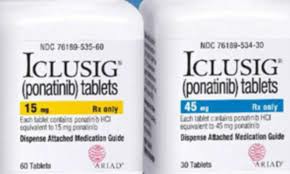
Thirdly, in terms of drug resistance and safety, although ponatinib has strong efficacy, it has relatively high cardiovascular risks, including thrombosis, myocardial infarction and stroke. It should be used with caution especially in high-risk patients (such as older patients, hypertension or diabetes). Orebatinib is designed to optimize its molecular selectivity and reduce the inhibition of non-BCR-ABLkinases. Therefore, the incidence of vascular events is lower, but it is also necessary to pay attention to hematological toxicities, such as neutrophils and thrombocytopenia. For patients with multidrug resistance or T315I positivity, both are preferred drugs, but in patients with high cardiovascular risk, orebatinib may be more suitable.
Finally, in terms of applicability to patient groups, ponatinib is more suitable for patients with chronic, accelerated and acute phase CML who have failed previous TKI treatment or T315I mutation positive, and Ph+ ALL patients have rich clinical experience, especially in Europe and the United States. Orebatinib is widely used in patients with CML's T315I mutation in the chronic phase. It is especially suitable for Asian populations or patients with high cardiovascular risk. It is also used as rescue treatment for patients in the chronic phase of multi-drug resistance. In clinical selection, an individualized plan should be formulated based on the patient's type of drug-resistant mutation, previous TKI treatment history, cardiovascular risk, and drug availability to reduce the risk of adverse events while ensuring efficacy.
To summarize, both ponatinib and orebatinib are third-generation TKIs, which are effective in drug-resistant CML and Ph+ ALLplays an important role in treatment. Ponatinib has strong efficacy but high cardiovascular risk, while orebatinib has higher selectivity and more controllable side effects with similar efficacy. In clinical practice, individualized drug selection should be made based on the patient's drug-resistant mutation type, disease stage, previous treatment, and cardiovascular risk to achieve optimal efficacy and safety.
Reference materials:https://www.drugs.com/
[ 免责声明 ] 本页面内容来自公开渠道(如FDA官网、Drugs官网、原研药厂官网等),仅供持有医疗专业资质的人员用于医学药学研究参考,不构成任何治疗建议或药品推荐。所涉药品可能未在中国大陆获批上市,不适用于中国境内销售和使用。如需治疗,请咨询正规医疗机构。本站不提供药品销售或代购服务。


