
.jpeg)
Detailed instructions on the correct usage and dosage of telisotuzumab-EMRELIS and clinical use guidelines
Telisotuzumab vedotin‑tllv (trade name EMRELIS) is a new type of antibody-drug conjugate (ADC) that mainly targets c‑MET Protein overexpression in patients with non-squamous non-small cell lung cancer (NSCLC). Its structure consists of a monoclonal antibody targeting c‑MET and a microtubule inhibitor MMAE (monomethyl auristatin E) is coupled through a stable linker. The drug recognizes c‑MET on the surface of tumor cells and transports MMAE directly into tumor cells, triggering microtubule depolymerization, cell cycle arrest and apoptosis. Since c‑MET is highly expressed in many non-squamous NSCLC tumor cells but is lowly expressed in most normal tissues, the drug theoretically has good tumor selectivity and therapeutic index.
EMRELIS The clinical indications are mainly for patients with locally advanced or metastatic non-squamous NSCLC whose tumors have high c‑MET protein expression (IHC score ≥50% of ’s 3+). These patients typically have received at least one standard systemic therapy, including platinum-based chemotherapy or immune checkpoint inhibitors. FDA approved the drug as an accelerated approval drug in 2025 5 month, mainly based on the II period DeLLphi‑301 Data from the study. The study showed that the objective response rate for patients receiving standard dose treatment was approximately 40%, and some patients achieved sustained remission, suggesting that the drug has clinical benefit in patients with NSCLC after failure of chemotherapy. Latest III Issue DeLLphi‑304 The study further showed that EMRELIS can significantly reduce the risk of death, with the median overall survival (mOS) increased from 8.3 months for traditional treatment to 13.6 months for progression or recurrence. NSCLC Patients are provided with new and effective treatment options.
In terms of standard usage and dosage, EMRELIS the recommended dose is 1.9 mg/kg intravenously infused once every two weeks until disease progression or intolerable adverse reactions occur. For patients weighing ≥100 kg , the upper dose limit is 190 mg. The infusion time is usually around 30 minutes. The initial drug treatment phase usually adopts a "step‑up" dosage regimen to reduce the risk of cytokine release syndrome (CRS), such as 1 given on day 1 mg, 10 mg on day 8 and day 15 , then maintenance standard dose every two weeks. During the treatment, it needs to be carried out in a medical institution capable of handling severe infusion reactions, and blood routine, liver and kidney function, peripheral nerves and respiratory system conditions should be monitored at the same time.
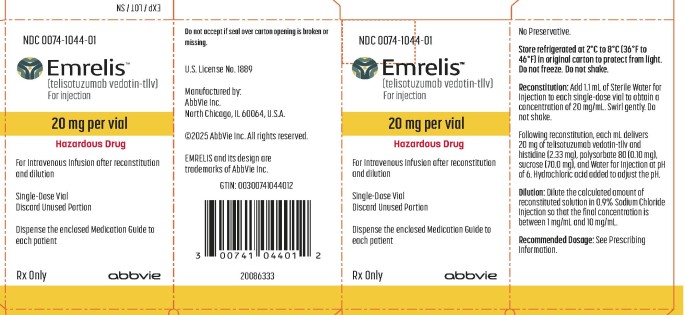
Adverse reaction management is EMRELIS the key to clinical use. Common toxicities include peripheral neuropathy (e.g., numbness, tingling), fatigue, decreased appetite, swelling, and ocular or pulmonary toxicity. In patients who develop Grade ≥2 lung injury or Grade 3/4 neuropathy, treatment should be withheld and dosage adjusted according to guidelines. The dosage reduction schedule is usually the first reduction to 1.6 mg/kg, the second reduction to 1.3 mg/kg, and the third reduction to 1.0 mg/kg; if 1.0 mg/kg is still intolerable dosage, the drug will need to be permanently discontinued. In addition, drugs may cause infusion-related reactions, increased risk of infection, and hematological toxicity, and therefore require regular evaluation before and during treatment.
Patient education is also an important part of the clinical use of EMRELIS . Patients should fully understand the drug's mechanism of action, treatment goals, and possible adverse reactions, and be informed to seek medical attention promptly if they experience numbness in their hands or feet, vision changes, difficulty breathing, obvious fatigue, or swelling. At the same time, the drug may cause potential harm to the fetus. Female patients should take effective contraceptive measures during treatment and for at least 2 months after stopping the drug, while male partners need to use contraception for at least 4 months. Regarding the combined use of drugs, MMAE is a CYP3A substrate. If a strong CYP3A inhibitor is used in combination, it may lead to increased toxicity, so caution should be taken.
Clinical guidelines recommend EMRELIS for use in selected c‑MET highly expressed non-squamous NSCLC patients who need to complete companion diagnostics IHC before treatment Testing to ensure targeted indications. The efficacy needs to be evaluated regularly during treatment, including imaging examinations, tumor marker monitoring, and symptom improvement. The drug should be continued until disease progression or unacceptable toxicity occurs, which means patients may need long-term biweekly infusions. During the treatment process, symptomatic treatment, lifestyle intervention and rehabilitation management can be combined to help patients improve their quality of life.
In summary, EMRELIS as a novel ADC for c‑MET highly expressed non-squamous NSCLC A breakthrough treatment option for patients. It has significant efficacy and high target specificity, but it also has multiple manageable toxicities and monitoring requirements. Clinical use must strictly follow the dosage and administration regimen, regular follow-up and adverse reaction management principles, and at the same time, patient education and informed consent must be done. When used by experienced oncology medical institutions, EMRELIS can provide considerable survival benefits and improvement in quality of life for patients with advanced NSCLC .
Reference materials:https://www.drugs.com/
[ 免责声明 ] 本页面内容来自公开渠道(如FDA官网、Drugs官网、原研药厂官网等),仅供持有医疗专业资质的人员用于医学药学研究参考,不构成任何治疗建议或药品推荐。所涉药品可能未在中国大陆获批上市,不适用于中国境内销售和使用。如需治疗,请咨询正规医疗机构。本站不提供药品销售或代购服务。


