
.jpeg)
Safinamide Mesylate Tablets (Sittaco) Instructions and Indications, Pharmacology and Clinical Application Analysis
Safinamide mesylate tablets (Safinamide) is a new oral anti-Parkinson drug. It is a selective reversible monoamine oxidase MAO-B inhibitor and has both sodium channel blocking and glutamate regulatory effects. The drug improves various motor and non-motor symptoms in patients with Parkinson's disease through multi-target effects, providing an effective adjuvant treatment option for patients with moderate to advanced Parkinson's disease (PD). Compared with traditional MAO-B inhibitors, safinamine not only has antioxidant effects and motor symptom improvement effects, but can also alleviate accompanying non-motor symptoms to a certain extent, such as fatigue, depression, and cognitive dysfunction.
In terms of pharmacological mechanism, safinamine mainly prevents the degradation of dopamine in the central nervous system by selectively inhibiting MAO-B enzyme activity, thereby increasing the concentration of dopamine in the synaptic cleft and improving dopaminergic nerve signal transmission. This mechanism is particularly effective in improving motor symptoms in patients with Parkinson's disease, including alleviating resting tremor, stiffness, bradykinesia and movement fluctuations. In addition, safinamine also has glutamate regulatory effects, which can inhibit the activity of overexcited glutamate neurons, reduce neurotoxic damage, and may reduce motor complications such as "on--off" phenomenon and dyskinesia. Its sodium channel blocking effect further enhances the neuroprotective potential and has certain significance for long-term neuromodulation of the central nervous system.
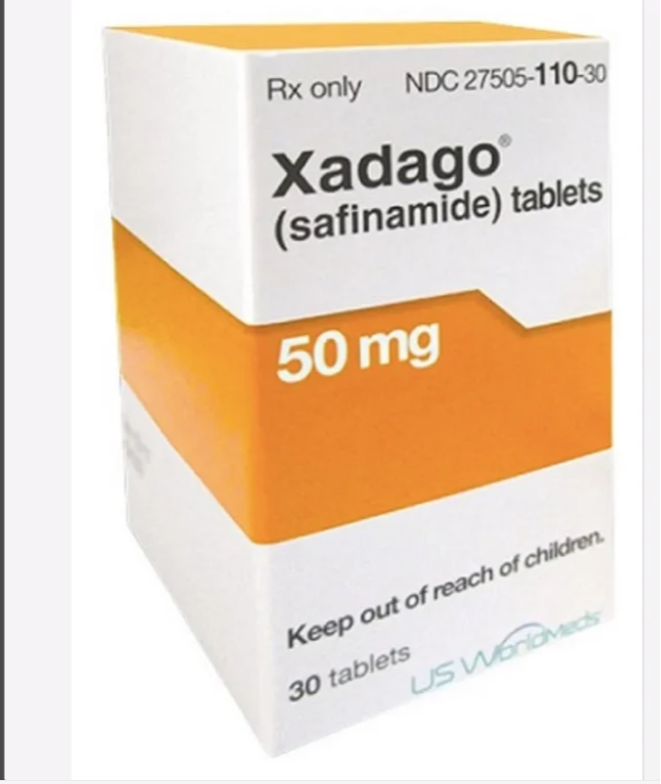
The indications of safinamide mesylate are mainly adjuvant treatment of Parkinson's disease, especially those patients who experience "on-off" fluctuations or unstable motor symptoms after treatment with levodopa (Levodopa). Clinical studies have shown that safinamide can significantly extend the "on" period and reduce the duration of the "off" period, while improving daily activities and quality of life. In patients with early-stage Parkinson's disease, safinamine can be used in combination with levodopa or dopamine receptor agonists to delay drug treatment dose escalation and the development of motor complications.
In terms of clinical application, oral administration of safinamide is simple, usually once a day, and the dose can be adjusted according to patient tolerance and clinical response. Common adverse reactions include insomnia, headache, nausea, increased blood pressure, and mild to moderate movement abnormalities, but most patients can tolerate it and do not need to discontinue the drug. It should be noted that patients should avoid taking other MAOs while taking safinamine.Inhibitors, tyrosine-rich foods, or serotonergic drugs to prevent increased blood pressure or serotonin syndrome. Clinical follow-up should pay attention to blood pressure, movement fluctuations and psychological status, and combine functional scores to evaluate the efficacy.
In short, safinamide mesylate tablets can significantly improve the motor and non-motor symptoms of patients with Parkinson's disease through multi-target pharmacological effects, and is especially suitable for patients in the middle and late stages who experience fluctuations in levodopa treatment. Its unique MAO-B inhibition, glutamate regulation and sodium channel blocking mechanisms make it superior in motor symptom control, motor complications relief and neuroprotection. Standardized medication, reasonable dose adjustment and regular follow-up can enable patients to improve motor function while reducing the risk of adverse reactions, significantly improving quality of life and treatment compliance.
Reference materials:https://www.drugs.com/
[ 免责声明 ] 本页面内容来自公开渠道(如FDA官网、Drugs官网、原研药厂官网等),仅供持有医疗专业资质的人员用于医学药学研究参考,不构成任何治疗建议或药品推荐。所涉药品可能未在中国大陆获批上市,不适用于中国境内销售和使用。如需治疗,请咨询正规医疗机构。本站不提供药品销售或代购服务。


