
.jpeg)
Semaglutide Injection Official Instructions and Medication Guide
1. Indications:
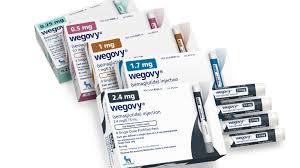
Semaglutide injection (Wegovy) is a glucagon-like peptide-1 (GLP-1) receptor agonist indicated for adults and children (12 years and older) with obesity or overweight. Its use needs to be combined with a low-calorie diet and increased physical activity. Wegovy indications include:
1. Adult patients with cardiovascular disease who are obese or overweight: This drug can be used in these patients to reduce the risk of major adverse cardiovascular events (such as cardiovascular death, non-fatal myocardial infarction, or non-fatal stroke).
2. Obesity patients:Wegovy is suitable for adults and children aged 12 years and above, especially those with obesity whose BMI is ≥30.
3. Overweight patients: It is suitable for adults who are overweight and carry at least one weight-related disease (such as hypertension, type 2 diabetes, etc.).
The use of this drug can significantly help patients lose weight and maintain the weight loss effect for a long time, especially when combined with diet and exercise treatment.
2. Usage and dosage
Semaglutide injection is administered by subcutaneous injection once a week. Patients can take the injection at any time and do not need to coincide with meal times. To ensure effectiveness, patients should receive their injections on the same day each week.
1. Initial dose escalation: Weeks 1-4: Inject 0.25 mg weekly. Weeks 5-8: 0.5 mg weekly injection. Weeks 9-12: 1 mg weekly injection. Weeks 13-16: 1.7 mg weekly injections.
2. Maintenance dose: For patients undergoing cardiovascular risk reduction or weight loss treatment, the maintenance dose is 1.7 mg or 2.4 mg per week at week 17 and beyond. Dosage selection is based on the physician's assessment and the patient's response to treatment.
3. Injection method: Semaglutide injection needs to be administered by subcutaneous injection. Patients can choose to inject at any time, and there is no need to coordinate with the time before or after meals.
4. Things to note:
The dose of semaglutide should be gradually increased strictly in accordance with the doctor's recommendations to reduce the risk of adverse reactions.
The effectiveness of this drug depends on lifestyle adjustments such as diet and exercise, and patients should strictly follow these guidelines.
3. Adverse reactions
When using semaglutide injection, the following common adverse reactions may occur, especially in adults or children 2 years old and above. According to clinical data, the incidence of the following adverse reactions is ≥5%:
1. Gastrointestinal reactions: such as nausea, vomiting, diarrhea, constipation, abdominal pain, flatulence, and gastroesophageal reflux disease.
2. Other common symptoms: headache, fatigue, dizziness, indigestion, and bloating.
3. Patients with diabetes should pay special attention:Patients with type 2 diabetes may suffer from hypoglycemia.
4. Respiratory symptoms: such as nasopharyngitis.
These adverse reactions are usually temporary and may gradually resolve as treatment continues. If symptoms are severe or persist, patients should contact their doctor promptly.
4. Pharmacological effects
Semaglutide is aGLP-1 analogue whose structure is 94% homologous to human GLP-1. GLP-1 is a physiological regulator of appetite and energy intake and is widely present in multiple areas of the brain that regulate appetite. Semaglutide promotes insulin secretion, inhibits gastric emptying, and helps reduce weight by regulating appetite by selectively activating GLP-1 receptors.
In animal experiments, semaglutide has been shown to reduce food intake by affecting neurons in the brain involved in appetite regulation. Although the mechanism of reducing cardiovascular events is not yet fully understood, studies have shown that semaglutide may indirectly reduce cardiovascular risk by reducing body weight and improving metabolic status.
5. Storage
Semaglutide injection should be stored in a refrigerated environment at 2°C to 8°C, avoid freezing, and avoid exposure to light. Unused medications should be kept in their original packaging until ready for use.
Storage temperature:Refrigerate at 2°C-8°C and can be stored for up to 28 days.
Avoid Freezing: Do not freeze this product and keep it out of direct sunlight.
Storage after opening: Once opened, it should be used within 28 days.
Reference materials:https://www.drugs.com
[ 免责声明 ] 本页面内容来自公开渠道(如FDA官网、Drugs官网、原研药厂官网等),仅供持有医疗专业资质的人员用于医学药学研究参考,不构成任何治疗建议或药品推荐。所涉药品可能未在中国大陆获批上市,不适用于中国境内销售和使用。如需治疗,请咨询正规医疗机构。本站不提供药品销售或代购服务。


