
.jpeg)
Roprostim (Huierning) complete Chinese instructions and medication guidance
Romiplostim (Romiplostim) is a recombinant human thrombopoietin receptor agonist (TPO-RA), mainly used to treat patients with chronic immune thrombocytopenia (ITP). The drug directly stimulates the proliferation and differentiation of bone marrow megakaryocytes by simulating the effect of thrombopoietin, thereby increasing platelet count and reducing the risk of bleeding. Roprostim is administered by subcutaneous injection, usually once a week, and the dose is individually adjusted according to the patient's platelet level to achieve a safe and effective platelet level. The drug itself is not a hormone, so long-term use will not cause hormone-related side effects such as osteoporosis or elevated blood sugar.
Before administering the drug, doctors need to assess the patient's platelet count, bleeding risk, and previous treatment history, including use of glucocorticoids or immunosuppressants. Roprostim is suitable for patients 18 years old and above with chronic ITP , especially those who have insufficient response to traditional treatments or are dependent on glucocorticoids. During use, patients should conduct hematology monitoring under the guidance of professional medical care, mainly including platelet count, complete blood cell count and necessary liver and kidney function indicators, so that the dose can be adjusted according to platelet levels to avoid the risk of thrombosis caused by excessive platelet elevation.
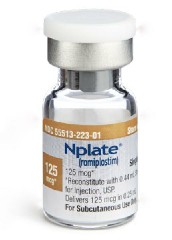
The dose adjustment is in principle the starting dose 1 μg/kg, injected subcutaneously once a week. The platelet count is monitored once a week, and the dose can be adjusted according to changes in platelets, with each adjustment not exceeding 1 μg/kg. If the platelet count rises above 400×10^9/L, the drug needs to be temporarily stopped and treatment restarted after the platelet count drops to a safe range. During long-term maintenance treatment, attention should be paid to preventing excessive platelet fluctuations. Regular follow-up and monitoring can effectively reduce the risk of thrombotic events and bleeding.
Common side effects of Roprostim include headache, joint pain, injection site reactions, and mild bone pain, which generally resolve spontaneously. A small number of patients may experience excessive elevation of platelets, increasing the risk of thrombosis; therefore, the dose should be adjusted promptly or the medication should be suspended when abnormal platelet counts occur. Patients should also pay attention to interactions with other drugs during use. For example, the combined use of anticoagulants or antiplatelet drugs may increase the risk of bleeding or thrombosis, and the plan should be adjusted according to the doctor's advice.
Overall, loprostim provides an effective and well-tolerated treatment option for patients with chronic ITP that can significantly increase platelet counts, reduce bleeding events, and improve quality of life. During medication, dosage adjustment principles must be strictly followed and regular hematology monitoring must be performed to ensure safety and efficacy. Patients should conduct long-term management under the guidance of doctors, while paying attention to side effects and thrombosis risks to achieve individualized and precise treatment.
Reference materials:https://www.cancer.gov/about-cancer
[ 免责声明 ] 本页面内容来自公开渠道(如FDA官网、Drugs官网、原研药厂官网等),仅供持有医疗专业资质的人员用于医学药学研究参考,不构成任何治疗建议或药品推荐。所涉药品可能未在中国大陆获批上市,不适用于中国境内销售和使用。如需治疗,请咨询正规医疗机构。本站不提供药品销售或代购服务。


