
.jpeg)
Comprehensive efficacy evaluation of deuterated colexitinib (decavatinib) in clinical treatment of psoriasis
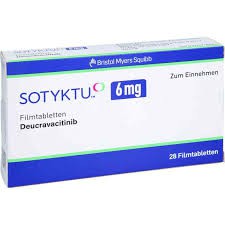
Deucravacitinib is an oral selective tyrosine kinase 2 (TYK2) inhibitor. In recent years, it has shown significant efficacy in clinical studies of psoriasis, especially moderate to severe plaque psoriasis. As one of the specific inhibitors of the JAK family, decavatinib selectively inhibits TYK2 activity and blocks downstream IL-12, IL-23 and Type IInterferon signaling pathway, thereby effectively inhibiting the inflammatory response of psoriasis and abnormal proliferation of keratinocytes. This precise targeting mechanism allows it to reduce inflammation in skin lesions while keeping side effects relatively controllable, providing patients with a new option for oral systemic treatment.
In large clinical trials, decarvatinib demonstrated high rates of improvement in dermatopathology. withPOETYK For example, in two key phase III trials of PSO-1 and PSO-2, after 16 weeks of treatment, approximately 58% to 60% of patients achieved By PASI75, that is, the psoriasis area and severity index has decreased by 75%, and more than 30% of patients have reached the PASI90 level, showing deep improvement. Compared with traditional systemic treatment drugs such as methotrexate or cyclosporine, decavatinib not only has stable efficacy, but also can be administered orally, avoiding the inconvenience caused by injection. Long-term follow-up data shows that its efficacy is maintained for 52 consecutive weeks, and some patients can continue to improve their skin appearance and itching symptoms, significantly improving their quality of life.
In terms of safety, the side effects of decavatinib are generally controllable and mild. Common adverse events include upper respiratory tract infection, headache, diarrhea and fatigue, and a few patients experienced mild elevation of blood lipids or mild elevation of aminotransferases. Specific inhibition with decavatinib reduces the risk of serious infection, thrombosis, or cardiovascular events compared with non-selective JAK inhibitors. This gives it certain advantages in long-term medication, especially for patients who have poor tolerance or contraindications to traditional systemic therapies. At the same time, clinical studies also suggest that patients still need to regularly monitor blood routine, liver and kidney function, and blood lipid levels during use to ensure medication safety.
Comprehensive efficacy evaluation shows that decavatinib is highly effective and tolerable in the treatment of psoriasis. Its oral dosage form, stable long-term efficacy, and relatively controllable safety make it an important treatment option for patients with moderate to severe plaque psoriasis. Compared with traditional biological agents, it does not require injections and has better patient compliance. It also provides a feasible alternative for patients who are unable or unwilling to use biological agents. In the future, with the accumulation of more real-world studies and long-term safety data, decavatinib is expected to occupy a more important position in the comprehensive treatment of psoriasis, and may also be expanded to the treatment of psoriatic arthritis and other inflammatory skin diseases. In conclusion, from the perspective of clinical trial data, long-term efficacy maintenance and safety, deuterated colexitinib provides psoriasis patients with a new oral systemic treatment option that is reliable in efficacy and easy to manage.
Reference materials:https://www.fda.gov/
[ 免责声明 ] 本页面内容来自公开渠道(如FDA官网、Drugs官网、原研药厂官网等),仅供持有医疗专业资质的人员用于医学药学研究参考,不构成任何治疗建议或药品推荐。所涉药品可能未在中国大陆获批上市,不适用于中国境内销售和使用。如需治疗,请咨询正规医疗机构。本站不提供药品销售或代购服务。


