
.jpeg)
Is it okay to take sunitinib for stromal tumors?
Sunitinib offers a new treatment option for patients with imatinib-resistant gastrointestinal stromal tumors to halt further progression of the disease and, in some cases, even reverse it. This was demonstrated in a large Phase III clinical trial in which patients who failed imatinib (due to primary resistance, secondary resistance, or intolerance) received sunitinib or placebo in a randomized and blinded manner.
Due to the clear benefit of sunitinib, the study was unblinded early at the first interim analysis. At that time, patients receiving placebo were advised to switch to sunitinib. In the study's primary endpoint, the median time to tumor progression (TTP) in the sunitinib group (27 weeks) was more than four times that of the placebo group (6 weeks, P<.0001). These are based on an independent radiology laboratory's evaluation. The benefit of sunitinib remained statistically significant when stratified by multiple prespecified baseline factors.
Among the secondary endpoints, the difference in progression-free survival (PFS) was similar to that in TTP. Seven percent of patients on sunitinib experienced significant tumor shrinkage, compared with 0% of patients on placebo. Another 58% of sunitinib patients had stable disease, compared with 48% of patients who received placebo. The median time to response with sunitinib was 10.4 weeks. Sunitinib reduced the relative risk of disease progression or death by 67% and the risk of death alone by 51%. The difference in survival benefit may have been diluted because placebo patients were switched to sunitinib as their disease progressed, and the majority of these patients subsequently responded to sunitinib.
Sunitinib is relatively well tolerated. Approximately 83% of sunitinib patients experienced treatment-related adverse events of any severity, compared with 59% of patients who received placebo. Serious adverse events were reported in 20% of sunitinib patients and 5% of placebo patients. Adverse events are generally mild and easily managed by dose reduction, dose interruption, or other treatments. Nine percent of sunitinib patients and 8% of placebo patients discontinued treatment due to adverse events. Fatigue is the most common adverse event of sunitinib treatment. In this study, 34% of sunitinib patients reported any degree of fatigue compared with 22% of placebo patients. The incidence of grade 3 (severe) fatigue was similar between the two groups, with no grade 4 fatigue reported
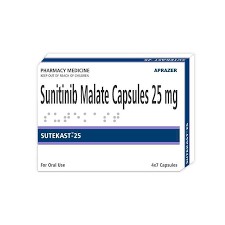
The original drug sunitinib has been launched in China and has entered the scope of Class B medical insurance, specificationsThe price of 12.5mg*28 capsules is around RMB 3,500. The original sunitinib drug has also been launched overseas. The price of 12.5mg*7 tablets is around RMB 1,500 (the price may fluctuate due to the exchange rate). There are also generic drugs produced in other countries. The price of 12.5mg*28 tablets produced by an Indian pharmaceutical factory is around RMB 750 (the price may fluctuate due to the exchange rate). The generic drugs produced abroad are basically the same as the original drugs at home and abroad. There may be differences in the prices of drugs of different specifications.
[ 免责声明 ] 本页面内容来自公开渠道(如FDA官网、Drugs官网、原研药厂官网等),仅供持有医疗专业资质的人员用于医学药学研究参考,不构成任何治疗建议或药品推荐。所涉药品可能未在中国大陆获批上市,不适用于中国境内销售和使用。如需治疗,请咨询正规医疗机构。本站不提供药品销售或代购服务。


