
.jpeg)
What are the precautions for Ramucirumab?
During treatment with Ramucirumab, patients should pay attention to the occurrence of bleeding, gastrointestinal perforation, impaired wound healing, arterial thromboembolic events, hypertension, worsening of liver injury, reversible posterior encephalopathy syndrome, proteinuria, thyroid dysfunction and other events.
1. Bleeding: Ramucizumab increases the risk of bleeding and gastrointestinal bleeding, including ≥Grade 3 bleeding events. Patients receiving nonsteroidal anti-inflammatory drugs (NSAIDs) and anticoagulant therapy are excluded from the study. Therefore, patients with severe bleeding (Grade 3 or 4) should permanently discontinue Ramosimumab.
2. Gastrointestinal perforation: Ramosizumab will increase the risk of gastrointestinal perforation. In six clinical studies in patients with various cancers receiving treatment, the incidence of gastrointestinal perforation of all grades and grade 3-5 ranged from <1-2%. Patients should permanently discontinue ramucizumab.
3. Impaired wound healing: Patients receiving drugs that inhibit the VEGF or VEGFR pathways may experience impaired wound healing. Ramosumabis a VEGFR2 antagonist that may adversely affect wound healing. Discontinue ramucizumab 28 days before elective surgery and do not take it for at least 2 weeks after major surgery and until the wound has completely healed. The safety of resuming ramucumab after resolution of wound healing complications has not been established.
4. Arterial thromboembolic events: Serious and sometimes fatal arterial thromboembolic events (ATEs) have occurred in clinical trials, including myocardial infarction, cardiac arrest, cerebrovascular accidents, and cerebral ischemia. Patients who experience ATEs should permanently discontinue ramucizumab.
5. Hypertension: The incidence of severe hypertension is increased in patients receiving ramucirumab. Control hypertension before starting treatment and monitor blood pressure every two weeks, or more frequently as needed for treatment. Do not use ramucirumab in patients with severe hypertension until controlled by medications. Ramosumab should be permanently discontinued in patients with hypertensive crisis or hypertensive encephalopathy.
6. Exacerbation of liver injury:Patients with Child-Pugh B or C cirrhosis who receive single-agent ramucirumab experience clinical deterioration, manifested by new or worsening encephalopathy, ascites, or hepatorenal syndrome. Use in patients with Child-Pugh B or C cirrhosis only when the potential benefits of treatment are judged to outweigh the risks of clinical deterioration.
7. Posterior reversible encephalopathy syndrome (PRES): Symptoms include seizures, headache, nausea/vomiting, blindness, or changes in consciousness, with or without hypertension. The diagnosis of PRES is confirmed by magnetic resonance imaging, and patients who develop PRES are permanently discontinuedRamosumab. Symptoms may resolve or improve within a few days, although some patients with PRES may experience persistent neurological sequelae or die.
8. Proteinuria: Discontinue ramucizumab in patients whose urinary protein level is 2 g or more within 24 hours. Once urine protein levels return to less than 2 g within 24 hours, restart the reduced dose. The drug should be permanently discontinued in patients with urine protein levels exceeding 3 grams within 24 hours or in patients with nephrotic syndrome.
9. Thyroid dysfunction: In 6 clinical studies, among 2,137 patients with various cancers who received ramucizumab, the incidence of grade 1-2 hypothyroidism ranged from <1-3%; there were no reports of grade 3-5 hypothyroidism. Monitor thyroid function during treatment with silamza.
10. Infusion-related reaction (IRR): In the experiment, IRR occurred during or after the first or second ramucizumab infusion, and its symptoms included Symptoms include chills/tremors, back pain/cramps, chest pain and/or tightness, chills, flushing, dyspnea, wheezing, hypoxia, and paresthesia, and in severe cases, bronchospasm, supraventricular tachycardia, and hypotension. IRRs for levels 3-4 should be permanently deactivated.
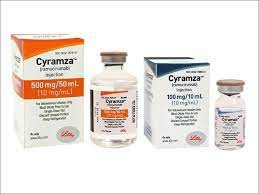
Ramosizumab is usually an injection preparation. The original drug has been on the market in China, but it has been on the market for a short time and has not been included in the medical insurance. The price of 100mg/10mL per box may be around RMB 5,000, and the price of 500mg/50mL per box may be around RMB 17,000. The price of the original Hong Kong version of 100mg/10mL may be around RMB 8,400 per box, and the price of 500mg/50mL per box may be around RMB 28,000 (the price may fluctuate due to exchange rates), and their pharmaceutical ingredients are basically the same. Currently, there are no generic drugs produced and marketed overseas. For specific prices and drug information, please consult Yaode’s medical consultant.
[ 免责声明 ] 本页面内容来自公开渠道(如FDA官网、Drugs官网、原研药厂官网等),仅供持有医疗专业资质的人员用于医学药学研究参考,不构成任何治疗建议或药品推荐。所涉药品可能未在中国大陆获批上市,不适用于中国境内销售和使用。如需治疗,请咨询正规医疗机构。本站不提供药品销售或代购服务。


