
.jpeg)
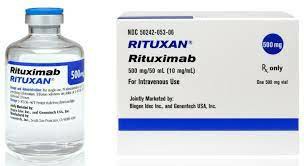
Instructions for Rituximab
1. Generic name: Rituximab
Product name:Ritnxan
All names: Rituximab,Rituximab, Rituximab, MabThera,Ristova, RITUXAN
2. Indications:
1. Non-Hodgkin lymphoma (NHL): Rituximab is suitable for
(1)Relapsed or refractory, low-grade or follicular, CD20-positive, B-cell NHL as a single agent.
(2)Previously untreated follicularCD20-positive B-cell NHL in combination with first-line chemotherapy, and as single-agent maintenance therapy in patients who have achieved a complete or partial response to a rituximab product in combination with chemotherapy.
(3)Non-progressive (including stable phase) low-grade CD20-positive B-cell NHL after first-line cyclophosphamide, vincristine, and prednisone (CVP) chemotherapy.
(4)Previously untreated diffuse large B-cell, CD20-positive NHL combined with cyclophosphamide, doxorubicin, vincristine, prednisone (CHOP) or other anthracycline-based chemotherapy regimens.
(5) For the treatment of pediatric patients 6 months and older with previously untreated advanced CD20-positive diffuse large B-cell lymphoma (DLBCL), Burkitt lymphoma (BL), Burkitt-like lymphoma (BLL), or mature B-cell acute leukemia (B-AL) in combination with chemotherapy.
2. Chronic lymphocytic leukemia (CLL):
Rituximab in combination with fludarabine and cyclophosphamide(FC) is indicated for the treatment of adult patients with previously untreated and previously treated CD20-positive chronic lymphocytic leukemia.
3. Rheumatoid arthritis (RA):
Rituximab is indicated in combination with methotrexate for the treatment of adult patients with moderately to severely active rheumatoid arthritis who have had an inadequate response to one or moreTNF antagonists.
4. Granulomatosis with polyangiitis (GPA) (Wegener's granulomatosis) and microscopic polyangiitis (MPA):
Rituximab in combination with corticosteroids Adult and pediatric patients 2 years of age and older with granulomatosis with polyangiitis and microscopic polyangiitis.
5. Pemphigus vulgaris (PV):
Rituximab is indicated for the treatment of adult patients with moderate to severe pemphigus vulgaris.
3. Usage and dosage:
1. Before treatment: Before starting rituximab treatment, screen all patients for HBV infection by measuring HBsAg and anti-HBc. For patients with RA, GPA, or MPA, perform a complete blood count and platelet count every 2-4 months during treatment. Continue to monitor for cytopenias after the last dose until symptoms resolve.
(1) First infusion: This drug can only be administered by medical staff. For adults, the infusion should start at a rate of 50mg/hr for the first time. In the absence of infusion toxicity, increase the infusion rate in increments of 50 mg/hr every 30 minutes to a maximum of 400 mg/hr. For pediatric patients, the infusion can be initiated at a rate of 0.5 mg/kg/hr (maximum 50 mg/hr). In the absence of infusion toxicity, increase the infusion rate by 0.5 mg/kg/hr every 30 minutes to a maximum of 400 mg/hr.
(2) Subsequent infusion: Begin infusion at a rate of 100mg/hr and, in the absence of infusion toxicity, increase the rate in 30-minute intervals in 100mg/hr increments to a maximum of 400mg/hr.
2. Non-Hodgkin lymphoma (NHL)Recommended dose: The recommended dose is375mg/m2
(1)Patients with relapsed or refractory, low-grade or follicular, CD20-positive, B-cell non-Hodgkin lymphoma take 4 or 8 doses once a week.
(2)Patients with relapsed or refractory, low-grade or follicular, CD20-positive B-cell non-Hodgkin lymphoma undergoing treatment once weekly for a total of 4 doses.
(3)Patients with previously untreated follicularCD20-positive B-cell non-Hodgkin lymphoma given on day 1 of each chemotherapy cycle, up to 8 doses. For patients in complete or partial response, eight weeks after completing combination therapy with a rituximab product and chemotherapy, rituximab maintenance therapy is initiated every every 8 weeks for a total of 12 doses.
(4)First-line Patients with non-progressive, low-grade, CD20-positive B-cell non-Hodgkin lymphoma after completing 6-8 cycles of CVP chemotherapy, 4 doses each time, 6 months apart, up to 16 doses.
(5)Patients with diffuse largeB-cell non-Hodgkin lymphoma given on Day 1 of each chemotherapy cycle, up to 8 infusions.
(6) Pediatric patients are using rituximab in combination with chemotherapy. The treatment includes2 induction phases and 2 consolidation phases, with a total of 6 administrations. In each induction period, the recommended dose is 375 mg/m2, administered by intravenous infusion, on the second or first day of chemotherapy, for a total of 2 doses; the drug is administered once every 48 hours. In each consolidation period, the recommended dose is 375 mg/m2, administered by intravenous infusion, and administered on the first day of chemotherapy.
3. Recommended dosage for chronic lymphocytic leukemia (CLL):
StartThe recommended dose of FC chemotherapy is 375mg/m2 the day before, then 500mg/m2 on day 1 of cycles 2-6 (every 28 days).
4. Recommended dose of Zevalin component for the treatment of non-Hodgkin lymphoma: When used as part of Zevalin treatment regimen, infuse 250mg/m2.
5. Rheumatoid arthritis (RA):
Intravenous infusion of rituximab in two doses, each time1000mg, 2 weeks apart. It is recommended that 100 mg of methylprednisolone or a corticosteroid equivalent be given intravenously 30 minutes before each infusion to reduce the incidence and severity of infusion-related reactions. Subsequent courses of treatment should be performed every 24 weeks or based on clinical assessment, but no earlier than every 16 weeks. Rituximab is used in combination with methotrexate.
6. Granulomatosis with polyangiitis (GPA) and microscopic polyangiitis (MPA):
(1) Induction therapy for adult patients with active GPA/MPA:
Intravenous infusion of rituximab375 mg/m2 once weekly for 4 weeks. According to clinical practice, 1000 mg of methylprednisolone is administered intravenously every day for 1 to 3 days, followed by oral prednisone. This regimen should be initiated within 14 days before or after starting rituximab and may be continued during and after the 4-week induction period of rituximab treatment.
(2) Follow-up treatment of GPA/MPA:
Rituximab is administered as two intravenous infusions of 500 mg each time, two weeks apart, followed by 500 mg intravenous infusions every 6 months based on clinical assessment. If a rituximab product is used for induction therapy of active disease, initiate subsequent treatment with rituximab within 24 weeks after the last induction infusion with the rituximab product or based on clinical assessment, but no earlier than 16 weeks after the last induction infusion with the rituximab product. If other standard immunosuppressants were used for induction therapy in active disease, initiate follow-up treatment with rituximab within 4 weeks after disease control.
(3) Induction therapy for children with active GPA/MPA:
Intravenous infusion of rituximab375 mg/m2 once weekly for 4 weeks. Prior to the first infusion of rituximab, give methylprednisolone 30 mg/kg (not to exceed 1 g/day) intravenously once daily for 3 days. After intravenous methylprednisolone, oral steroids should be continued according to clinical practice.
(4) Follow-up treatment for children with GPA/MPA:
Rituximab is given as an intravenous infusion of 250 mg/m2 in two divided doses, two weeks apart, followed by an intravenous infusion of 250 mg/m2 every 6 months based on clinical assessment. If a rituximab product is used for induction therapy of active disease, initiate subsequent treatment with rituximab within 24 weeks after the last induction infusion with the rituximab product or based on clinical assessment, but no earlier than 16 weeks after the last induction infusion with the rituximab product.
7. Pemphigus vulgaris (PV):
Rituximab is given as an intravenous infusion of 1000 mg in two divided doses, 2 weeks apart, and combined with a decreasing course of glucocorticoids. Intravenous infusion of rituximab 500 mg for maintenance treatment at month 12 and every 6 months thereafter or based on clinical assessment. At the time of relapse, 1000 mg of rituximab was administered intravenously, and the glucocorticoid dose was considered to be resumed or increased based on clinical assessment. Subsequent infusions can be given up to 16 weeks after the previous infusion.
4. Adverse reactions:
Common adverse reactions of rituximab include fever, chills, nausea, pruritus, angioedema, hypotension, headache, bronchospasm, urticaria, rash, vomiting, myalgia, dizziness or hypertension.
5. Storage:
Rituximab is a sterile, preservative-free, clear, colorless intravenous infusion solution that should be refrigerated at 2°C to 8°C (36°F to 46°F). The vial should be kept out of direct sunlight and should not be frozen or shaken.
6. Mechanism of action:
Rituximab is a monoclonal antibody that targets the CD20 antigen expressed on the surface of pre-B lymphocytes and mature B lymphocytes. After binding to CD20, rituximab mediates B cell lysis. Possible mechanisms of cell lysis include complement-dependent cytotoxicity (CDC) and antibody-dependent cell-mediated cytotoxicity (ADCC).
[ 免责声明 ] 本页面内容来自公开渠道(如FDA官网、Drugs官网、原研药厂官网等),仅供持有医疗专业资质的人员用于医学药学研究参考,不构成任何治疗建议或药品推荐。所涉药品可能未在中国大陆获批上市,不适用于中国境内销售和使用。如需治疗,请咨询正规医疗机构。本站不提供药品销售或代购服务。


