
.jpeg)
Instructions for Pirfenidone
1. Generic name: Pirfenidone
Product name: Esbriet
All names: Pirfenidone,Pirfenidone, Asri, Pirespa
2. Indications:
Pirfenidone (Pirfenidone) is suitable for the treatment of idiopathic pulmonary fibrosis (IPF)
3. Usage and dosage:
1. Before use: Before patients start treatment with pirfenidone, liver function tests are required.
2. Recommended dosage:
The daily maintenance dose of pirfenidone is801 mg three times a day, totaling 2403 mg/day. After starting treatment, titrate to the full dose of 2403 mg/day within 14 days. On days 1-7 of treatment, titrate to 267 mg three times a day. times (801mg/day);On days 8-14 of treatment, titrate to 534mg three times a day (1602mg/day). After the 15th day of treatment, titrate to 801mg three times a day (2403mg/day). Doses exceeding 2403 mg/day are not recommended for any patient, patients should not take 2 doses at the same time to make up for a missed dose, and patients should not take more than 3 doses per day.
3. Dose adjustment: Patients who miss taking pirfenidone for 14 days or more should restart treatment with an initial 2-week dose escalation schedule until the full maintenance dose is reached. For patients whose treatment is interrupted for less than 14 days, the dose before the interruption may be resumed. If a patient experiences significant adverse reactions (i.e. gastrointestinal reactions, photosensitivity reactions or rash, severe cutaneous adverse reactions (scarring)), consider temporarily reducing or interrupting the dose of pirfenidone to relieve symptoms. If scarring is confirmed, permanently discontinue pirfenidone.
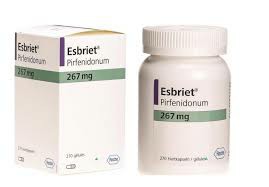
4. Adverse reactions:
The most common side effects of pirfenidone include nausea, rash, fatigue, diarrhea, indigestion(heartburn), loss of appetite, headache, and photosensitivity (a sunburn-like reaction after exposure to light). After pirfenidone was put on the market, adverse reactions include agranulocytosis (blood and lymphatic system diseases), drug-induced liver injury (hepatobiliary diseases), angioedema (immune system diseases), and severe skin reactions including scarring (skin and subcutaneous tissue).
5. Storage:
Store pirfenidone20 to 25°C (68 to 77°F), with a tolerance of 15 to 30°C (59 to 86°F), out of the reach of children. Keep the bottle tightly closed and safely throw away any pirfenidone that is expired or no longer needed.
6. Special groups:
1. Smokers: Smoking reduces pirfenidone exposure, which may change the efficacy characteristics of pirfenidone. Instruct patients to stop smoking before treatment with pirfenidone and to avoid smoking while using pirfenidone.
7. Mechanism of action:
The exact mechanism of action of pirfenidone is not fully understood. It is thought that the antioxidant effects of pirfenidone contribute to its anti-inflammatory effects, resulting in anti-fibrotic effects. Pirfenidone reduces the production of transforming growth factor-β1 (TGF-β1), a key profibrotic and proinflammatory cytokine associated with idiopathic pulmonary fibrosis (IPF). By inhibiting TGF-β1, pirfenidone inhibits TGF-β1-induced differentiation of human lung fibroblasts into myofibroblasts, thereby preventing excessive collagen synthesis and extracellular matrix production.
Some evidence suggests that pirfenidone downregulates pro-inflammatory cytokines, includingTNF-α, interleukin-1 (IL-1), IL-6, interferon-γ (IFN-γ), and platelet-derived growth factor (PDGF). Animal models demonstrate that pirfenidone promotes the production of anti-inflammatory IL-10 and prevents the accumulation of various inflammatory cells, including lymphocytes, macrophages, and neutrophils. In animal models, pirfenidone inhibits the influx of inflammatory cells and improves bleomycin-induced pulmonary vascular permeability. Several in vitro studies have shown that pirfenidone mediates antioxidant effects by scavenging reactive oxygen species (ROS) and inhibiting lipid peroxidation, thereby reducing cell damage in IPF.
Pirfenidone has been approved for marketing in China under the trade name of Asri. It has entered the scope of Class B medical insurance and is limited to patients with idiopathic pulmonary fibrosis. The specifications produced by domestic pharmaceutical factoriesThe price of 100mg*54 capsules per box is around RMB 500. There are also generic pirfenidone drugs produced in other countries overseas. For example, the price of a box of 200mg*30 tablets produced by an Indian pharmaceutical factory is around RMB 100 (the price may fluctuate due to the exchange rate). The ingredients of the generic drugs are basically the same as those of the original drug. For more drug information and specific prices, please consult Yaode Medical Consultant.
[ 免责声明 ] 本页面内容来自公开渠道(如FDA官网、Drugs官网、原研药厂官网等),仅供持有医疗专业资质的人员用于医学药学研究参考,不构成任何治疗建议或药品推荐。所涉药品可能未在中国大陆获批上市,不适用于中国境内销售和使用。如需治疗,请咨询正规医疗机构。本站不提供药品销售或代购服务。


