
.jpeg)
Pomalidomide instructions
1. Common name: pomalidomide
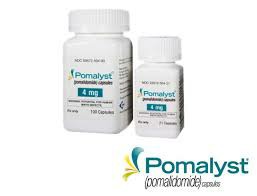
Product name:POMALYST
All names: pomalidomide, pomalidomide, Imnovid, Pomalyst
2. Indications:
1. Multiple myeloma (MM): Pomalidomide (Pomalidomide) combined with dexamethasone is suitable for adult patients with multiple myeloma who have previously received at least two treatments (including lenalidomide and a proteasome inhibitor) and have disease progression on the date of completion of the last treatment or within 60 days.
2. Kaposi's sarcoma (KS): Pomalidomide is indicated for the treatment of adult patients with AIDS-related Kaposi's sarcoma after failure of highly active antiretroviral therapy (HAART) and Kaposi's sarcoma in HIV-negative adult patients.
3. Usage and dosage:
1. Before use: Women of childbearing potential must have a negative pregnancy test and take contraceptive measures before starting to take pomalidomide.
2. Recommended dosage:
(1)Multiple myeloma (MM): The recommended dose of pomalidomide is 4 mg once daily on days 1 through 21 of each 28-day cycle, until disease progression or unacceptable toxicity, in combination with dexamethasone.
(2) Kaposi's sarcoma (KS):The recommended dose of pomalidomide is 5 mg once daily on days 1 through 21 of each 28-day cycle until disease progression or unacceptable toxicity. Continue HAART as HIV treatment for patients with AIDS-related Kaposi's sarcoma.
3. Dose adjustment: If adverse reactions occur after using pomalidomide, the dose should be adjusted. If 1 mg once a day is not tolerated, pomalidomide should be discontinued permanently.
(1) Strong CYP1A2 inhibitors: Avoid concomitant use of pomalidomide with strong CYP1A2 inhibitors and reduce dose to 2 mg if unavoidable.
(2) Patients with hepatic impairment: For patients with mild or moderate hepatic impairmentMultiple myelomaFor patients with Kaposi's sarcoma who have mild, moderate or severe hepatic impairment, the recommended dose should be reduced to 3 mg orally per day; for patients with severe hepatic impairment, the recommended dose should be reduced to 3 mg per day.
4. Adverse reactions:
After pomalidomide was put on the market, pancytopenia, hypothyroidism, hyperthyroidism, gastrointestinal bleeding, liver failure (including fatal cases), elevated liver enzymes, allergic reactions (such as angioedema, anaphylaxis, urticaria), solid organ transplant rejection, Adverse events include hepatitis B virus reactivation, herpes zoster, progressive multifocal leukoencephalopathy (PML), tumor lysis syndrome, basal cell carcinoma and cutaneous squamous cell carcinoma, Stevens-Johnson syndrome, toxic epidermal necrolysis, and drug reactions with eosinophilia and systemic symptoms (DRESS). The most common side effects include anemia, neutropenia, fatigue, thrombocytopenia, fever, peripheral edema, peripheral neuropathy, and infections, including pneumonia.
5. Storage:
PomalidomideStore20°C-25°C (68°F-77°F); tolerance is 15°C-30°C (59°F-86°F). Do not open or crush pomalidomide capsules. If powder of this medicine comes into contact with your skin, wash your skin immediately and thoroughly with soap and water. If medication comes into contact with mucous membranes, rinse thoroughly with water.
6. Taboo:
1. Pregnant women: Contraindicated in pregnant womenPomalidomide is a thalidomide analogue that has teratogenic effects on rats and rabbits when administered during the organogenesis period. If a patient becomes pregnant while taking this drug, it may cause harm to the fetus.
2. Allergy: Pomalidomide is contraindicated in patients who show severe allergic reactions (such as angioedema, anaphylaxis) to pomalidomide or any excipients.
7. Mechanism of action:
Pomalidomide is an analogue of thalidomide with immunomodulatory, anti-angiogenic, and anti-neoplastic properties. The cellular activity of pomalidomide is mediated through its target protein cereblon, a component of the cullin ring E3 ubiquitin ligase complex. In vitro, substrate proteins, including Aiolos and Ikaros, are targeted for ubiquitination and subsequent degradation in the presence of drugs, leading to direct cytotoxic and immunomodulatory effects. In in vitro cell experiments, pomalidomide inhibits the proliferation and induces apoptosis of hematopoietic tumor cells.
Pomalidomide inhibits the proliferation of lenalidomide-resistant multiple myeloma(MM) cell lines and synergizes with dexamethasone to induce tumor cell apoptosis in lenalidomide-sensitive and lenalidomide-resistant cell lines. Pomalidomide enhances T-cell and natural killer (NK) cell-mediated immunity and inhibits the production of pro-inflammatory cytokines (such as TNF-α and IL-6) by monocytes. Pomalidomide exhibits anti-angiogenic activity in mouse tumor models and in vitro umbilical cord models.
[ 免责声明 ] 本页面内容来自公开渠道(如FDA官网、Drugs官网、原研药厂官网等),仅供持有医疗专业资质的人员用于医学药学研究参考,不构成任何治疗建议或药品推荐。所涉药品可能未在中国大陆获批上市,不适用于中国境内销售和使用。如需治疗,请咨询正规医疗机构。本站不提供药品销售或代购服务。


