
.jpeg)
How long does it take for resistance to Gefitinib to develop?
Gefitinib (Gefitinib) is a targeted therapy drug used to treat non-small cell lung cancer (NSCLC), especially for patients with epidermal growth factor receptor (EGFR) mutations. However, resistance is a condition that may arise during gefitinib treatment and requires an understanding of resistance mechanisms, management, and future treatment options.
Resistance means that after a patient uses a certain drug for a long time, the sensitivity of tumor cells to the drug gradually decreases, causing the drug to lose its efficacy. For gefitinib, resistance is mainly divided into two categories: early resistance and late resistance.
Early resistance (Primary Resistance): Early resistance means that tumor cells become insensitive to the drug immediately or within a short period of time after starting gefitinib treatment. The most common reason is that tumor cells do not have EGFR mutations, or there are some other mechanisms that prevent drugs from effectively acting on tumor cells. In this case, the doctor may re-evaluate the patient's condition and consider other treatment options.
Late resistance (Acquired Resistance): Late resistance refers to the gradual loss of efficacy of the drug over time after the patient initially responds well to gefitinib. This is a more common resistance mechanism, and studies have shown that approximately 60-70% of EGFR mutation-positive NSCLC patients will develop late resistance after gefitinib treatment. The mechanisms of late drug resistance are complex and diverse. The following are some possible mechanisms:
1. T790M mutation: This is the most common late-stage resistance mechanism. Tumor cells acquire the T790M mutation after treatment, making them resistant to gefitinib. In this case, other drugs, such as Osimertinib (Osimertinib), may be needed to combat the T790M mutation.
2. Activating other signaling pathways: Tumor cells may bypass EGFR by activating other signaling pathwaysInhibition of signaling pathways, resulting in drug resistance.
3. Cell heterogeneity: Different subclones may exist within the tumor, and some subclones may be resistant to gefitinib, leading to treatment failure.
4. Immune escape: Tumor cells may avoid immune system attack by changing immune escape mechanisms, thereby weakening the effect of the drug.
How to manage gefitinib resistance is an important clinical challenge. One strategy is to adjust the treatment plan based on the molecular characteristics of the tumor when drug resistance occurs, which may include changing to other targeted drugs or using chemotherapy. Osimatinib is a drug targeting the T790M mutation and has therapeutic effect on some drug-resistant patients.
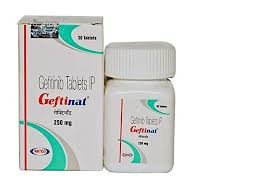
Gefitinib was launched in China in 2005. At that time, the price of a box was about 5,000 yuan. Enter medical insurance in China in 2017. The price after medical insurance has dropped a lot. For the specific price after medical insurance, please consult the local hospital pharmacy or the medical insurance bureau. Other versions include original drugs and cost-effective generic drugs. Generic drugs include generic drugs from India, Bangladesh and Laos. The prices vary with different specifications, about 200~800yuan, and the ingredients of generic drugs are basically the same as domestic drugs.
[ 免责声明 ] 本页面内容来自公开渠道(如FDA官网、Drugs官网、原研药厂官网等),仅供持有医疗专业资质的人员用于医学药学研究参考,不构成任何治疗建议或药品推荐。所涉药品可能未在中国大陆获批上市,不适用于中国境内销售和使用。如需治疗,请咨询正规医疗机构。本站不提供药品销售或代购服务。


