
.jpeg)
Is Lurbinectedin a chemotherapy drug?
LurbinectedinAlthough it plays an important role in the treatment of cancer, it is not a traditional chemotherapy drug. Instead, it belongs to a class of drugs called DNAtopoisomerase IIα inhibitors, which have a completely new mechanism of action. Here's a detailed explanation of how rubicatin differs from traditional chemotherapy drugs and why it's considered a different class of drug:
1. Differences in mechanism of action:
Traditional chemotherapy drugs: Traditional chemotherapy drugs are usually cytotoxic drugs. They reduce tumor volume by directly damaging rapidly proliferating cancer cells and inhibiting their growth and division. These drugs are generally not very selective and also affect normal cells and are therefore associated with a wide range of side effects.
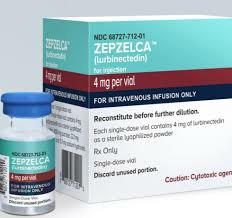
Rubicatin: Rubicatin’s mechanism of action is different from traditional chemotherapy drugs. It is an inhibitor of DNAtopoisomeraseIIα, which mainly works by affecting the regulation of DNA topological structure. It does not directly poison cancer cells like traditional chemotherapy drugs, but blocks the DNA repair and replication process, leading to DNA damage and death of cancer cells. Because it is more targeted, it is usually accompanied by fewer side effects.
2. Differences in targeting:
Traditional chemotherapy drugs: Traditional chemotherapy drugs usually do not have specific molecular targets and they affect rapidly proliferating cells, whether they are normal cells or cancer cells. This results in widespread cytotoxicity that may trigger a variety of side effects.
Rubicatin: Rubicatin is a targeted drug whose mechanism of action targets a specific biological molecule, namelyDNAtopoisomeraseIIα. It selectively affects this molecule in tumor cells and is therefore more targeted, thereby reducing the impact on normal cells and mitigating side effects.
3. Differences in clinical application:
Traditional chemotherapy drugs: Traditional chemotherapy drugs are usually used to treat multiple cancer types, including but not limited to leukemia, lymphoma, breast cancer, lung cancer, etc. They are often part of a variety of treatments used to control the growth and spread of cancer.
Rubicatin: The specific indication for rubicatin is the treatment of recurrent small cell lung cancer (SCLC) and recurrent synovial sarcoma. It is used as a treatment option for these specific types of cancer and is often considered when other treatments have failed or are not suitable.
To sum up, rubicatin is a different drug class from traditional chemotherapy drugs, with a more precise mechanism of action and higher targeting. This makes it potentially advantageous in the treatment of some cancer types, especially in reducing side effects. However, treatment decisions should be made based on the patient's specific situation and cancer type, often involving physician and patient engagement to ensure the most appropriate treatment is chosen.
Rubicardin has not yet been launched in China, so it is not included in medical insurance. Patients cannot purchase it domestically and need to purchase Rubicatin through overseas channels. There is only the original drug Rubicatin in foreign countries, and the price is relatively expensive. In comparison, the original drug in Singapore is slightly cheaper, priced at more than 30,000, and there are other American versions of the original drug, priced at more than 90,000.
[ 免责声明 ] 本页面内容来自公开渠道(如FDA官网、Drugs官网、原研药厂官网等),仅供持有医疗专业资质的人员用于医学药学研究参考,不构成任何治疗建议或药品推荐。所涉药品可能未在中国大陆获批上市,不适用于中国境内销售和使用。如需治疗,请咨询正规医疗机构。本站不提供药品销售或代购服务。


