
.jpeg)
What are the precautions for Necitumumab?
During treatment with Necitumumab , attention should be paid to the occurrence of cardiopulmonary arrest, hypomagnesemia, venous and arterial thromboembolic events, skin toxicity, infusion-related reactions, embryo-fetal toxicity and other events.
1. Cardiopulmonary arrest: In clinical studies, 3% of patients who received nesituzumab combined with gemcitabine and cisplatin experienced cardiopulmonary arrest or sudden death, while 0.6% of patients who received gemcitabine and cisplatin alone experienced cardiopulmonary arrest or sudden death. Closely monitor serum electrolytes, including serum magnesium, potassium, and calcium, before each infusion of nexituzumab during treatment and for at least 8 weeks after the last dose. Withhold nexituzumab for grade 3 or 4 electrolyte abnormalities. Once electrolyte abnormalities improve to ≤ grade 2, these patients can be treated with subsequent cycles of nesituzumab.
2. Hypomagnesemia: Severe hypomagnesemia (grade 3 or 4) occurred in 20% of patients treated with nesituzumab, compared with 7% of patients treated with gemcitabine and cisplatin alone. The median time to onset of hypomagnesemia and concomitant electrolyte abnormalities was 6 weeks. Monitor patients for hypomagnesemia, hypocalcemia, and hypokalemia before each infusion of nexituzumab during treatment and for at least 8 weeks after completion. Withhold nexituzumab for grade 3 or 4 electrolyte abnormalities. Once hypomagnesemia and associated electrolyte abnormalities improve to ≤ grade 2, these patients can be treated with subsequent cycles of nexituzumab.
3. Venous and arterial thromboembolic events (VTE and ATE): Some of these are fatal, and the most common venous thromboembolisms are pulmonary embolism (5%) and deep vein thrombosis (2%). Nexituzumab should be discontinued in patients with severe or life-threatening VTE or ATE.
4. Skin toxicity: including rash, acneiform dermatitis, acne, dry skin, itching, generalized rash, skin fissures, maculopapular rash and erythema. Severe skin toxicity occurred in 8% of patients. Cutaneous toxicity usually occurs within the first 2 weeks of treatment and resolves within 17 weeks of onset. For Grade 3 skin reactions, modify the dose of nexituzumab. Limit sun exposure. Discontinue nesituzumab for severe (Grade 4) skin reactions or Grade 3 skin induration/fibrosis.
5. Infusion-related reactions (IRR): Most IRRs occur after the first or second use of nesituzumab. Monitor patients for signs and symptoms of IRR during and after nesituzumab infusion. For severe or life-threatening IRR, nexituzumab should be discontinued.
6. Embryonic-Fetal Toxicity: Based on animal data and its mechanism of action, nexituzumab can cause fetal damage when administered to pregnant women. Disruption or depletion of EGFR in animal models leads to impaired embryonic development, including effects on placental, lung, heart, skin, and neural development. The lack of EGFR signaling causes embryonic and postnatal death in animals. Advise females of reproductive potential to use effective contraception during treatment with nexituzumab and for three months after the last dose.
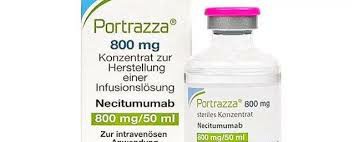
The generic drug of Nexituzumab has not yet been approved for marketing in China, and therefore it has not been included in medical insurance. The German version of the generic version of Nexituzumab available overseas800mg/50ml may cost more than RMB 10,000 per box (the price may fluctuate due to the exchange rate), which is relatively expensive. Currently, there is no generic version of Nexituzumab on the market. For more drug information and specific prices, please consult Yaode Medical Consultant.
[ 免责声明 ] 本页面内容来自公开渠道(如FDA官网、Drugs官网、原研药厂官网等),仅供持有医疗专业资质的人员用于医学药学研究参考,不构成任何治疗建议或药品推荐。所涉药品可能未在中国大陆获批上市,不适用于中国境内销售和使用。如需治疗,请咨询正规医疗机构。本站不提供药品销售或代购服务。


