
.jpeg)
Instructions for Nivolumab
1. Generic name: Nivolumab
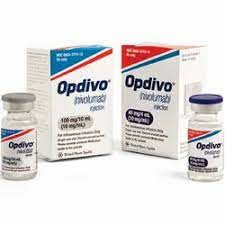
Product name:Opdivo
All names: Nivolumab Injection,Nivolumab, Nivolumab, Opdivo, Biochivo
2. Indications:
1. Melanoma:
(1) Unresectable or Metastatic: Nivolumab, as a single agent or in combination with ipilimumab, is indicated for the treatment of adult and pediatric patients 12 years of age and older with unresectable or metastatic melanoma.
(2) Adjuvant treatment: Nivolumab is indicated for the adjuvant treatment of adult and pediatric patients 12 years of age and older with melanoma and lymph node metastasis or metastatic disease who have undergone complete resection.
2. Non-small cell lung cancer (NSCLC):
(1) Resectable neoadjuvant treatment: Nivolumab combined with platinum doublet chemotherapy is suitable for neoadjuvant treatment of adult patients with resectable (tumor ≥4cm or lymph node positive) non-small cell lung cancer.
(2) Metastatic non-small cell lung cancer:
Nivolumab in combinationipilimumab is indicated for the first-line treatment of adult patients with metastatic NSCLC whose tumors express PD-L1 (≥1%) and have no EGFR or ALK genomic tumor abnormalities as determined by an FDA-approved trial.
Nivolumab combined with ipilimumab and 2 cycles of platinum-based doublet chemotherapy is suitable for the first-line treatment of adult patients with metastatic or recurrent NSCLC without EGFR or ALK genomic tumor abnormalities.
Nivolumab is indicated for the treatment of adult patients with metastaticNSCLC who have progressed during or after platinum-based chemotherapy. Patients with tumor aberrations of the EGFR or ALK genome should have disease progression on an FDA-approved therapy targeting these abnormalities before receiving nivolumab.
3. Malignant pleural mesothelioma:
Nivolumab combinationipilimumab is indicated for the first-line treatment of adult patients with unresectable malignant pleural mesothelioma.
4. Advanced renal cell carcinoma (RCC):
Nivolumab combined with cabozantinibipilimumab is suitable for the first-line treatment of adult patients with intermediate or low-risk advanced renal cell carcinoma; combined with cabozantinib (cabozantinib) is suitable for the first-line treatment of adult patients with advanced renal cell carcinoma. Nivolumab is indicated as a single agent for the treatment of adult patients with advanced renal cell carcinoma who have received anti-angiogenic therapy.
5. Typical Hodgkin lymphoma:
Nivolumab is indicated for the treatment of adult patients with classical Hodgkin lymphoma(cHL) who has relapsed or progressed following autologous hematopoietic stem cell transplantation (HSCT) and brentuximab vedotin, or 3 or more systemic therapies including autologous HSCT.
6. Squamous cell carcinoma of the head and neck (SCCHN):
Nivolumab is indicated for the treatment of adult patients with recurrent or metastatic squamous cell carcinoma of the head and neck who have disease progression during or after platinum-based therapy.
7. Urothelial carcinoma (UC):
Nivolumab is indicated for the adjuvant treatment of adult patients with urothelial carcinoma who are at high risk of recurrence after curative resection for UC. Nivolumab is also indicated for the treatment of adult patients with locally advanced or metastatic urothelial carcinoma who have disease progression during or after platinum-containing chemotherapy or who have disease progression within 12 months of neoadjuvant or adjuvant platinum-containing chemotherapy.
8. Microsatellite instability-high or mismatch repair-deficient metastatic colorectal cancer (CRC):
Nivolumab, as a single agent or in combination withipilimumab, is indicated for the treatment of adult and pediatric patients 12 years of age and older with microsatellite instability-high (MSI-H) or mismatch repair-deficient (dMMR) metastatic colorectal cancer that has progressed following treatment with fluoropyrimidine, oxaliplatin, and irinotecan.
9. Hepatocellular carcinoma (HCC): Nivolumab in combination with ipilimumab is used to treat adult patients with hepatocellular carcinoma who have previously received sorafenib.
10. Esophageal cancer:
Nivolumab is suitable for neoadjuvant chemoradiotherapy(CRT) for the adjuvant treatment of adult patients with completely resected esophageal or gastroesophageal junction cancer with residual pathologic disease; indicated for the treatment of adult patients with unresectable advanced, recurrent, or metastatic esophageal squamous cell carcinoma (ESCC) after prior fluoropyrimidine and platinum-based chemotherapy.
Nivolumab combined with chemotherapy containing fluoropyrimidine and platinum is suitable for the first-line treatment of adult patients with unresectable advanced or metastatic esophageal squamous cell carcinoma(ESCC). In combination with ipilimumab, it is suitable for the first-line treatment of adult patients with unresectable advanced or metastatic esophageal squamous cell carcinoma (ESCC).
11. Gastric cancer, gastroesophageal junction cancer and esophageal adenocarcinoma:
Nivolumab is used in combination with fluoropyrimidine- and platinum-containing chemotherapy drugs for the treatment of adult patients with advanced or metastatic gastric cancer, gastroesophageal junction cancer, and esophageal adenocarcinoma.
3. Usage and dosage:
1. Melanoma:
(1) Unresectable or metastatic melanoma: When used as a single agent, the recommended dose of nivolumab is 240 mg intravenously over 30 minutes every 2 weeks or 480 mg intravenously over 30 minutes every 4 weeks until disease progression or unacceptable toxicity; when used in combination with ipilimumab, 1 mg/kg intravenously over 30 minutes every 3 weeks or 3 mg/kg intravenously over 90 minutes on the same day ipilimumab, given as a single agent or 480 mg intravenously over 30 minutes every 2 weeks for up to 4 doses or until unacceptable toxicity occurs, whichever occurs first; after completion of 4 doses of combination therapy, as a single agent or 480 mg intravenously over 30 minutes every 4 weeks; after completion of 4 doses of combination therapy, as a single agent until disease progression or unacceptable toxicity occurs.
(2) Adjuvant treatment of melanoma: The recommended dose of nivolumab is 240 mg intravenously over 30 minutes every 2 weeks or 480 mg intravenously over 30 minutes every 4 weeks until disease progression or unacceptable toxicity for one year.
2. Non-small cell lung cancer:
(1) Metastatic non-small cell lung cancer: The recommended dose of nivolumab is 240 mg intravenously over 30 minutes every 2 weeks or 480 mg intravenously over 30 minutes every 4 weeks until disease progression or unacceptable toxicity occurs.
(2) in combination with ipilimumab for the treatment of metastatic or recurrent non-small cell lung cancer expressing PD-L1:
Nivolumab perIpilimumab 3 mg/kg intravenously over 30 minutes for 2 weeks and 1 mg/kg intravenously over 30 minutes every 6 weeks until disease progression, unacceptable toxicity, or up to 2 years in patients without disease progression.
(3) Combination treatment for metastatic or recurrent non-small cell lung cancer: In the first 2 cycles, 360 mg intravenously over 30 minutes every 3 weeks, 1 mg/kg ipilimumab intravenously over 30 minutes every 6 weeks, followed by histology-based platinum doublet chemotherapy every 3 weeks, then 360 mg intravenously over 30 minutes every 3 weeks, and 1 mg/kg intravenously over 30 minutes every 6 weeks ipilimumab until disease progression, unacceptable toxicity, or up to 2 years in patients without disease progression.
3. Malignant pleural mesothelioma: When used in combination withipilimumab, the recommended dose of nivolumab is 360 mg intravenously over 30 minutes every 3 weeks and 1 mg/kgipilimumab intravenously over 30 minutes every 6 weeks until disease progression, unacceptable toxicity, or up to 2 years in patients without disease progression.
4. Renal cell carcinoma:
(1) Monotherapy: Nivolumab 240 mg intravenously over 30 minutes every 2 weeks or 480 mg intravenously over 30 minutes every 4 weeks until disease progression or unacceptable toxicity.
(2) In combination with ipilimumab: nivolumab 3 mg/kg intravenously over 30 minutes every 3 weeks, and ipilimumab 1 mg/kg intravenously over 30 minutes on the same day, for a total of 4 doses. Then after completion of 4 doses of combination therapy, give as single agent: 240 mg intravenously over 30 minutes every 2 weeks or 480 mg intravenously over 30 minutes every 4 weeks until disease progression, unacceptable toxicity, or up to 2 years.
(3) In combination with cabozantinib: Nivolumab 240 mg intravenously over 30 minutes every 2 weeks in combination with cabozantinib 40 mg orally once daily (without food) until disease progression or unacceptable toxicity occurs. After completing 4 doses of ipilimumab combination therapy, nivolumab was administered as a single agent until disease progression or unacceptable toxicity.
5. Classic Hodgkin lymphoma, squamous cell carcinoma of the head and neck (SCCHN), and urothelial carcinoma (UC): The recommended dose of nivolumab is 240 mg intravenously over 30 minutes every 2 weeks or 480 mg intravenously over 30 minutes every 4 weeks until the disease worsens or unacceptable toxicity occurs.
6. Colorectal cancer (CRC), hepatocellular carcinoma: 40 kg or more
(1) Monotherapy: The recommended dose of nivolumab is 240 mg intravenously over 30 minutes every 2 weeks or 480 mg intravenously over 30 minutes every 4 weeks until disease progression or unacceptable toxicity occurs.
(2) Combined use with ipilimumab: After completing 4 doses of combination therapy, 3 mg/kg intravenously over 30 minutes every 3 weeks, 1 mg/kg intravenously over 30 minutes on the same day for a total of 4 doses, as a single agent, 240 mg intravenously over 30 minutes every 2 weeks or 480 mg intravenously over 30 minutes every 4 weeks until disease progression or unacceptable toxicity.
7. Esophageal cancer and gastric cancer:
(1) Monotherapy: Nivolumab 240 mg intravenously over 30 minutes every 2 weeks or 480 mg intravenously over 30 minutes every 4 weeks until disease progression or unacceptable toxicity or for a total treatment duration of 1 year.
(2) Combined use: 240 mg intravenously over 30 minutes every 2 weeks or 360 mg fluoropyrimidine and platinum-containing chemotherapy drugs intravenously over 30 minutes every 3 weeks until disease progression, unacceptable toxicity, or up to 2 years.
4. Adverse reactions:
The most common side effects of Nivolumab itself (which may affect more than 1 in 10 people) include fatigue, muscle and bone pain, diarrhea, rash, cough, nausea (feeling sick), itching, decreased appetite, joint pain, constipation, difficulty breathing, abdominal pain, nose and throat infection, fever, headache, anemia (low red blood cell count) and vomiting.
5. Storage:
Nivolumab is stored refrigerated at 2°C to 8°C (36°F to 46°F) in the original packaging and protected from light until use. Do not freeze or shake. Store diluted nivolumab in the dark at 2°C to 8°C (36°F to 46°F) for no more than 7 days. If not used within 7 days of preparation, discard diluted solution.
6. Mechanism of action:
Nivolumab is a human immunoglobulinG4 (IgG4) monoclonal antibody that binds to the PD-1 receptor and blocks its interaction with PD-L1 and PD-L2, releasing PD-1 pathway-mediated suppression of immune responses, including anti-tumor immune responses. In syngeneic mouse tumor models, blocking PD-1 activity resulted in decreased tumor growth. Combined inhibition mediated by nivolumab (anti-PD-1) and ipilimumab (anti-CTLA-4) resulted in enhanced T cell function that was greater than the effect of either antibody alone and led to improved anti-tumor responses in metastatic melanoma and advanced RCC. In murine syngeneic tumor models, dual blockade of PD-1 and CTLA-4 resulted in increased antitumor activity.
[ 免责声明 ] 本页面内容来自公开渠道(如FDA官网、Drugs官网、原研药厂官网等),仅供持有医疗专业资质的人员用于医学药学研究参考,不构成任何治疗建议或药品推荐。所涉药品可能未在中国大陆获批上市,不适用于中国境内销售和使用。如需治疗,请咨询正规医疗机构。本站不提供药品销售或代购服务。


