
.jpeg)
What are the precautions for taking Vandetanib?
During treatment with Vandetanib (Vandetanib), patients should pay attention to the occurrence of QT prolongation and torsade de pointes, severe skin reactions, interstitial lung disease, ischemic cerebrovascular events, bleeding, heart failure, diarrhea, hypothyroidism, hypertension, reversible posterior leukoencephalopathy syndrome, renal failure, impaired wound healing, embryo-fetal toxicity and other events.
1. QT prolongation and torsade de pointes: Vandetanib can prolong the QT interval in a concentration-dependent manner, and patients may suffer from torsade de pointes and sudden death. Vandetanib therapy should not be initiated in patients with a QTcF interval greater than 450 ms, and vandetanib should not be used in patients with a history of torsade de pointes, congenital long QT syndrome, bradyarrhythmias, or decompensated heart failure.
2. Severe skin reactions: Serious and sometimes fatal skin reactions have occurred, including toxic epidermal necrolysis (TEN) and Stevens-Johnson syndrome. If severe skin reactions occur, permanently discontinue vandetanib and systemic treatment such as corticosteroids may be required. Photosensitivity reactions may occur during treatment with vandetanib and for up to 4 months after stopping treatment.
3. Interstitial lung disease (ILD)/Pneumonia: Including death, consider a diagnosis of ILD in patients with non-specific respiratory signs and symptoms, interrupt vandetanib due to acute or worsening pulmonary symptoms; if ILD is confirmed, discontinue vandetanib.
4. Ischemic cerebrovascular events: Including death, in the randomized medullary thyroid cancer study, the incidence of ischemic cerebrovascular events was higher in the vandetanib group compared with placebo. Therefore, vandetanib should be discontinued in patients with severe ischemic cerebrovascular events.
5. Bleeding: including death; patients who have recently coughed up bloodDo not take vandetanib for patients with ≥1/2 teaspoon of red blood; discontinue vandetanib for patients with severe bleeding.
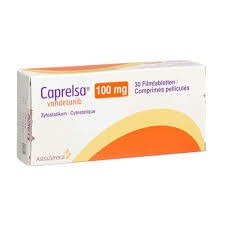
6. Heart failure: including death; monitor for signs and symptoms of heart failure; patients with heart failure may consider discontinuing vandetanib; heart failure may be irreversible after discontinuing vandetanib.
7. Diarrhea: In the study, 11% of patients treated with vandetanib experienced grade 3 or worse diarrhea. Monitor serum electrolytes and ECG to reduce risk and detect early QT prolongation due to dehydration. Discontinue vandetanib with severe diarrhea. After the condition improves, vandetanib is continued at a reduced dose.
8. Hypothyroidism: Obtain thyroid-stimulating hormone (TSH) at baseline at weeks 2-4, weeks 8-12, and every 3 months after starting vandetanib treatment. If signs or symptoms of hypothyroidism occur, have thyroid hormone levels checked and thyroid replacement therapy adjusted accordingly.
9. Hypertension: including hypertensive crisis. Monitor all patients for hypertension. Dosage reduction or interruption in hypertension may be necessary. Do not resume vandetanib if high blood pressure is uncontrolled.
10. Reversible posterior leukoencephalopathy syndrome (RPLS): A syndrome of subcortical vasogenic edema diagnosed by brain MRI that occurs in patients treated with vandetanib. Consider this syndrome in any patient who presents with seizures, headache, visual disturbances, confusion, or changes in mental function. In clinical studies, patients who developed RPLS also had hypertension. Vandetanib treatment was discontinued in patients with RPLS.
11. Renal failure: Renal failure occurs in patients treated with vandetanib. Withhold, reduce dose, or permanently discontinue based on severity.
12. Impaired wound healing: Patients receiving drugs that inhibit the VEGF signaling pathway may experience impaired wound healing. Stop taking vandetanib for at least one month before elective surgery; do not take vandetanib for at least 2 weeks after major surgery until the wound has completely healed.
13. Embryo-Fetotoxicity: According to its mechanism of action, vandetanib can cause harm to the fetus when taken by pregnant women. In rats, vandetanib is embryotoxic, fetotoxic, and induces fetal malformations at exposures equivalent to or lower than the clinical dose of 300 mg, and adversely affects female fertility, embryofetal development, and postnatal development of pups. Advise females of childbearing potential to use an effective method of contraception during treatment with vandetanib and for at least 4 months after the last dose.
The original drug vandetanib has not yet been marketed in China, so it is not included in medical insurance. The original drug specifications of vandetanib listed overseasThe price of each box of 300mg*30 tablets may be more than 30,000 yuan (the price may fluctuate due to the exchange rate). There is currently no generic drug of vandetanib produced and launched. For more drug information and specific prices, please consult the medical consultant of Yaode.
[ 免责声明 ] 本页面内容来自公开渠道(如FDA官网、Drugs官网、原研药厂官网等),仅供持有医疗专业资质的人员用于医学药学研究参考,不构成任何治疗建议或药品推荐。所涉药品可能未在中国大陆获批上市,不适用于中国境内销售和使用。如需治疗,请咨询正规医疗机构。本站不提供药品销售或代购服务。


