
.jpeg)
Survival with Blinatumomab in acute lymphoblastic leukemia
Acute lymphoblastic leukemia (ALL) is a blood cancer that primarily affects the development and function of lymphocytes. TreatmentALLusually requires multiple treatments, including chemotherapy, radiation therapy, and stem cell transplantation. However, for some ALL patients, especially in the setting of minimal residual disease (MRD), conventional treatments may not provide adequate efficacy. In these situations, Blinatumomab has attracted widespread attention as a revolutionary treatment. In this article, we will explore the survival performance of belintuzumab in the treatment of acute lymphoblastic leukemia, combining clinical trial data to support our analysis.
Survival effects of belintuzumab
Belintuzumab is a phage antibody fusion drug that attacks leukemia cells by enhancing the immune system, especially in patients with CD19positive B cellsALL. The unique mechanism of this drug allows it to demonstrate significant survival effects in the treatment of ALL. Here is important information about the survival effects of belintuzumab:
1.MRDPositive ALL Management: Minimal residual disease (MRD) is a condition in which residual leukemia cells can still be detected even after conventional treatment. For MRDpositive ALL patients, conventional treatments may not be effective enough because the presence of MRD may lead to disease recurrence even if symptoms resolve. Bellintuzumab has been shown to have a significant survival effect in these settings. Clinical trial data show that patients with MRDpositive ALL using belintuzumab achieved significant improvements in relapse-free survival (DFS) and overall survival (OS).
2.Full response treatment: In full response treatment, belintuzumab is often used as consolidation therapy to reduce the risk of disease recurrence. The goal of full response therapy is to ensure patients achieve a durable state of remission and improve their survival. Clinical trial data show that patients with complete responses to belintuzumab have better outcomes compared with conventional treatmentDFS and OS achieved better results.
3.Reducing the need for traditional chemotherapy: For some ALL patients, especially those who cannot tolerate traditional chemotherapy or are not suitable for traditional treatment for other reasons, belintuzumab provides them with a treatment option. Not only can it reduce the need for traditional chemotherapy, it can also improve survival and mitigate treatment-related toxicities.
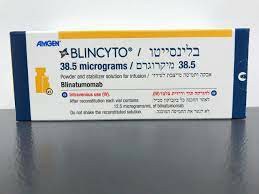
Clinical Experimental Data
To support our analysis, let’s bring in some key clinical trial data to gain a more specific understanding of belintuzumab’s survival effects. Here are some representative data summaries:
1.Blinatumomab Treatment MRD positive ALL Patients: A study on MRD positive B-cells ALL Patient clinical trials (MT103-211) showed that patients taking Blinatumomab achieved significant improvements in DFS and OS . In this trial, relapse-free survival (DFS) was significantly longer and overall survival (OS) was significantly longer in the Blinatumomab treatment group. This suggests that Blinatumomab has a significant survival effect in the treatment of MRD positive ALL .
2.Blinatumomab For full response treatment: studied in clinical trial (MT103-203) Blinatumomab Role in total response therapy. The results showed that patients taking Blinatumomab achieved better outcomes in both DFS and OS . They showed a significant survival advantage in maintaining remission, which is important in preventing disease recurrence.
3.Reduced need for traditional chemotherapy: In some studies, patients with ALL who were treated with Blinatumomab successfully reduced their need for traditional chemotherapy. Not only does this help reduce treatment-related toxicities, it also improves patient survival because they can better tolerate the treatment.
Belintuzumab, a novel and innovative treatment, has achieved significant survival effects in patients with acute lymphoblastic leukemia. Particularly in the setting of minimal residual disease (MRD), it offers hope of improving patient outcomes and extending relapse-free survival (DFS) and overall survival (OS). Clinical trial data clearly demonstrate that belintuzumab also has a significant survival advantage in patients who require full response therapy or who are not candidates for conventional chemotherapy. The introduction of this treatment method provides more treatment options for ALL patients and is expected to improve their survival prospects. However, treatment decisions should be based on the patient's specific circumstances, so patients should work closely with their physician when deciding on treatment options to ensure the best possible outcome.
[ 免责声明 ] 本页面内容来自公开渠道(如FDA官网、Drugs官网、原研药厂官网等),仅供持有医疗专业资质的人员用于医学药学研究参考,不构成任何治疗建议或药品推荐。所涉药品可能未在中国大陆获批上市,不适用于中国境内销售和使用。如需治疗,请咨询正规医疗机构。本站不提供药品销售或代购服务。


