
.jpeg)
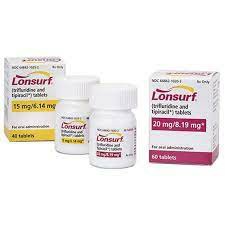
Instructions for Trifluridine Tipiracil Tablets (Lonsurf)
1. Common name: trifluridine, tipiracil
Product name:LONSURF, LONSURF
All names: Trifluridine and Tipiracil Hydrochloride Tablets, Trifluridine and Tipiracil Hydrochloride Tablets, LONSURF Tablets
2. Indications:
1. Metastatic colorectal cancer (HCC): Trifluridine tipiracil tablets (Lonsurf) as a single drug or in combination with bevacizumab for the treatment of adult patients with metastatic colorectal cancer who have previously received fluoropyrimidine-, oxaliplatin-, and irinotecan-based therapy (Fluoropyrimidine, Oxaliplatin and Irinotecan) chemotherapy (an antiVEGF biological therapy) and antiEGFR therapy (if RAS wild type).
2. Metastatic gastric cancer: Trifluridine and tipiracil tablets are suitable for the treatment of adult patients with metastatic gastric or gastroesophageal junction adenocarcinoma who have previously received at least two types of chemotherapy, including fluoropyrimidine (Fluoropyrimidine,), platinum, taxane or irinotecan, and, if appropriate, HER2/neu targeted therapy.
3. Usage and dosage:
1. Recommended dose: Patients should take trifluridine orally administered trifluridine tipiracil tablets twice daily with food on days 1-5 and 8-12 of each 28-day cycle. The recommended dose as a single agent or in combination with bevacizumab is 35 mg/m2, up to a maximum of 80 mg per dose (based on trifluridine ingredients) until disease progression or unacceptable toxicity. Round doses to the nearest 5 u200bu200bmg increment.
Refer to the Prescribing Information for bevacizumab dosing information.
2. Dose adjustment: The doctor will obtain a complete blood cell count before and on the 15th day of each cycle when the patient takes the drug; if discomfort occurs, the dose can be adjusted under the guidance of the doctor, and a maximum of 3 dose reductions are allowed. Patients who cannot tolerate the oral dose of 20 mg/m2 twice daily should permanently discontinue trifluridine tipiracil tablets. Do not increase your dose after reducing it.
(1) For patients with severe renal impairment [creatinine clearance (CLcr) 15-29 mL/min], the recommended dose is 20 mg/m2 (trifluridine-based ingredient) taken orally twice daily with food on days 1-5 and days 8-12 of each 28-day cycle. For patients with severe renal impairment who cannot tolerate a dose of 20 mg/m2 twice daily, reduce the dose to 15 mg/m2 twice daily. Patients who cannot tolerate the 15 mg/m2 dose should permanently discontinue trifluridine and tipiracil tablets.
4. Adverse reactions:
In clinical studies of patients treated with trifluridine and tipiracil tablets as monotherapy, the most common adverse reactions or laboratory abnormalities (≥10%) were neutropenia, anemia, thrombocytopenia, fatigue, nausea, decreased appetite, diarrhea, vomiting, abdominal pain, and pyrexia. In clinical studies of patients treated with trifluridine and bevacizumab, the most common adverse reactions or laboratory abnormalities (≥20%) were neutropenia, anemia, thrombocytopenia, fatigue, nausea, increased aspartate aminotransferase (AST), increased alanine aminotransferase (ALT), increased alkaline phosphatase, decreased sodium, diarrhea, abdominal pain, and decreased appetite.
5. Storage:
Trifluridine and Tipiracil tablets will be stored20°C to 25°C (68°F to 77°F); deviations of 15°C to 30°C (59°F to 86°F) are allowed. Trifluridine is a cytotoxic drug and requires special handling and disposal procedures when applicable. If stored outside of original bottle, discard after 30 days.
6. Special groups:
1. Women: Based on animal data and its mechanism of action, trifluridine and tipiracil tablets can cause harm to the fetus. When administered during pregnancy, it caused embryo-fetal lethality and embryo-fetal toxicity in pregnant rats. Therefore, it is recommended that women not breastfeed while receiving trifluridine tipiracil tablets and for 1 day after the last dose; it is recommended that women of reproductive potential use effective contraception during treatment and for at least 6 months after the last dose.
2. Men: Due to potential genotoxicity, it is recommended that men with female partners of reproductive potential use condoms during treatment with trifluridine and for at least 3 months after the last dose.
7. Mechanism of action:
Trifluridine tipiracil tablets are composed of the thymidine-based nucleoside analog trifluridine (Trifluridine) and the thymidine phosphorylase inhibitor tipiracil, the molar ratio is 1:0.5 (the weight ratio is 1:0.471). Inhibiting the metabolism of trifluridine by thymidine phosphorylase, inclusion of tipiracil increases trifluridine exposure. After being taken up by cancer cells, tipiracil is integrated into DNA, interfering with DNA synthesis and inhibiting cell proliferation. After being taken up by cancer cells, tipiracil is integrated into DNA, interfering with DNA synthesis and inhibiting cell proliferation. Trifluridine/Tipiracil demonstrated antitumor activity against KRAS wild-type and mutant human colorectal cancer xenografts in mice.
The original drug of trifluridinetipiracil tablets has been marketed in China under the trade name Langsif, but it has not yet entered the scope of medical insurance. The price per box may be around RMB 6,000, and the price per box of the Hong Kong version may be more than RMB 10,000 (the price may fluctuate due to exchange rates). The Japanese version of trifluridine tipiracil tablets sold overseas may cost around more than 5,000 yuan per box (the price may fluctuate due to exchange rates). There are also cheaper generic versions of trifluridine and tipiracil tablets available overseas. Their pharmaceutical ingredients are basically the same as those of the original drugs sold domestically and abroad. For example, the price of each box produced by an Indian pharmaceutical factory may be around more than 1,000 yuan (the price may fluctuate due to exchange rates).
[ 免责声明 ] 本页面内容来自公开渠道(如FDA官网、Drugs官网、原研药厂官网等),仅供持有医疗专业资质的人员用于医学药学研究参考,不构成任何治疗建议或药品推荐。所涉药品可能未在中国大陆获批上市,不适用于中国境内销售和使用。如需治疗,请咨询正规医疗机构。本站不提供药品销售或代购服务。


