
.jpeg)
Cabergoline’s mechanism of action
Cabergoline (Cabergoline) is a dopamine receptor agonist. Its mechanism of action involves the dopamine system and affects multiple dopamine receptor subtypes. This drug is primarily used to treat dopamine-related disorders, such as hyperprolactinemia, Parkinson's disease, and certain pituitary adenomas. When discussing the mechanism of action of cabergoline, we need to have a deeper understanding of the dopamine system, dopamine receptors, and how cabergoline works.
1. Dopamine System
Dopamine is a neurotransmitter that plays an important role between neurons in the brain and other parts of the body. The dopamine system plays a key role in many physiological and behavioral processes, including emotion regulation, reward perception, motor coordination, and endocrine regulation. The dopamine system includes a variety of neurons and dopamine receptors, among which dopamine receptors are the key targets of dopamine action.
2. Dopamine receptors
Dopamine receptors are a type of protein molecules located on the surface of neurons. They interact with dopamine molecules and trigger a series of biochemical signals, thereby affecting neuronal activity. Dopamine receptors can be divided into different subtypes, including D1, D2, D3, < span>D4 and D5 isoforms, of which the D2 isoform plays a key role in the effects of cabergoline.
3. Mechanism of action of cabergoline
The mechanism of action of cabergoline mainly involves the following aspects:
3.1 Inhibit dopamine release
Cabergoline reduces dopamine release by interacting with dopamineD2 subtype receptors. In some disease conditions, too much or too little dopamine release can cause problems, so cabergoline can be used to restore the balance of dopamine levels. In patients with hyperprolactinemia, dopamineD2Receptors are often overstimulated, resulting in insufficient secretion of dopamine from the anterior pituitary gland, thereby increasing the activity of prolactin cells in the anterior pituitary gland. Cabergoline reduces the inhibitory effect of dopamine by reducing the stimulation of dopamineD2 receptors, thereby reducing the secretion of prolactin and improving the symptoms of hyperprolactinemia.
3.2 Inhibit the growth of pituitary tumors
Cabergoline can also be used to treat pituitary adenomas, such as pheochromocytoma, pituitary adenoma, and adenomatous gigantism. In these cases, cabergoline inhibits the growth and division of pituitary adenoma cells by binding to dopamineD2receptors. This inhibitory effect may cause adenomas to shrink and reduce associated symptoms.
3.3 Parkinson’s disease treatment
Cabergoline is also used to treat Parkinson's disease, a movement disorder related to the dopamine system. In Parkinson's disease, the loss of dopamine neurons leads to a decrease in dopamine levels, resulting in motor symptoms. Cabergoline helps improve motor function in patients with Parkinson's disease by stimulating dopamine receptors and increasing dopamine levels.
Cabergoline is a dopamine receptor agonist that affects the dopamine system through multiple mechanisms. It is used to treat dopamine-related disorders, including hyperprolactinemia, Parkinson's disease, and pituitary adenomas. Cabergoline works by inhibiting dopamine release, inhibiting pituitary adenoma growth, and increasing dopamine levels. However, the use of cabergoline should be done under the supervision of a physician, as it can cause a range of side effects and interactions that require dosage and treatment plans to be adjusted based on the patient's specific condition and needs. Ultimately, the mechanism of action of cabergoline plays a key role in the regulation of the dopamine system, helping to restore dopamine balance and thus improve the symptoms of related diseases.
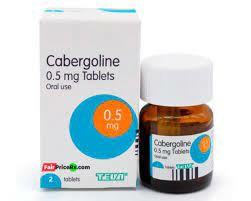
Cabergoline is not currently available in the country, so patients cannot purchase it domestically and need to purchase cabergoline through overseas channels. In foreign countries, cabergoline is the original drug, and the cheaper version is the Turkish original drug, which costs about one to two hundred yuan.
[ 免责声明 ] 本页面内容来自公开渠道(如FDA官网、Drugs官网、原研药厂官网等),仅供持有医疗专业资质的人员用于医学药学研究参考,不构成任何治疗建议或药品推荐。所涉药品可能未在中国大陆获批上市,不适用于中国境内销售和使用。如需治疗,请咨询正规医疗机构。本站不提供药品销售或代购服务。


