
.jpeg)
Instructions for Ribociclib
1. Common name: Reboxil
Product name:KISQALI, Kaililong
All names: Ribociclib, Ribociclib Succinate Tablets, Ribociclib Succinate Tablets, Ribociclib, Ribociclib, Ribociclib
2. Indications:
Ribociclib (Ribociclib) is indicated for the treatment of adult patients with hormone receptor (HR)-positive, human epidermal growth factor receptor 2 (HER2)-negative advanced or metastatic breast cancer, and is used in combination with other drugs:
(1) Aromatase inhibitors as initial endocrine-based therapy;
(2)Or with fulvestrant (fulvestrant) as initial endocrine therapy for postmenopausal women or men or as treatment after disease progression.
3. Usage and dosage:
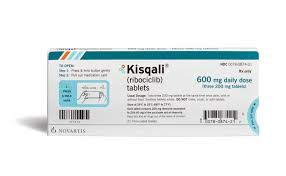
1. Recommended dose: The recommended dose of Riboxiclib is 600 mg (three 200 mg film-coated tablets) once a day for 21 consecutive days, and then stop treatment for 7 days to form a complete cycle of 28 days. Riboxil can be taken with or without food.
(1) Combination medication: When used together with reboxiclib, the recommended dosage of the aromatase inhibitor used in combination must be based on its prescribing information; the recommended dosage of fulvestrant is 500 mg, administered on days 1, 15, and 29, and once a month thereafter.
(2) Based on current clinical practice standards, premenopausal/perimenopausal women or men treated with reboxil in combination with an aromatase inhibitor and men treated with fulvestrant should be treated with a luteinizing hormone-releasing hormone (LHRH) agonist.
2. Dose adjustment: If the patient develops symptoms of discomfort during or after treatment with Riboxil, the doctor may advise the patient to adjust the dose of Riboxil, which may include reducing, interrupting, or stopping Riboxil. The first dose of reboxiclib can be reduced to 400 mg/day (two 200 mg film-coated tablets); the second dose can be reduced to 200 mg/day (one 200 mg film-coated tablet). If further dose reduction below 200 mg/day is necessary, discontinue treatment.
(1)StrongCYP3A Inhibitors: Avoid concomitant use of ribociclib withstrong CYP3A inhibitors. If this cannot be avoided, reduce the dose of rebociclib to 400 mg once daily. If the strong inhibitor is discontinued, reduce the dose of rebociclib(after at least 5 half-lives of the strong CYP3A inhibitor) change to the dose before starting the strong CYP3A inhibitor.
(2) Liver Impairment: The recommended starting dose of ribociclib in patients with moderate hepatic impairment (Child-Pugh Class B) and severe hepatic impairment (Child-Pugh Class C) is 400 mg once daily.
(3) Renal Impairment: For patients with severe renal impairment, the recommended starting dose of reboxiclib is 200 mg once daily.
4. Adverse reactions:
In clinical studies of reboxil, the most common (≥20%) adverse reactions (including laboratory abnormalities) included leukopenia, neutropenia, hemoglobinemia, lymphopenia, increased aspartate aminotransferase, increased gamma-glutamyl transferase, increased alanine aminotransferase, infection, nausea, increased creatinine, fatigue, thrombocytopenia, diarrhea, vomiting, headache, constipation, and alopecia. Adverse events such as interstitial lung disease/pneumonitis, Stevens-Johnson syndrome (SJS), toxic epidermal necrolysis (TEN), drug-induced hypersensitivity syndrome (DiHS)/drug reaction with eosinophilia and systemic symptoms (DRESS) have also occurred after Riboxil was put on the market.
5. Storage:
Riboxiclib is usually stored in its original packagingat a temperature of 20°C to 25°C (68°F to 77°F).
6. Special groups:
1. Women: Due to the potential for serious adverse reactions in infants breastfed with Riboxil, lactating women are advised not to breastfeed during drug treatment and for at least 3 weeks after the last dose of the drug; women of reproductive potential are advised to use effective contraceptive methods (methods that result in a pregnancy rate of less than 1%) during drug treatment and for at least 3 weeks after the last dose.
2. Men: According to animal studies, Riboxil may impair fertility in men of reproductive potential.
7. Mechanism of action:
Reboxiclib is an inhibitor of cyclin-dependent kinases4 and 6 (CDK4/6). These kinases are activated upon binding to D-cyclin and play key roles in signaling pathways leading to cell cycle progression and cell proliferation. The cyclin D-CDK4/6 complex regulates cell cycle progression through phosphorylation of retinoblastoma protein (pRb).
In vitro, Riboxiclib reducespRb phosphorylation, leading to G1 phase arrest of the cell cycle, and reduces cell proliferation in breast cancer cell lines. In vivo, treatment with single agent reboxil in a rat xenograft model with human tumor cells resulted in a reduction in tumor volume that correlated with inhibition of pRb phosphorylation. In a study using a patient-derived estrogen receptor-positive breast cancer xenograft model, the combination of rebociclib and an anti-estrogen (such as letrozole) resulted in increased tumor growth inhibition compared with each drug alone. Furthermore, the combination of reboxil and fulvestrant resulted in tumor growth inhibition in an estrogen receptor-positive breast cancer xenograft model.
The original drug Riboxil has been launched in China, but due to its short time on the market, its price and purchase methods are not yet known, and it has not yet been included in the scope of medical insurance. The price of the European version of Riboxil's original drug, 200mg*21 tablets, sold overseas may be more than RMB 20,000 per box, while the Indian version of Riboxil's original drug, 200mg*21 tablets, may be priced around RMB 3,000 per box (the price may fluctuate due to exchange rates). The ingredients of the two drugs are basically the same. There are currently no generic versions of Riboxil produced and marketed.
[ 免责声明 ] 本页面内容来自公开渠道(如FDA官网、Drugs官网、原研药厂官网等),仅供持有医疗专业资质的人员用于医学药学研究参考,不构成任何治疗建议或药品推荐。所涉药品可能未在中国大陆获批上市,不适用于中国境内销售和使用。如需治疗,请咨询正规医疗机构。本站不提供药品销售或代购服务。


