
.jpeg)
Instructions for Rucaparib
1. Common name: Rucapani
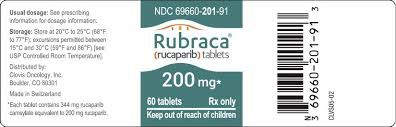
Product name:Rubraca
All names: Rucaparib,Rucaparib Tablets, Rucaparib, Rucaparib, Rucaparib, Rucaparib
2. Indications:
1. Maintenance treatment of mutated recurrent ovarian cancer: Rucaparib (Rucaparib) is indicated for the maintenance treatment of adult patients with BRCA mutation (germline and/or somatic)-related recurrent epithelial ovarian cancer, fallopian tube cancer, or primary peritoneal cancer who have a complete or partial response to platinum-based chemotherapy.
2. BRCA-mutated metastatic castration-resistant prostate cancer (mCRPC): Rucaparib is indicated for the treatment of adult patients with deleterious BRCA-mutated (germline and/or somatic) metastatic castration-resistant prostate cancer who have received androgen receptor-directed therapy and taxane-based chemotherapy.
3. Usage and dosage:
1. Before treatment: Before patients are treated with rucapanib, doctors will select eligible patients for drug maintenance treatment based on the presence of harmful BRC mutations (germline and/or somatic). A negative result from a plasma sample does not mean that the patient's tumor is negative for BRCA mutations. If results from plasma specimens are negative, consider further genomic testing using clinically indicated tumor specimens.
2. Recommended dose: The recommended dose of rucapanib for the treatment of ovarian cancer and prostate cancer is 600 mg (two 300 mg tablets), taken twice a day, with or without food, for a total daily dose of 1200 mg; continue treatment until the disease worsens or unacceptable toxicity occurs.
Patients receiving rucapanib for metastatic castration-resistant prostate cancer should also receive concomitant treatment with a gonadotropin-releasing hormone (GnRH) analogue or should undergo bilateral orchiectomy.
3. Dose adjustment: In order to control adverse reactions, consider interrupting rucapanib treatment or reducing its dose.
The starting dose of rucapanib is 600 mg twice daily (two 300 mg tablets), with the first dose reduced to 500 mg twice daily (two 250 mg tablets), the second dose reduced to 400 mg twice daily (two 200 mg tablets), and the third dose reduced to 300 mg twice daily (one 300 mg tablet).
4. Adverse reactions:
In clinical studies of rucapanib for the treatment of ovarian cancer, the most common (≥10%) adverse reactions were nausea, weakness/fatigue, anemia/low hemoglobin, increased AST/ALT, vomiting, diarrhea, decreased appetite, thrombocytopenia/low platelet count, dysgeusia, neutropenia/low neutrophil count, increased serum creatinine, dyspnea, dizziness, indigestion, and photosensitivity reactions.
In clinical studies using rucapanib to treat prostate cancer, adverse reactions that occurred in ≥20% of cases included fatigue, nausea, constipation, vomiting, diarrhea, anemia, thrombocytopenia, decreased appetite, rash, and increased AST/ALT.
5. Storage:
Rucaparib is stored20°C to 25°C (68°F to 77°F); tolerance is 15°C to 30°C (59°F to 86°F).
6. Special groups:
1. Women: Due to the potential serious adverse reactions of rucapanib in breastfed children, lactating women are advised not to breastfeed during drug treatment and within 2 weeks after the last dose; women of reproductive potential are recommended to use effective contraceptive measures during drug treatment and within 6 months after the last dose.
2. Men: Based on the results of genotoxicity and animal reproduction studies, it is recommended that male patients with fertile female partners or pregnant male patients use effective contraceptive methods during drug treatment and within 3 months after the last dose; male patients are recommended not to donate sperm during treatment and within 3 months after taking the last dose of rucapanib.
7. Mechanism of action:
Rucapanib is an inhibitor of poly(ADP-ribose) polymerase (PARP), including PARP-1, PARP-2 and PARP-3, which play a role in DNA repair. In vitro studies have shown that rucapanib-induced cytotoxicity may involve inhibition of PARP enzyme activity and increased formation of PARP-DNA complexes, leading to DNA damage, apoptosis, and cancer cell death. Increased rucapanib-induced cytotoxicity and antitumor activity were observed in tumor cell lines lacking BRCA 1/2 and other DNA repair genes. Rucaparib has been shown to reduce tumor growth in mouse xenograft models of human cancer with or without BRCA deficiency.
[ 免责声明 ] 本页面内容来自公开渠道(如FDA官网、Drugs官网、原研药厂官网等),仅供持有医疗专业资质的人员用于医学药学研究参考,不构成任何治疗建议或药品推荐。所涉药品可能未在中国大陆获批上市,不适用于中国境内销售和使用。如需治疗,请咨询正规医疗机构。本站不提供药品销售或代购服务。


