
.jpeg)
The role and efficacy of Toripalimab
Toripalimab (Toripalimab) is China’s first domestically produced anti-PD-1 monoclonal antibody with completely independent intellectual property rights. Toripalimab received conditional approval in December 2018 for the treatment of unresectable or metastatic melanoma that has not responded to prior systemic therapy. The National Medical Products Administration recently approved toripalimab for the treatment of recurrent/metastatic nasopharyngeal carcinoma (NPC) and locally advanced or metastatic urothelial carcinoma (UC). It has demonstrated acceptable safety in clinical studies and promising anti-tumor effects in tumors such as melanoma, neuroendocrine tumors and urothelial cancer, and has clear economic advantages.
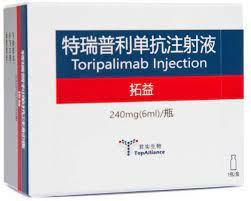
In some cancers, a receptor called programmed cell death protein1 (PD-1) on external tumor cells reduces the immune system's ability to attack the tumor cells. By blocking this receptor, the immune system is better able to fight cancer. Because toripalimab is an anti- PD-1 monoclonal antibody, it can block the PD-1 receptor, so that the immune system is no longer suppressed and can attack and kill tumor cells. Toripalimab is also thought to reduce the number of PD-1 receptors on the outside of cancer cells by causing them to be taken up inside cancer cells. t cells are important immune cells in the human body and express costimulatory immune checkpoint proteins on their surface. Through immune checkpoints, cancer cells can block the activation of T cells and their cytotoxic effect on tumors, leading to immune evasion.
As surface receptor proteins, immune checkpoints can be effectively inhibited by antibodies called checkpoint inhibitors. The emergence of checkpoint inhibitors has fundamentally changed the landscape of cancer treatment. Among all checkpoint inhibitors in clinical use, anti-programmed death protein 1 (PD-1)/programmed death ligand 1 (PD-L1) antibodies have been the most successful. Antibody blockade of PD-1 prevents its interaction with PD-L1 and PD-L2, blocking their downstream pathways and restoring T cell anti-tumor responses.
[ 免责声明 ] 本页面内容来自公开渠道(如FDA官网、Drugs官网、原研药厂官网等),仅供持有医疗专业资质的人员用于医学药学研究参考,不构成任何治疗建议或药品推荐。所涉药品可能未在中国大陆获批上市,不适用于中国境内销售和使用。如需治疗,请咨询正规医疗机构。本站不提供药品销售或代购服务。


