
.jpeg)
Instructions for Vigabatrin (Vigabatrin)
1. Common name: vigabatrin
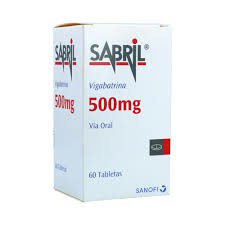
Product name:Sabril/Kigabeq
All names: vigabatrin, Vigabatrin, Vigadin, Qi epilepsy
2. Indications:
1. Refractory complex partial epilepsy (CPS): Vigabatrin (Vigabatrin) is indicated for adult and pediatric patients 2 years of age and older with refractory complex partial epilepsy who have had an inadequate response to several alternative treatments and whose potential benefits outweigh the risk of vision loss. Vigabatrin is not a first-line treatment for complex partial epilepsy.
2. Infantile spasms (IS): Vigabatrin is suitable for pediatric patients aged 1 month to 2 years old with infantile spasms, and its potential benefits outweigh the potential risks of vision loss.
3. Usage and dosage:
1. Medication management: The dosage regimen of Vigabatrin depends on the indication, age group, body weight and dosage form (tablet or oral solution). Dosage adjustments may be required in patients with impaired renal function. Vigabatrin is taken by mouth with or without food. Oral solution of Vigabatrin should be mixed with water before administration. It is recommended that a calibrated measuring device be used to accurately measure and deliver the prescribed dose, a household teaspoon or tablespoon is not an adequate measuring device. If the decision is made to discontinue Vigabatrin, the dose should be gradually reduced.
2. Recommended dosage:
(1)Refractory complex partial epilepsy (CPS): In patients with refractory complex partial epilepsy, if no substantial clinical benefit is observed within 3 months of starting treatment, Vigabatrin should be discontinued. If, in the prescriber's clinical judgment, evidence of treatment failure became apparent before 3 months, treatment should be discontinued at that time.
{1}Treatment in patients 17 years of age and older should begin with 1000 mg/day (500 mg twice daily). Depending on response, the total daily dose may be increased by 500 mg weekly. The recommended dose of Vigabatrin for adults is 3000 mg/day (1500 mg twice daily).
The 6000mg/day dose showed no additional benefit compared withthe 3000mg/day dose and was associated with an increased incidence of adverse events. In controlled clinical studies in adults with complex partial epilepsy, Vibatrin was tapered by reducing the daily dose by 1000 mg/day weekly until discontinued.
{2} Pediatrics (patients aged 2 to 16 years): The recommended dose of Vigabatrin is based on body weight and administered in two divided doses. Based on response, the dose can be increased weekly to a total daily maintenance dose. The maintenance dose is based on an adult equivalent dose of 3000mg/day. Patients weighing more than 60kg should be dosed according to adult recommendations.
For patients weighing 10kg-15kg, the daily starting dose is 350mg/day and the maintenance dose is 1050mg/day; for patients weighing >15kg-20kg, the daily starting dose is 450mg/day and the maintenance dose It is 1300mg/day; for patients weighing >20kg-25kg, the daily starting dose is 500mg/day and the maintenance dose is 1500mg/day; for patients weighing >25kg-60kg, the daily starting dose is 500mg/day and the maintenance dose is 2000mg/day.
(2)Infantile spasms (IS): The initial daily dose is 50 mg/kg/day in two divided doses (25 mg/kg twice daily); subsequent dosing can be titrated every 3 days in increments of 25 mg/kg/day to 50 mg/kg/day, up to a maximum of 150 mg/kg/day in two divided doses (75 mg/kg/day twice daily).
Patients weighing 3kgInitial titration is 1.5mL twice a day, and the highest dose is titration 4.5mL twice daily; patients weighing 4kg, initial titration is 2mL twice a day, and the highest dose is titration 6mL twice a day; Patients weighing 5kg, initial titration is 2.5mL twice a day, and the highest dose is titration 7.5mL twice a day; patients weighing 6kg For patients, the initial titration is 3 mL twice a day, and the highest dose is 9 mL twice a day; for patients weighing 7 kg, the initial titration is 3.5 mL twice a day, and the highest dose is 10.5 mL twice a day; for patients weighing 8 kg, the initial titration is 4 mL twice a day, and the highest dose is 12 mL twice a day; for patients weighing 9 kg, the initial titration is 4.5 mL twice a day, and the highest dose is 13. 5 mL titration; for patients weighing 10 kg, the initial titration is 5 mL twice a day, and the highest dose is 15 mL titration twice a day; for patients weighing 11 kg, the initial dose is 5.5 mL titration twice a day, and the highest dose is 16.5 mL titration twice a day; for patients weighing 12 kg, the initial titration is 6 mL twice a day, and the highest dose is 18 mL titration twice a day; for patients weighing 13 kg, the initial dose is 18 mL twice a day; for patients weighing 13 kg, the titration is 6 mL twice a day. .5mL titration, the highest dose titration is 19.5mL twice a day; patients weighing 14kg, the initial titration is 7mL twice a day, and the highest dose is 21mL titration twice a day; patients weighing 15kg, the initial titration is 7.5mL twice a day, and the highest dose is 22.5mL titration twice a day; patients weighing 16kg, the initial titration is 8mL twice a day, and the highest dose is 24mL titration twice a day.
In patients with infantile spasms, Vigabatrin should be discontinued if no significant clinical benefit is observed within 2 to 4 weeks. If, in the prescriber's clinical judgment, evidence of treatment failure becomes apparent before 2-4 weeks, treatment should be discontinued at this time. In a controlled clinical study in patients with infantile spasms, Vibatrin was tapered by reducing the daily dose from 25 mg/kg to 50 mg/kg every 3-4 days.
3. Patients with renal impairment: Vigabatrin is mainly excreted through the kidneys after entering the body. ForAdult and pediatric patients 2 years and older, mild renal impairment (CLcr>50-80mL/min): the dose should be reduced by 25%; moderate renal impairment (CLcr>30-50mL/min): the dose should be reduced by 50%; severe renal impairment (CLcr>10-30mL/min): the dose should be reduced by 75%. CLcr (in mL/min) can be estimated from serum creatinine (mg/dL) using the following formula:
Patients from 2 years old to under 12 years old: CLcr (mL/min/1.73 m2) = (K×Ht)/Scr
Adult and pediatric patients 12 years of age or older: CLcr (mL/min) = [140 age (years)] × weight (kg) / [72 × serum creatinine (mg/dL)] (×0.85 for female patients)
Height (Ht), in centimeters; serum creatinine (Scr), mg/dL; K (proportionality constant): female children (<12 years old): K=0.55; male infants (<12 years old): K=0.70
4. Adverse reactions:
In clinical studies of Vigabatrin, the most common (≥5%) adverse reactions were headache, drowsiness, fatigue, dizziness, convulsions, nasopharyngitis, weight gain, upper respiratory tract infection, visual field defects, depression, tremor, nystagmus, nausea, diarrhea, memory impairment, insomnia, irritability, abnormal coordination, blurred vision, diplopia, vomiting, influenza, fever and rash.
After Vibatrin was put on the market, birth defects, deafness, delayed puberty, gastrointestinal bleeding, esophagitis, developmental delay, facial edema, malignant hyperthermia, multiple organ failure, cholestasis, myotonia, encephalopathy, hypertonia, hypotonia, muscle spasm, myoclonus, optic neuritis, movement disorders, acute psychosis, and apathy , delirium, hypomania, neonatal restlessness, mental disorder, laryngeal edema, pulmonary embolism, respiratory failure, stridor, angioedema, maculopapular rash, pruritus, Stevens-Johnson syndrome (SJS), toxic epidermal necrolysis (TEN), alopecia and other adverse events.
5. Storage:
Vigabatrin can be stored at 20°C to 25°C (68°F to 77°F).
7. Mechanism of action:
The exact mechanism of the anti-epileptic effects of Vigabatrin in Vigabatrin is unknown, but is believed to be the result of its action as an irreversible inhibitor of gamma-aminobutyric acid aminotransferase (GABA-T), the enzyme responsible for the metabolism of the inhibitory neurotransmitter GABA. This effect results in increased GABA levels in the central nervous system. A direct correlation between plasma concentration and efficacy has not been established. The duration of drug action is thought to depend on the rate of enzymatic resynthesis rather than the rate of drug elimination from the systemic circulation.
[ 免责声明 ] 本页面内容来自公开渠道(如FDA官网、Drugs官网、原研药厂官网等),仅供持有医疗专业资质的人员用于医学药学研究参考,不构成任何治疗建议或药品推荐。所涉药品可能未在中国大陆获批上市,不适用于中国境内销售和使用。如需治疗,请咨询正规医疗机构。本站不提供药品销售或代购服务。


