
.jpeg)
How to choose between dacomitinib and afatinib
Dacomitinib (Dacomitinib) and afatinib (Afatinib) are two commonly used targeted therapy drugs for the treatment of non-small cell lung cancer (NSCLC). They are tyrosine kinase inhibitors that block the growth and spread of tumor cells by inhibiting the epidermal growth factor receptor (EGFR) on tumor cells. Which drug to choose depends mainly on the patient's specific situation and the doctor's recommendations.
Dacomitinib and afatinib are suitable for NSCLC patients with EGFR-positive mutations. These drugs may be effective if the patient's tumor has an EGFR-sensitive mutation (such as a deletion at position 19 of the EGFR gene mutation or the L858R mutation at position 21). Therefore, genetic testing is required to determine the presence of EGFR mutations before selecting a drug. Results from a clinical study showed that dacomitinib had better efficacy than afatinibin terms of progression-free survival (PFS) and showed controllable toxicity in patients with non-small cell lung cancer carrying rare EGFR mutations, and dacomitinib was effective in patients with non-small cell lung cancer who had brain metastases.
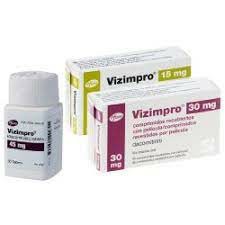
Dacomitinib is usually taken by mouth once daily, while afatinib is taken twice daily on an empty stomach. This may have implications for patient convenience and compliance. As pan-HER inhibitors, dacomitinib and afatinib have a series of adverse reactions, mainly involving the skin and mucous membranes of the digestive tract, such as diarrhea, rash, oral inflammation, etc. However, afatinib was generally associated with more cutaneous adverse effects, and dacomitinib was associated with more gastrointestinal adverse effects. Therefore, the patient's individual tolerability and risk of side effects should also be considered.
The original drug of dacomitinib has been launched in China and has entered the scope of Class B medical insurance. The price of the common specification 15mg*30 tablets per box may be more than 1,000 yuan; the European version of dacomitiniboriginal drug sold overseas, the specification 45mg*30 tablets may be more than 20,000 yuan per box (the price may fluctuate due to exchange rates). Currently, there are cheaper generic drugs of dacomitinib sold overseas. Their pharmaceutical ingredients are basically the same as those of the original drugs sold domestically and abroad. For example, the price of 45mg*30 tablets produced by a Lao pharmaceutical factory may be around a few hundred yuan per box (the price may fluctuate due to exchange rate effects).
The original drug afatinib has also been launched in China and is included in medical insurance, with common specificationsThe price of each box of 30mg*7 tablets may be more than 1,000 RMB; the price of 40mg*28 tablets of the original Indian drug sold overseas may be more than 5,000 RMB per box (the price may fluctuate due to the exchange rate), and the price of the Indian generic drug 40mg*28 tablets per box may be more than 1,000 RMB (the price may fluctuate due to the exchange rate).
In summary, when choosing between dacomitinib and afatinib, a comprehensive evaluation should be conducted based on factors such as the patient's genetic mutation, individual tolerance, and drug characteristics, and decisions should be made under the guidance of a doctor.
[ 免责声明 ] 本页面内容来自公开渠道(如FDA官网、Drugs官网、原研药厂官网等),仅供持有医疗专业资质的人员用于医学药学研究参考,不构成任何治疗建议或药品推荐。所涉药品可能未在中国大陆获批上市,不适用于中国境内销售和使用。如需治疗,请咨询正规医疗机构。本站不提供药品销售或代购服务。


