
.jpeg)
Venetoclax and rituximab combination maintains survival in patients with relapsed/refractory CLL
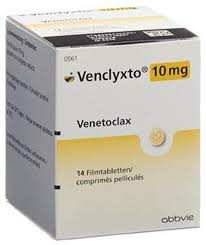
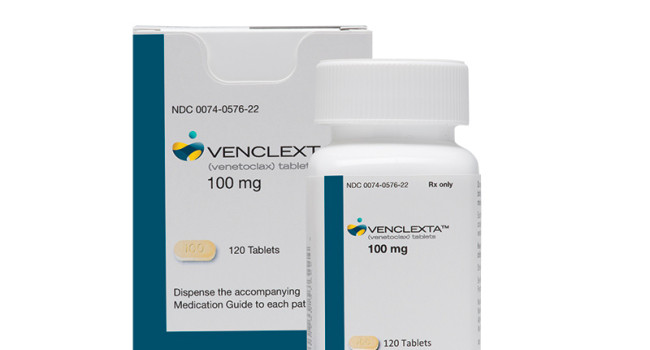
Based on 2023yearCLLInternational Symposium3IssueMURANO< span>Trial(NCT02005471)research results, compared with bendamustine(Bendeka)plus rituximab, recurrence rate/Refractory chronic lymphocytic leukemia(CLL)Patients treated with venetoclax/venetoclax< for a fixed duration span>Additional treatment with rituximab(Rituxan) resulted in sustained benefits in progression-free survival (PFS) and overall survival (OS). In addition, results from the trial's retreatment/ crossover substudy showed that veneclase was better based on overall response rate (ORR) and undetectable minimal residual disease (uMRD). /Venetoclaxretreatment with rituximab is an effective option and uMRDis associated with prolonged PFSin patients receiving venetoclax/venetoclax plus rituximab.
At the time of the final data cutoff on 8month3 in 2022year, 7years of follow-up data showed that patients who receivedvenetoclax/venetoclax plus rituximab(n = 194)A median PFS of 54.7 months was achieved (95% CI, 52.3-59.9) compared with the bendamustine plus rituximab group(n = 195HR, 0.23; 95% CI, 0.18-0.29; StratifiedP < . 0001);7The annualPFS rates are 23% and not evaluable(NE) respectively. Venetoclax/VenetoclaxMedian OS in the venetoclax plus rituximab group was NE, while the bendamustine group was 87.8 months (95% CI, 70.1-NE) (HR, 0.53; 95% CI, 0.37-0.74; StratifiedP < . 0002); 7-year overall survival rates were 69.6% and 51.0% respectively. Venetoclax/The median efficacy follow-up time of the venetoclax group and the bendamustine group were 86.8months(Range span>0.3-99.2)and 84.4months(range0.0-95.0).
Compared with previous standard chemoimmunotherapy,2fixed duration of venetoclax/venetoclax[ Add]rituximab treatment[program]P FSand OSBenefits maintained at 7 years of follow-up, uMRDremains associated with PFSprolongation in patients receiving time-limitedvenetoclax/venetoclax treatment. Retreatment with venetoclax/venetoclax plus rituximab]is a viable option for PD patients, with median PFS approaching 2Year. Overall, the very mature data from this study continue to support the use of fixed-duration venetoclax in combination with rituximab in the setting of relapsed/refractory (CLL).
The study evaluated patients with progressive disease(PD) who receivedvenetoclax/venetoclax plus rituximab as re-treatment or crossover to the bendamustine group. 25) The median PFS was 23.3 months (95% CI, 15.6-24.3). The best ORR was 72%, including a complete response rate of 24%, and median OS was not reached. Eight patients achieved uMRD status at the end of venetoclax/venetoclax plus rituximab retreatment, although none retained uMRD at the end of retreatment.
In the substudy, most patients were classified as having high-risk disease at baseline. Among patients receiving combinations containing venetoclax/venetoclax, the median age was 66 of patients had received 3 previous treatments, and 1 patients had received at least 4 previously treatments. The majority of patients did not have TP53 (68%) or IGHV mutations (88%). Median follow-up was 33.4months(range2.7-44.0) from the final study in the main study The median time from drug dose to retreatment in the substudy was 2.3 years (range 1.2-3.1).
MURANOis a global, open-label trial enrolling patients with relapsed/refractoryCLL who had previously received 1 to 3 cycles of treatment, including at least 1 regimen containing standard chemotherapy, with an ECOG performance status of 1 or lower. 2Patients were stratified by del(17p) status, response to prior therapy, and geographic region. Peripheral blood MRD (uMRD threshold < 10-4) was measured by allele-specific oligonucleotide-PCR and / or flow cytometry.
Eligible patients were randomly assigned in a 1:1 manner to receive rituximab at a dose of 375 on day 1 of cycle 1 mg/m2, then on days 1 of cycles 2 through 6 the dose is 500 mg/m2, and in the 1 and th cycles from 1 to 6 >2 days in combination with venetoclax at a dose of 400 mg/m2/venetoclax or at a dose of70 mg/m2of bendamustine. After the 6 cycle, patients in the study group received venetoclax/venetoclax monotherapy according to the same dosing schedule for up to 2 years from the first dose. Before the start of combination therapy, patients in the study group also received venetoclax/venetoclax in ascending doses for 5 weeks, starting from 20 mg and increasing to 400 mg.
The co-primary endpoints are PFS and PD. Secondary endpoints include best overall response rate, OS, event-free survival rate, duration of response and MRD negative rate. 2Baseline patient characteristics were well balanced between the two groups; the mean age was 64.5 years in the venetoclax group and bendamustine group, respectively >28-83years)and66years(range22-85years). The majority of patients in both groups were male (70.1% vs. 77.4%), with an ECOG performance status of 0 (57.2% vs. 55.7%) and were considered to be at moderate risk for tumor lysis syndrome (54.6% vs. 53.3%). 3 Additional findings from the preliminary study showed that the time to next antileukemia treatment was63months(95% CI, 56.1-73.6) and 24months(95% CI, 20.7-29.5). 49.0% and 67.2% of patients received subsequent antileukemia therapy, respectively.
Patients who completed 2years of PDvenetoclax/venetoclax treatment(n = 118)Among them, 83 cases reached uMRD, 23cases were considered lowMRDpositive, and 12cases were considered highMRDpositive. 14 patients achieved sustained uMRD, defined as uMRD that lasted beyond the end of treatment. The researchers noted an overrepresentation of favorable baseline characteristics among patients with persistent uMRD. SustaineduMRD (n = 14)and non-sustaineduMRD (n = 180)patients had wild-type (9.0% vs. 91.0%) or mutant (2.1% vs. 97.9%) respectively. TP53status, mutant(13.2%vs.86.8%)or unmutated(4.9%vspan>95.1%) IGHV status and either without genome complexity (5.7% vs. 94.3%) or with genome complexity (8.3% vs. 91.7%). “Importantly, 14 patients were still suffering from 7 years after starting treatment.uMRD," Seymour said."In patients with favorable disease biologyIGHVmutations and pan>TP53Deletion of mutations—The very consistent uMRDincidence in this cohort was 16%. ”
The median PFS for patients who achieved uMRD was 52.5 months (95% CI, 44.5-61.5), while the lowMRD positive group was 29.3 months(95% CI, 20.2-37.5) (HR, 3.46; 95% CI, 1.75-6.86; P < .0001)and4.6months(95% CI, 2.8-8.3)In the MRD high positive group (HR, 17.22; 95% CI, 5.70-52.00; P < .0001). Compared with the lowMRDpositive groupNE (95% CI, 62.7-NE)Compared with the uMRD group, the median OS was NE (95% CI, NE-NE) (HR, 1.07; 95%confidence intervals are0.34-3.35) and 63.1 months(95%The confidence interval is 51.5-NE). 95% CI, 0.73-7.80). On the safety front, the study authors noted that no new safety signals were reported since the 5-year data cutoff, and all patients were outside the adverse reaction reporting window.
[ 免责声明 ] 本页面内容来自公开渠道(如FDA官网、Drugs官网、原研药厂官网等),仅供持有医疗专业资质的人员用于医学药学研究参考,不构成任何治疗建议或药品推荐。所涉药品可能未在中国大陆获批上市,不适用于中国境内销售和使用。如需治疗,请咨询正规医疗机构。本站不提供药品销售或代购服务。


