
.jpeg)
Tepotinib demonstrates durable benefits of high-level methionine MET amplification
Tepotinib provided clinically meaningful activity and durable responses in patients with non-small cell lung cancer (NSCLC) and methionine (MET) amplification, as measured by circulating tumor DNA (ctDNA), according to new exploratory findings from Cohort B of the VISION trial (NCT02864992). Demonstrated tepotinib can provide clinically meaningful activity in patients with high MET-amplified non-small cell lung cancer.
VISION is an open-label, multicenter, phase 2 clinical trial consisting of 3 groups of patients with advanced non-small cell lung cancer and MET exon 14 skipped alterations or MET amplification. In Cohort B, patients had advanced non-small cell lung cancer, high-level methionine amplification without methionine exon 14 skipping alterations, and an ECOG performance status of 0 or 1 based on the 73-gene Guardant360 liquid biopsy assay. High-level MET amplification is defined as at least 2.5 gene copy numbers. Patients were treated in the first-, second- or third-line setting, and upfront immunotherapy was allowed. All patients received 500 mg of tepotinib once daily. The primary endpoint was independent review committee objective response rate (ORR) based on RECIST v1.1 criteria. Secondary endpoints include duration of response (DOR), progression-free survival (PFS), overall survival (OS) and safety.
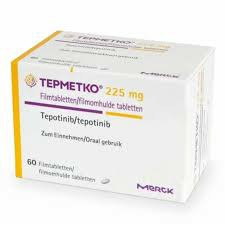
Of the 24 patients in the cohort, the median age was 63.4 years, 88% were male, 88% were smokers, 88% had an ECOG performance status of 1, and 29% were treatment-naïve. Across the entire cohort, the ORR was 41.7% (95% CI, 22.1%-63.4%), including 1 complete response (CR) (4.2%), and the disease control rate (DCR) was 45.8% (95% CI, 25.6%-67.2%). The median DOR was 14.3 months (95% confidence interval, 2.8-not evaluable [NE]), the median PFS was 4.2 months (95% CI, 1.4-15.6), and the median OS was 7.5 months (95% CI, 4.0-15.6).
In first-line treatmentAmong the 7 patients, the efficacy was particularly significant. The overall response rate and DCR were 71.4% (95% confidence interval, 29.0%-96.3%), including 1 complete response. The median DOR was 14.3 months (95% confidence interval, 2.8-NE), the median PFS was 15.6 months (95% CI, 1.4-NE), and the median OS was 143 months (95% CI, 4.0-NE). This benefit was particularly evident in first-line treatment-naïve patients, where high response rates and long duration of response were observed. The median duration of treatment was 3.6 months (range 0.1-26.8), with 5 patients (21%) continuing treatment for at least one year and 2 patients (8%) continuing treatment for at least two years. 1 of these 2 patients achieved CR. The first-line treatment group had the highest median PFS at 15.6 months, followed by the second-line treatment group at 13.6 months and the third-line treatment group at 1.7 months.
[ 免责声明 ] 本页面内容来自公开渠道(如FDA官网、Drugs官网、原研药厂官网等),仅供持有医疗专业资质的人员用于医学药学研究参考,不构成任何治疗建议或药品推荐。所涉药品可能未在中国大陆获批上市,不适用于中国境内销售和使用。如需治疗,请咨询正规医疗机构。本站不提供药品销售或代购服务。


