
.jpeg)
A study comparing the efficacy of upadacitinib and ustekinumab in the treatment of ulcerative colitis
Upadacitinib may be associated with an increased likelihood of achieving clinical remission, steroid-free clinical remission, and endoscopic remission compared with ustekinumab in patients with ulcerative colitis (UC), according to a new study. Results from a multicenter retrospective cohort study showed that compared with patients taking ustekinumab, a higher proportion of patients taking upadatinib achieved clinical remission and steroid-free clinical remission within 8 to 16 weeks, and a higher proportion achieved endoscopic remission within 52 weeks.
While there is currently no cure for ulcerative colitis, symptoms can be relieved by modulating the immune system and controlling exacerbations of the condition. This can be achieved through a multifaceted treatment approach, including medications, clinical trials, and changes in diet and nutrition. Medications are often the first line of treatment and include5-aminosalicylates, corticosteroids, immunosuppressants, and biologics. However, the effectiveness of some treatments remains unclear. While real-world data suggest that tofacitinib and ustekinumab have similar efficacy in ulcerative colitis, the relative effectiveness of upadacitinib and ustekinumab is unclear.
A total of218 patients were enrolled in the study, including 70 patients treated with upatinib and 148 patients treated with ustekinumab. In the upadatinib cohort, 44.3% of participants were female, and the mean age was 39.4 years (interquartile range [IQR], 29.2-49.1). In the ustekinumab cohort, 54.1% were female, and the mean age was 38.9 years (IQR, 29.8-54.3). The researchers noted that compared with the ustekinumab group, more patients in the upadatinib group had prior late treatment failure and increased baseline simple clinical colitis activity index (SCCAI) (6 vs. 4; P < 0.01). The primary outcome of interest was clinical response at weeks 8-16, defined by the investigators as an improvement >3 points on the Simple Clinical Colitis Activity Index (SCCAI), an improvement >3 points on the 9-point Mayo score, or provider-documented clinical response. Secondary outcomes were steroid-free clinical response at 8 to 16 weeks, endoscopic response, and endoscopic response at first endoscopic assessment at 52 weeks.
The results showed that a greater proportion of patients taking upadacitinib met all outcomes except treatment discontinuation and endoscopic reactions, which were similar between the two groups. The researchers then performed an inverse probability analysis of treatment-weighted logistic regression to determine the relativeAssociation of ustekinumab with primary and secondary outcomes. In the analysis, upadatinib was associated with a greater likelihood of clinical response (adjusted odds ratio [aOR], 2.39; 95% confidence interval [CI], 1.04-5.49), steroid-free clinical response (aOR, 3.17; 95% CI, 1.55-6.46), and endoscopic response (aOR, 5.10; 95% CI, 1.34-19.3). In a sensitivity analysis excluding patients with prior ustekinumab exposure, the results were similar.
Adverse events within 16 weeks were reported in 5 cases in the upadacitinib group. These events include acne, angina due to anemia, elevated liver enzymes, nausea, and pneumonia. Ten people in the ustekinumab group reported adverse events within 16 weeks. These events include appendicitis, arthralgia, acute infusion reactions, bone pain, intestinal microperforations, fatigue, nausea, and rash. In a real-world ulcerative colitis cohort, upadatinib was associated with significantly higher clinical response, SFCR, and endoscopic response rates compared with ustekinumab.
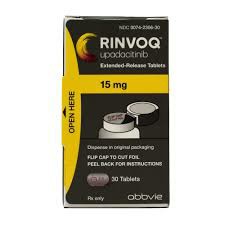
The original drug Upatinib has been launched in China, and has subsequently entered the scope of Class B medical insurance. Only eligible patients can be reimbursed. Specifications The price of each box of 15mg*28 tablets may be around RMB 3,000. The European version of the original drug sold overseas is priced at more than 20,000 yuan for 15mg*30 tablets (the price may fluctuate due to exchange rates), which is expensive. Cheaper upadatinib generic drugs are also sold overseas, and their pharmaceutical ingredients are basically the same as those of the original drugs sold domestically and abroad. For example, the price of 15mg*30 tablets produced by Bangladesh pharmaceutical factory is around 900 yuan (the price may fluctuate due to the exchange rate).
[ 免责声明 ] 本页面内容来自公开渠道(如FDA官网、Drugs官网、原研药厂官网等),仅供持有医疗专业资质的人员用于医学药学研究参考,不构成任何治疗建议或药品推荐。所涉药品可能未在中国大陆获批上市,不适用于中国境内销售和使用。如需治疗,请咨询正规医疗机构。本站不提供药品销售或代购服务。


