
.jpeg)
Iruplinalkib produces longer PFS than crizotinib in advanced ALK+ NSCLC
ALK compared with crizotinib (Crizotinib), based on prespecified interim analysis data from the Phase 3 INSPIRE trial (NCT04632758) presented at the 2023 World Congress on Lung Cancer. TKI-Treatment-naïve, locally advanced and metastaticALK-positive non-small cell lung cancer (NSCLC) patientsIruplinalkib (Iruplinalkib) experienced improved progression-free survival (PFS) and higher objective response rates (ORR). The median follow-up time for iruplinkib (n=143) and crizotinib (n=149) was 23.98 months (range 0-36.9) and 24.54 months (range0-33.2), respectively, Independent Review Committee (IRC) Evaluated median PFS was 27.70 months (95% CI, 26.25-not evaluable [NE]) and 14.62 months (95% CI, 11.07-16.49), respectively (HR, 0.344; 95% CI, 0.226-0.523; P < .0001).
IRC-assessed disease-free survival for patients with baseline central nervous system (CNS) metastases (n=37) who received iruplinalkib was 21.95 months (95% CI, 18.23-NE) versus 11.01 months (95% CI, 7.46-14.72) in the crizotinib group (n=44; HR, 0.242; 95% CI, 0.119-0.493; P<.0001). Among patients without CNS metastases at baseline, those who received iruplinalkib (n=106) had a median PFS of 28.32 months (95% CI, 27.56-NE). The median PFS of patients treated with crizotinib was 16.46 months (95% CI, 12.88-18.43) (n=105; HR, 0.360; 95% CI, 0.236-0.548; P<.0001).
In the intention-to-treat population, the IRC-estimated ORR was 93% (95% CI, 87.5%-96.6%) in the iruplinalkib group compared with 89.3% (95% CI, 83.1%-93.7%) in the crizotinib group (difference, 3.7%; P=0.2694). The median time to objective response was 1.84 months in both the study group (range 0.5-11.1) and the control group (range 0.9-9.1). The median duration of response (DOR) was 26.78 months (95% CI, 25.79-NE) with iruplinalkib and 12.88 months (95% CI, 10.97-14.72) with crizotinib (HR, 0.312; 95% CI, 0.215-0.452; P<.0001).
AlthoughALK TKIs have been approved by regulatory agencies for first-line treatment of advanced ALK-positive non-small cell lung cancer, but after several years of treatment, resistance inevitably emerges. Preclinical data indicate that the ALK TKI iruplinkib inhibits wild-type ALK and has broad activity against resistance mutations such as L1196M and G1202R. Additionally, prior data from the phase 2 INTELLECT study showed that iruplinkib resulted in an IRC-assessed ORR of 6 in patients with crizotinib-resistant, ALK-positive NSCLC (n=146) 9.9% (95%CI, 61.7%-77.2%), the median DOR was 14.4 months (95%CI, 13.1-NE), and the median PFS was 19.8 months (95%CI, 14.5-NE).
Subsequently, in June 2023, the National Medical Products Administration approved iruplinalkib for patients with ALK-positive, crizotinib-resistant or intolerant, locally advanced or metastatic non-small cell lung cancer. The open-label, randomized, multicenter INSPIRE trial enrolled patients with stage IIIB/IV NSCLC who were centrally confirmed to be ALK-positive by FISH or another National Medical Products Administration-approved local trial. Patients were required to have an ECOG performance status of 0 or 1 and no prior exposure to ALK TKIs. They may have received 1 chemotherapy regimen.
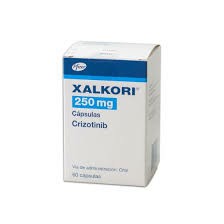
A total of 292 patients were randomized 1:1 to receive iruplinalkib (daily dose180 mg, followed by a 7-day run-in period of 60 mg daily) and crizotinib (twice-daily dose250 mg). Continue treatment until disease progression, unacceptable toxicity, or other reason for discontinuation. Stratification factors included prior chemotherapy regimen (0 vs. 1), presence of baseline CNS metastases (yes vs. no), and prior radiation therapy for CNS metastases (yes vs. no). PFS assessed by the IRC according to RECIST v1.1 criteria served as the trial's primary endpoint. Secondary endpoints included investigator-assessed PFS, ORR, and DOR by IRC and investigator assessment, intracranial ORR by IRC and investigator assessment, overall survival, and safety.
The median age in both the iruplinalkib and crizotinib groups was 55 years (range: 25-76 years); 50.3% and 41.6% of patients, respectively, were male. The majority of patients had an ECOG performance status of 1 (78.3% vs. 73.2%) and had stage IV disease at study entry (89.5% vs. 94.6%). According to the investigators' assessment, 25.9% of patients in the iruplinalkib group had central nervous system metastases at baseline, compared with 29.5% of patients in the crizotinib group; 1.4% and 2.7% of patients, respectively, had received radiation therapy before metastasis. In addition, 16.8% of patients in both groups had previously received chemotherapy.
Additional data from the trial showed that in patients with measurable CNS metastases at baseline, iruplinkib (n=11) resulted in an intracranial ORR of 90.9% (95% CI, 58.7%-99.8%) and crizotinib (n=15) resulted in an intracranial ORR of 60% (95% CI, 32.3%-83.7%). The median intracranial DOR was 20.14 months (95% CI, 7.33-NE) in the iruplinalkib group and 9.26 months (95% CI, 3.71-NE) in the crizotinib group.
In patients with measurable or non-measurable baseline CNS metastases, iruplinkib (n=38) induced an intracranial ORR of 57.9% (95% CI, 40.8%-73.7%) and crizotinib (n=39) induced an intracranial ORR of 25.6% (95% CI, 13.0%-42.1%). The median intracranial DOR was 23.79 months (95% CI, 9.23-NE) and 9.26 months (95% CI, 3.71-NE) for iruplinalkib and crizotinib, respectively. At the time of data cutoff, 71 patients were still receiving iruplinalkib and 28 patients were still receiving crizotinib. Among the 72 patients who discontinued iruplinalkib, the most common reason for discontinuation was radiographic disease progression (n = 53), followed by intolerance (n = 9), patient discontinuation (n = 4), death (n = 4), and clinical disease progression (n = 2).
The average duration of treatment with iruplinalkib was 23.92 months, and the average duration of treatment with crizotinib was 12.94 months. Treatment-related adverse effects (TRAEs) of any grade occurred in 98.6% of patients in the iruplinalkib group and 99.3% in the crizotinib group, with these effects being grade 3 or 4 in 51.7% and 49.7% of patients, respectively. The incidence of serious TRAEs was 14% in the iruplinalkib group and 10.7% in the crizotinib group. Two fatal TRAEs were reported in the crizotinib group. Additionally, 28% of patients receiving iruplinalkib experienced a TRAE requiring dose reduction, and 5.6% experienced a TRAE leading to treatment discontinuation; these incidence rates were 32.9% and 4.7%, respectively, in the crizotinib group.
[ 免责声明 ] 本页面内容来自公开渠道(如FDA官网、Drugs官网、原研药厂官网等),仅供持有医疗专业资质的人员用于医学药学研究参考,不构成任何治疗建议或药品推荐。所涉药品可能未在中国大陆获批上市,不适用于中国境内销售和使用。如需治疗,请咨询正规医疗机构。本站不提供药品销售或代购服务。


